
Sulistrowiczki – Sanctuary, Nature Trail and Wenecja Park
Accommodation in Sulistrowiczki
Sulistrowiczki brings together sacred architecture, a nature trail and Wenecja Park. If you are considering whether the place suits your travel interests, you will find several points of interest here: stained-glass art in the sanctuary, a marked route along the nature trail, and a historic park with ponds and cascades.
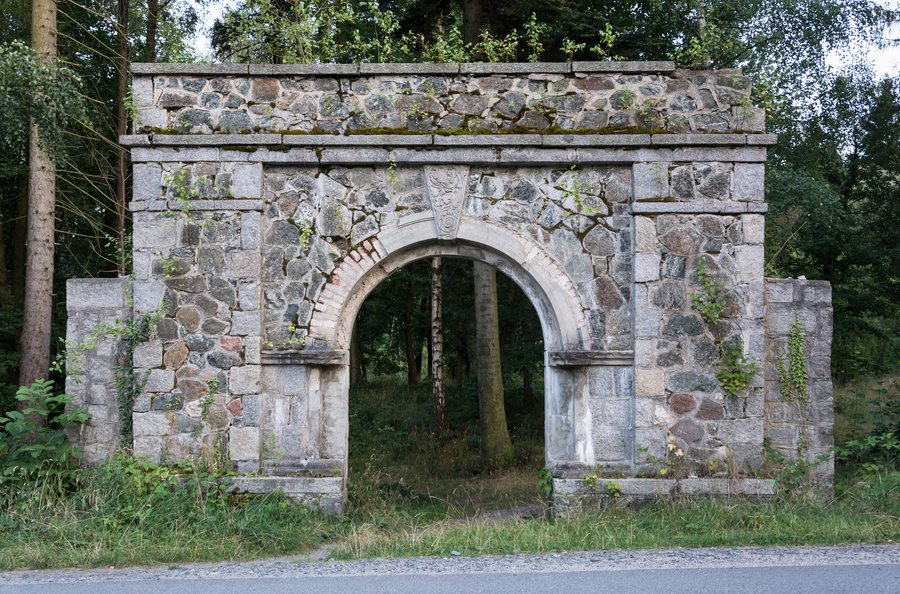 File:2016 Park Wenecja w Sulistrowiczkach, brama 1.jpg
Photo: Jacek Halicki via Wikimedia Commons, CC BY 3.0
File:2016 Park Wenecja w Sulistrowiczkach, brama 1.jpg
Photo: Jacek Halicki via Wikimedia Commons, CC BY 3.0
Key facts about Sulistrowiczki
The Sanctuary of Our Lady of Good Counsel was built on a granite foundation from spruce wood sourced from the upper elevations of the Ślęża Massif. Its stained-glass windows were made by Maria Gostylla Pachucka. A nature trail starts in Sulistrowiczki and leads across Łąka Sulistrowicka to Radunia and onward to Przełęcz Tąpadła. Wenecja Park, established in 1914, lies in the valley of the Sulistrowicki Potok and covers about 8 hectares.
What makes the sanctuary distinctive?
At the Sanctuary of Our Lady of Good Counsel, different materials come together: spruce wood from the upper elevations of the Ślęża Massif and a granite foundation. Beside the sanctuary stands a bell tower shaped like a chapel, with a lantern. These architectural features offer culturally minded travellers specific details to look out for when exploring the site.
The stained-glass window designs are also connected to the area. Maria Gostylla Pachucka depicted symbols of the Holy Spirit and the vegetation of the nearby Łąka Sulistrowicka nature reserve. Religious symbolism and plant motifs thus appear together in the windows. Visitors interested in sacred art can treat this design as a focus in its own right, alongside Sulistrowiczki’s nature and hiking destinations.
What routes and experiences does Sulistrowiczki offer?
The nature trail starts in Sulistrowiczki. Its stated route leads across Łąka Sulistrowicka to Radunia and from there onward to Przełęcz Tąpadła. This clearly named sequence of landscapes and places can help you decide which route to take. If you are planning to include a hike in your trip, you can use this sequence as a guide when choosing this trail.
Another option is the quest “Miejsca mocy w Sulistrowiczkach”. It starts in the village centre, in the car park by the church. Participants follow the instructions on a quest map and search for hidden letters along the walking route. The focus is therefore not only on covering a distance, but also on solving the task using the map. Its starting point and format make this quest a distinct way to explore Sulistrowiczki.
What can you see at Wenecja Park and the Studnia Świętego Świerada?
Wenecja Park was established in 1914 in the valley of the Sulistrowicki Potok and covers about 8 hectares. Its many water features—ponds and cascades—gave the park its name. Its date of origin, approximate size and eponymous features are therefore important for understanding the park. It offers a different theme from the sanctuary and nature trail, with ponds and cascades at its heart.
The Studnia Świętego Świerada is located at the edge of a meadow east of the Potok Sulistrowicki. A figure of the Madonna was installed beside the well in 1999. The meadow and stream are the named geographical reference points for finding it; the year 1999 refers to when the figure was installed. Its location and this dated detail distinguish it from the other topics described here.
If you are looking for more place pages to compare your travel destinations, you can also explore Chrząstawa Mała, Biskupice Podgórne, Samotwór, Mietków, Kobierzyce, Święta Katarzyna, Siechnice and Karwiany.
FAQ
Where does the nature trail from Sulistrowiczki lead?
It leads across Łąka Sulistrowicka to Radunia and onward to Przełęcz Tąpadła.
How does the “Miejsca mocy w Sulistrowiczkach” quest work?
Participants follow a quest map and search for hidden letters along the walking route. The starting point is in the village centre, in the car park by the church.
How did Wenecja Park get its name?
Its many water features, including ponds and cascades, gave the park its name.
For the broader travel overview: Wroclaw.

