
Discover Terespol
Accommodation in Terespol
Terespol brings together different historical perspectives: its town charter and change of name in 1697, the Prochownia as part of the Terespol bridgehead within the Brest Fortress, and a mural commemorating the Żołnierze Wyklęci. The town’s history, its links to the fortress, and its commemorative themes offer several ways to understand the place.
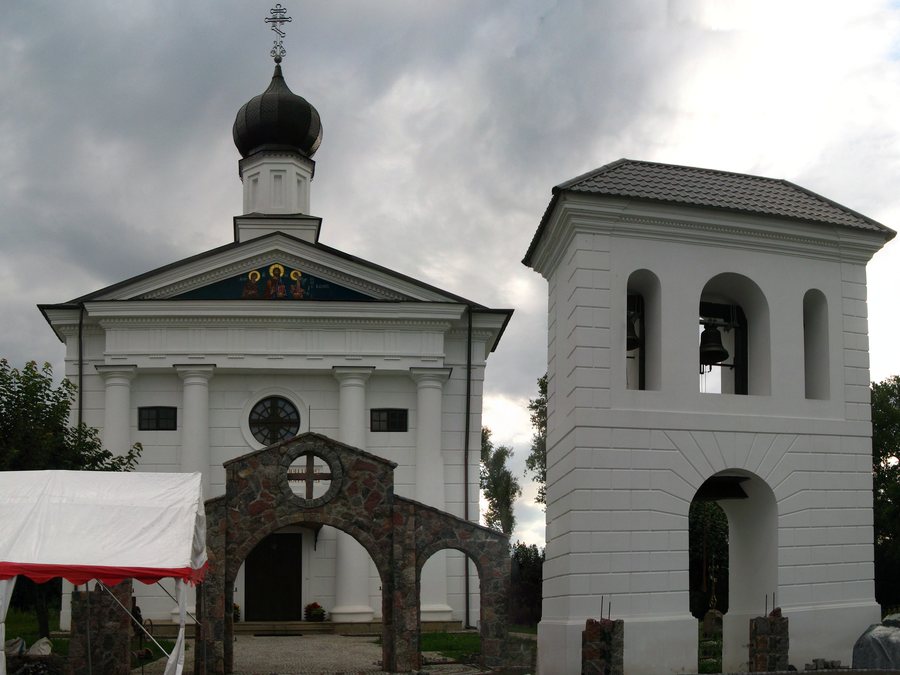 File:Cerkiew prawosławna p.w. św. Jana Teologa (k. XVIII) Terespol 01 JoannaPyka.JPG
Photo: JoannaPyka via Source, CC BY-SA 3.0 pl
Terespol at a glance
- In 1697, Terespol received its town charter and was renamed from Błotków to Terespol.
- Karol Stanisław Radziwiłł had Terespol burned down; Jan Detlov Flemming supported the Czartoryski during the Sejms.
- The Prochownia was built in 1913 as part of the Terespol bridgehead within the Brest Fortress.
- The Koło Miłośników Fortyfikacji i Historii saved the Prochownia from falling into disrepair through its own efforts.
- Terespol has a mural commemorating the Żołnierze Wyklęci.
Which events shaped the town’s history?
The year 1697 brought two changes: Terespol received its town charter and was renamed from Błotków to Terespol. The town’s former and later names, along with an important date in its history, are thus linked. Anyone interested in the town’s development will find a clear historical reference point here.
Another important episode was political: Karol Stanisław Radziwiłł had Terespol burned down. The town’s owner at the time, Jan Detlov Flemming, supported the Czartoryski during the Sejms and therefore often opposed the Radziwiłłs. The town charter and name change on the one hand, and the political alignments on the other, are distinct aspects of Terespol’s history. Together, they offer a broader view of its historical themes without blending them into a single narrative.
What connects the Prochownia to the Brest Fortress?
The Prochownia was built in 1913 as part of the Terespol bridgehead within the Brest Fortress. This connection places the building in a specific fortification context: it is not just a building in Terespol, but part of the bridgehead within the fortress. The year 1913 provides a point of reference distinct from the events surrounding the town charter of 1697.
The Prochownia’s history also includes its preservation. The Koło Miłośników Fortyfikacji i Historii from Terespol saved the building from falling into disrepair through its own efforts. This site brings together the history of construction and preservation: its origins as part of the fortification complex and the later efforts of a Terespol association to preserve the building.
Which cultural themes add to the picture?
A mural in Terespol commemorates the Żołnierze Wyklęci. This adds a distinct commemorative reference alongside the town’s history and the history of its fortress. These themes are clearly different: the Prochownia is associated with the bridgehead of the Brest Fortress and its rescue from disrepair, while the mural commemorates the Żołnierze Wyklęci. This distinction helps you consider the town’s cultural points of interest according to their respective focus.
How can you choose a focus for your stay?
If you are comparing Terespol for a culture-focused trip, first consider which perspective interests you most: the town’s history around 1697, the Prochownia’s links to the fortress, or the mural’s commemorative theme. These are different points of interest, not interchangeable stops. You can also use your personal travel interests to guide your hotel search.
Discover more destinations: Czosnówka, Gnojno, Slawatycze, Wisznice, Rokitno, Mokrany Nowe, Leśna Podlaska, Konstantynów.
FAQ
When did Terespol receive its town charter?
Terespol received its town charter in 1697. In the same year, the town was renamed from Błotków to Terespol.
What is known about the Prochownia?
It was built in 1913 as part of the Terespol bridgehead within the Brest Fortress. The Koło Miłośników Fortyfikacji i Historii saved the building from falling into disrepair through its own efforts.
Who is the mural in Terespol dedicated to?
The mural commemorates the Żołnierze Wyklęci.
To the wider travel overview: Bialski.

