
Gnojno on the Bug: Observation Tower, Church and Routes
Accommodation in Gnojno
Gnojno on the Bug is marked by an observation tower above a bend in the river. The present-day Roman Catholic Church of Saint Anthony of Padua was built in 1875 as an Orthodox church. Two routes described differently, as well as the former ferry connection, are also important for finding your way around.
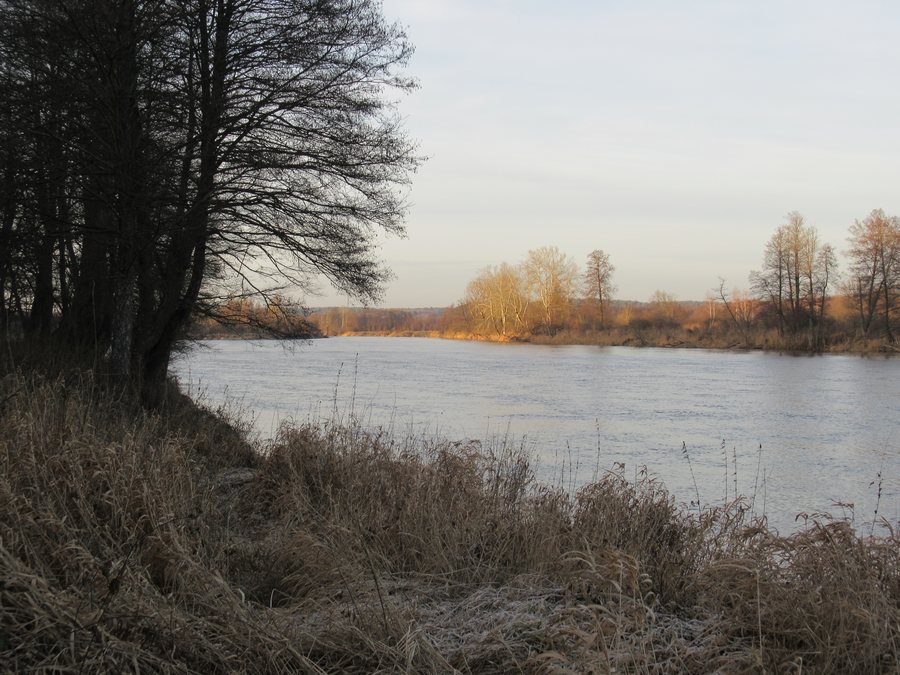
Gnojno at a glance
The present-day Roman Catholic Church of Saint Anthony of Padua was built in 1875 as an Orthodox church. A 20-metre-high observation tower stands on a 32-metre-high escarpment, offering views of the Bug, riverside meadows and forests. The 31-kilometre Serpelice–Gnojno–Serpelice cycling route passes through Gnojno. The 82.5-kilometre Szlak Nadbużański (Bug River Trail) also passes through the village.
What makes the view over the Bug distinctive?
The observation tower opened in December 2025. The two heights refer to different things: the tower is 20 metres high and stands on a 32-metre-high escarpment above a bend in the Bug. From there, you can see the river, riverside meadows and forests. The tower has safety measures and a monitoring system. A report from December 2025 also mentions shelters, a car park, and a footpath and cycle path near the tower. If you plan to visit the area, check the current conditions in advance.
What stories do the church and cemetery tell?
The present-day Roman Catholic Church of Saint Anthony of Padua was built in 1875 as an Orthodox church. The cemetery in Gnojno has a different history: it was established as a Uniate cemetery in the early 19th century and later became Orthodox. It is no longer in use, but several tombstones from the second half of the 19th century remain. The church and cemetery thus represent different periods in the local history of religion. When interpreting them, it helps to distinguish the church’s present dedication from the cemetery’s former religious use.
How do the routes through Gnojno differ?
The 82.5-kilometre Szlak Nadbużański (Bug River Trail) passes through Gnojno and continues via Bubel Stary, Janów Podlaski, Błonie, Neple, Malowa Góra, Lebiedziew, Kostomłoty, Kodeń and Jabłeczna to Sławatycze. The 31-kilometre Serpelice–Gnojno–Serpelice cycling route also passes through the village. These are two different routes: the second is explicitly identified as a cycling route, while the Szlak is described by its longer course through several villages. To help make your initial choice, consider whether you are looking for a route specifically designated for cycling or would prefer to follow the Szlak’s course.
What should you consider when planning your trip?
A report dated 2 December 2025 noted that the former ferry between Gnojno and Niemirów had not operated for several years. Therefore, do not plan on it as a confirmed current connection. The Podlaski Przełom Bugu Landscape Park is also relevant to the area: part of the park lies within the municipality of Konstantynów.
When choosing where to stay, you can compare the destinations that matter most to your plans. Your specific priorities will depend on whether you want to focus mainly on the scenery, historic sites or the named routes.
Discover more destinations: Janów Podlaski, Cieleśnica, Pratulin, Małaszewicze, Bubel-Łukowiska, Czosnówka, Horbów, Małaszewicze Duże.
FAQ
What can you see from the observation tower in Gnojno?
The tower offers views of the Bug, riverside meadows and forests. It stands on a 32-metre-high escarpment above a bend in the river.
Which of the routes mentioned is a cycling route?
The Serpelice–Gnojno–Serpelice cycling route is 31 kilometres long and passes through Gnojno. The Szlak Nadbużański (Bug River Trail) is 82.5 kilometres long and passes through several other villages before reaching Sławatycze.
Can you plan to use the former ferry for a trip today?
A report dated 2 December 2025 described the ferry between Gnojno and Niemirów as having been out of service for several years. Therefore, do not consider it a confirmed current connection.
For the regional travel overview: Bialski.

