
Bełżyce: Discover Historical Traces
Accommodation in Bełżyce
Bełżyce offers a cultural and historical perspective spanning different periods: surviving castle remains, a manor-and-park complex, and places of remembrance each have their own character. This variety is particularly helpful when deciding what to visit: you can distinguish architectural traces, community remembrance, and a church associated with a cultural route.
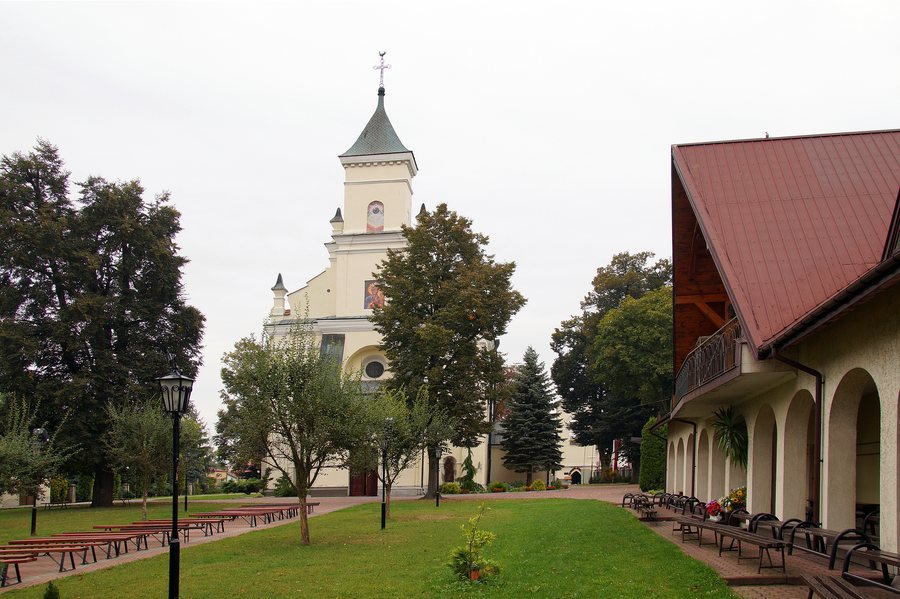
Bełżyce at a glance
- Remains of a 15th-century castle have survived.
- A 19th-century manor-and-park complex has survived.
- The Kościuszko Mound is opposite the entrance and was raised by local residents in 1905.
- The Church of the Conversion of St. Paul (pw. Nawrócenia św. Pawła) is part of the Lublin Renaissance Trail (Szlak Renesansu Lubelskiego).
- A 19th-century Jewish cemetery commemorates Bełżyce’s former Jewish community.
- The cemetery wall features a brief history of the community and a relief with text in Polish and Hebrew.
Which historical traces can you compare?
The surviving remains of a 15th-century castle and the 19th-century manor-and-park complex represent different forms of architectural heritage. The terms refer to two different types of site: a castle and a combination of manor house and park. Their dates also make it easy to compare the 15th and 19th centuries. If you like to place cultural sites within their historical periods, you can consider these two points of interest separately. This shows that Bełżyce’s architectural traces date from different centuries.
What do the places of remembrance tell you?
The 19th-century Jewish cemetery commemorates Bełżyce’s former Jewish community. The cemetery wall features a brief history of the community and a relief with text in Polish and Hebrew. Here, you encounter both the community’s historical story and a bilingual artistic treatment. The Kościuszko Mound offers a different historical reference point: local residents raised it in 1905, and it is opposite the entrance. This creates a clear contrast: the cemetery points to the former Jewish community, while the mound is identified by the year it was raised—1905—and by the local residents who built it.
What role does the church play in the area’s cultural profile?
The Church of the Conversion of St. Paul (pw. Nawrócenia św. Pawła) in Bełżyce is part of the Lublin Renaissance Trail (Szlak Renesansu Lubelskiego). For travelers who choose places based on cultural and historical themes, the route’s name is a useful guide: it points to the Renaissance as a shared theme. The church thus offers a different thematic perspective from the castle remains, the manor-and-park complex, or the cemetery, each of which is associated with a particular period. You can keep these different aspects in mind as you explore the local culture, rather than reducing them to a single historical narrative.
How can you combine choosing a destination with finding accommodation?
If culture is an important part of your trip, you can consider Bełżyce in terms of its traces from different periods, its places of remembrance, and its connection to the Renaissance route. This lets you make your destination choice based on culture while choosing accommodation separately to suit your needs.
Discover more destinations: Rudka Kozłowiecka, Bronice-Kolonia, Wojciechów, Ciecierzyn, Niedrzwica Duża, Piotrowice-Kolonia, Wólka, Jabłonna.
FAQ
Which historic buildings have survived in Bełżyce?
Remains of a 15th-century castle and a 19th-century manor-and-park complex have survived.
What does the Jewish cemetery commemorate?
The 19th-century cemetery commemorates Bełżyce’s former Jewish community. The wall features a brief history of the community and a relief with text in Polish and Hebrew.
When was the Kościuszko Mound raised?
Local residents raised it in 1905; it is opposite the entrance.
Which cultural route is the church part of?
The Church of the Conversion of St. Paul (pw. Nawrócenia św. Pawła) in Bełżyce is part of the Lublin Renaissance Trail (Szlak Renesansu Lubelskiego).
See the regional travel overview: Powiat Lubelski.

