
Discover Parchatka
Accommodation in Parchatka
Ravine slopes with diverse vegetation, two intersecting hiking trails and three memorial crosses on a hill give Parchatka a distinct natural and cultural character. The different routes can help you match your interests to your travel plans.
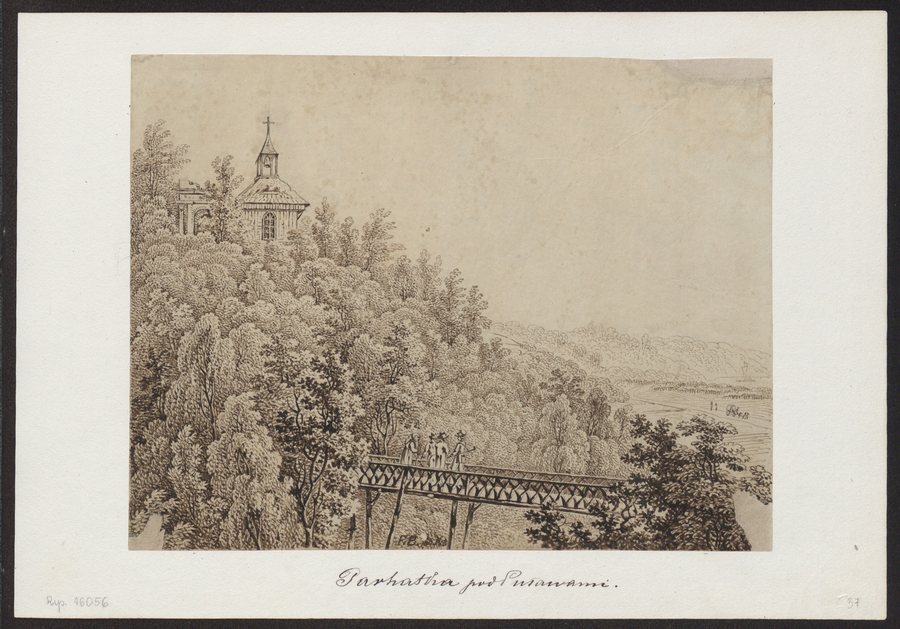 File:Parchatka post 1819 (5595432).jpg
Photo: Johann Friedrich Franz Bruder via Wikimedia Commons, Public domain
File:Parchatka post 1819 (5595432).jpg
Photo: Johann Friedrich Franz Bruder via Wikimedia Commons, Public domain
Quick facts about Parchatka
- In the Sołectwo Parchatka, the microclimate on the ravine slopes encourages the growth of unusual plants.
- A map created in 2019 listed twelve ravines in Parchatka.
- The blue Nadwiślański Trail and the yellow trail intersect in Parchatka.
- Three crosses on a hill commemorate Zofia z Matuszewiczów Kicka.
What gives the ravine landscape its character?
The ravines are more than just a backdrop to the hiking trails: their slopes in the Sołectwo Parchatka are covered with diverse vegetation. The local microclimate encourages the growth of unusual plants. If you are interested in landscapes and plants, this combination offers a distinctive perspective on the area, alongside its trails and the history of the crosses.
The figure of twelve ravines refers specifically to a 2019 map of ravines in the Kazimierz area.
How do the hiking trails differ?
The overall length of the blue Nadwiślański Trail is specified: it is 108.6 kilometres long, runs from Annopol via Kazimierz and Puławy to Dęblin, and passes through Parchatka. The yellow trail runs from Puławy to Parchatka via Góra Trzech Krzyży. The two trails intersect in Parchatka. The blue trail’s overall length and route from Annopol via Kazimierz and Puławy to Dęblin are specified; the yellow trail runs from Puławy to Parchatka via Góra Trzech Krzyży.
There is also a walking path that starts in Parchatka and follows the right-hand branch of the Ulesie ravine to join the yellow trail. This means there are several distinct route options: a trail that passes through Parchatka, a connection via Góra Trzech Krzyży, and a walking path that starts in Parchatka and meets the yellow trail. Check current trail conditions before setting out.
What story do the three crosses tell?
Princess Izabela Czartoryska had three crosses erected on a hill in Parchatka in memory of her foster daughter, Zofia z Matuszewiczów Kicka. The crosses have been returned to their original location. A walk from Parchatka to Kazimierz passes the three crosses on the hill. This lets you visit the memorial as part of a route, without separating its historical significance from the landscape.
Which focus best suits your travel plans?
If you are primarily interested in nature, the vegetated ravine slopes and microclimate are the main features. When planning your route, the known trails offer different points of reference: the full route of the blue trail, the yellow trail’s route via Góra Trzech Krzyży, and the walking path from Parchatka to the yellow route. The crosses add another point of interest to a walk in the direction of Kazimierz. Which of these details matters most for your plans depends on whether you prioritize the landscape, the route or the memorial site.
Discover more destinations: Strzyżowice, Lysa Gora, Kębło, Kazimierz Dolny, Puławy, Nałęczów, Rablów, Sadurki.
FAQ
Which hiking trails intersect in Parchatka?
The blue Nadwiślański Trail and the yellow trail intersect in Parchatka.
How long is the blue Nadwiślański Trail?
The full route is 108.6 kilometres long and runs from Annopol via Kazimierz and Puławy to Dęblin.
What do the three crosses commemorate?
Princess Izabela Czartoryska had them erected on a hill in Parchatka in memory of her foster daughter, Zofia z Matuszewiczów Kicka. The crosses have been returned to their original location.
For the broader travel overview: Puławski.

.jpg)