
Discover Grodzisk Mazowiecki
Accommodation in Grodzisk Mazowiecki
For your trip planning, Grodzisk Mazowiecki offers points of interest ranging from railway history and ethnographic museum experiences to historic buildings and trails in the southern part of the municipality.
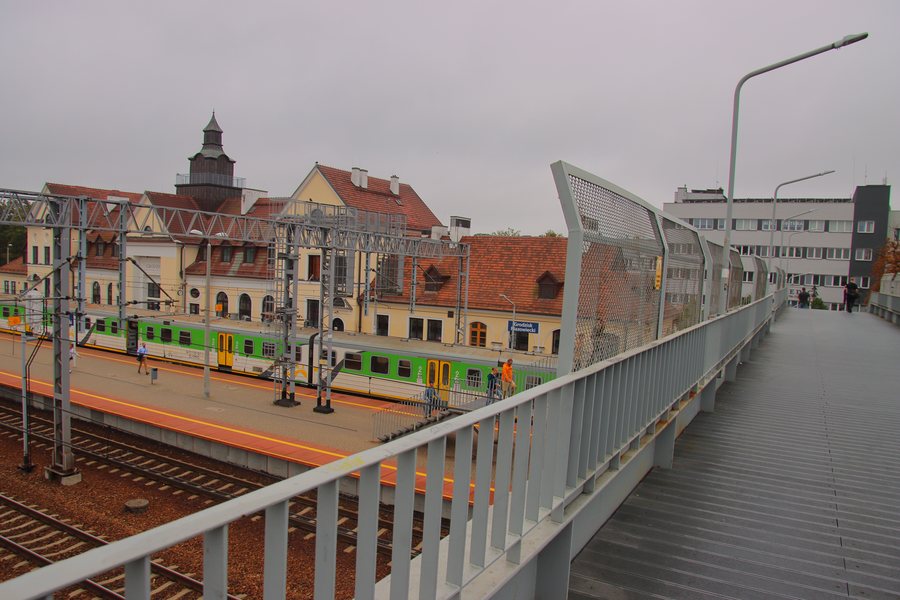 File:IMG-240913183 dworzec pkp grodzisk mazowiecki.jpg
Photo: 24april1975 via Wikimedia Commons, CC BY-SA 4.0
File:IMG-240913183 dworzec pkp grodzisk mazowiecki.jpg
Photo: 24april1975 via Wikimedia Commons, CC BY-SA 4.0
Grodzisk Mazowiecki at a glance
- The ethnographic gallery Willa Radogoszcz is now housed in Willa Radogoszcz and offers museum lessons.
- The railway station building was constructed from 1922 to 1924 and was one of the first stops on the Warsaw–Vienna Railway.
- 1,506 hectares in the southern part of the municipality belong to the Warsaw Protected Landscape Area.
- Stawy Walczewskiego has a designated bathing area and a water sports equipment rental service.
What cultural and architectural history can you discover?
Railway history is reflected in various ways. The railway station building in Grodzisk Mazowiecki was constructed from 1922 to 1924 and was among the early stops on the Warsaw–Vienna Railway. Willa Foksal is also connected with this railway line: it was designed in 1846 as an elegant inn for its passengers. The two building histories have different emphases—one is a stop, the other an inn catering to travelers.
Historic buildings also tell stories of different periods and uses. Dworek Adama Chełmońskiego was built in the mid-19th century and relocated in 1900. Dr. Michał Bojasiński’s hydropathic establishment, opened in 1884, was designed to serve as a clinic, sanatorium and hotel. Its park included an orangery and winter gardens.
Willa Kaprys was built in 1886 as a summer residence. Its historic park features stylized antique sculptures, a plane tree, a hornbeam designated as a natural monument and a surviving lime tree avenue. The garden at Dwór Skarbków has Baroque design elements and also includes a venue intended for summer concerts. St. Anne’s Church, in turn, was built in several stages over a period of 200 years. The Temple of St. Tomasz in Grodzisk was first mentioned in 1355; the Jewish cemetery was established in 1780.
What do the landscape and water have to offer?
The landscape also helps characterize part of the municipality: 1,506 hectares in the south belong to the Warsaw Protected Landscape Area. The blue “Śladami Chełmońskiego” hiking trail also runs through the southern part of the municipality. If you would like to consider nature and culture when planning your trip, you can use these landscape details as a separate point of reference alongside the historic buildings.
Stawy Walczewskiego has a designated bathing area. Water sports equipment is also available for hire there. This aspect of a day out differs from the architectural and cultural sites described above: here, water and water sports are the main attractions.
Where can you get maps to help you find your way?
Poczekalnia PKP in Grodzisk Mazowiecki operates as a tourist information center in a historic railway station building. Maps of the town and its surroundings, with hiking and cycling routes marked, are available there. You can use these maps for orientation when exploring the available routes. The blue “Śladami Chełmońskiego” hiking trail runs through the southern part of the municipality; the maps provided include hiking and cycling routes, but do not promise any particular map depiction of this trail.
If you would like to compare other places in the wider area, you can find pages for Budy Michałowskie, Huta Żabiowolska, Marynin, Grzegorzewice, Bieganów, Kałęczyn, Nowe Kozery, Zalesie, Żabia Wola, Książenice, Żelechów, Grodzisk Mazowiecki, Milanówek and Podkowa Leśna.
FAQ
What does the Willa Radogoszcz gallery offer?
The ethnographic gallery Willa Radogoszcz is now housed in Willa Radogoszcz. The gallery offers museum lessons.
What can you do at Stawy Walczewskiego?
There is a designated bathing area and a water sports equipment rental service.
Where can you find maps with hiking and cycling routes?
Poczekalnia PKP is a tourist information center in a historic railway station building. It provides maps of the town and its surroundings with hiking and cycling routes marked.
What is known about the garden at Dwór Skarbków?
The garden has Baroque design elements and includes a venue intended for summer concerts.
For the wider travel overview: Masovia.

