
Skrzeszew – Local History and Routes
Accommodation in Skrzeszew
In Skrzeszew, two historical stories meet routes of different lengths. You can consider local history and the routes as separate focal points for your trip.
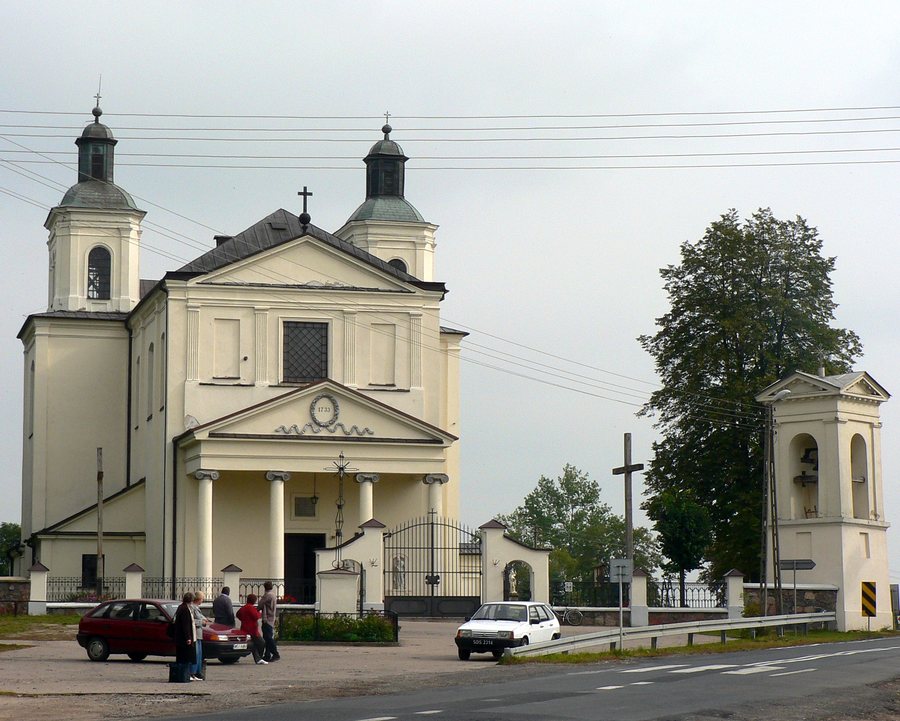
Quick facts about Skrzeszew
- The Kuska family founded a wayside chapel in 1922 at the intersection of Dolna and Kościelna Streets.
- A historical account tells how the oak cross, of unknown origin, was washed ashore during the great flood of 1908.
- The 15 km Green Central Trail (Szlak Zielony Centralny) passes through Skrzeszew.
- The 32 km Pułtuska-Czarna cycling route also passes through Skrzeszew. A route description characterizes it as easy and mentions asphalt roads.
What stories are associated with Skrzeszew?
The wayside chapel and the oak cross represent different historical stories. For the chapel, the key details are its foundation by the Kuska family in 1922 and its location at the intersection of Dolna and Kościelna Streets. This anchors the story in a specific place in the village. The date of the chapel’s foundation can be contrasted with the account of the oak cross, which relates to the great flood of 1908.
The historical account says that the oak cross, of unknown origin, was washed ashore at that time. It was later taken to the church in Skrzeszew and mounted on the wall there with a wooden plaque. The plaque bears the inscription “ŚWIADEK WIARY NASZYCH PRZODKÓW”. The two accounts therefore have different focal points: one centers on a family foundation, the other on a reported flood and the subsequent mounting of the cross.
Which routes can you compare?
The Green Central Trail is 15 km long, while the Pułtuska-Czarna cycling route is 32 km long. The second route is therefore 17 km longer overall and more than twice as long. This comparison gives you an initial reference for route length. The easy rating applies to the Pułtuska-Czarna cycling route: a description also characterizes it as focused on scenery and nature and mentions asphalt roads.
In the wider region, this cycling route passes through the Lasy Legionowskie and Lasy Serockie forests. According to the route description, the forests are on sandy terrain. For the longer route, the description therefore gives not only its length but also a difficulty rating, a surface detail, and a regional landscape context. Before setting out on a bike ride, it is advisable to check current route information.
Which focus suits your travel plans?
The years place the historical stories in time: the account of the washed-ashore oak cross refers to 1908, and the wayside chapel was founded in 1922. For the routes, length is the clear point of comparison; additional described features apply to the 32 km cycling route. When planning your stay, you can therefore first decide whether you are more interested in local history or a cycling route. When looking for a hotel for your trip to Skrzeszew, this focus can offer practical guidance.
Discover more destinations: Izabelin, Nieporęt, Rajszew, Jabłonna, Białobrzegi, Zegrze Południowe, Jadwisin, Kąty Węgierskie.
FAQ
At which intersection was the wayside chapel founded?
In 1922, the Kuska family founded a wayside chapel at the intersection of Dolna and Kościelna Streets in Skrzeszew.
Which routes pass through Skrzeszew?
The Green Central Trail is 15 km long. The Pułtuska-Czarna cycling route also passes through Skrzeszew and is 32 km long overall.
What does the account say about the oak cross?
According to the historical account, it was washed ashore during the 1908 flood, with its origin unknown, and was later taken to the church in Skrzeszew. There it was mounted on the wall with a wooden plaque bearing the inscription “ŚWIADEK WIARY NASZYCH PRZODKÓW”.
To the broader travel overview: Legionowski.

