
Sienno: Church, Bell Tower and Traces of the Oleśniccy
Accommodation in Sienno
Sienno offers cultural and historical points of interest spanning several centuries: from the Neo-Gothic Church of St. Sigismund to the Baroque bell tower and traces of the Oleśniccy. This makes it possible to understand the town in terms of its architectural and local history and plan your trip around your own cultural interests.
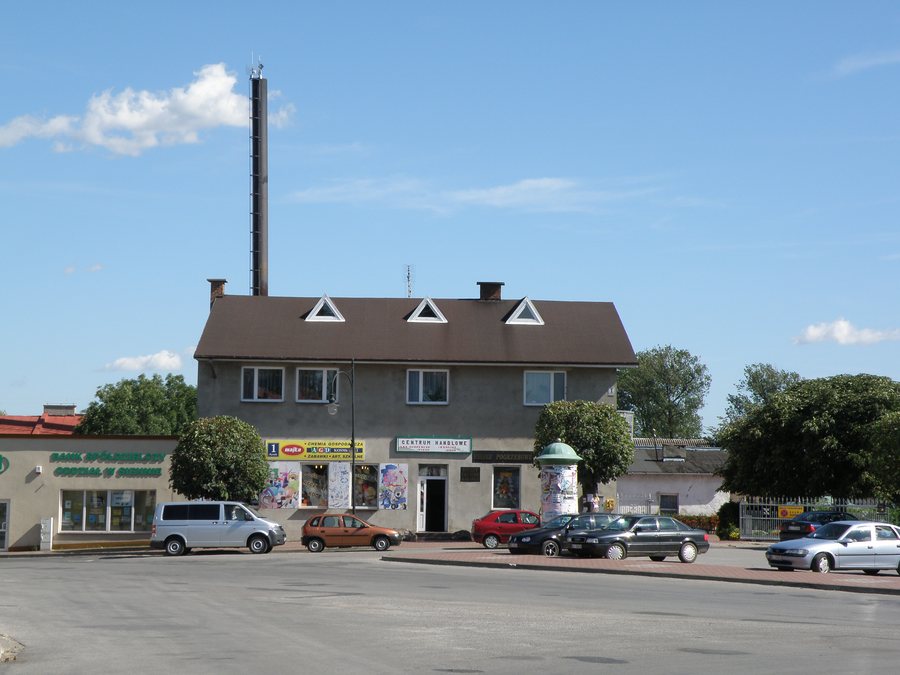 File:Sienno - mazowieckie (14).JPG
Photo: Alina Zienowicz (Ala z) via Wikimedia Commons, CC BY-SA 3.0
File:Sienno - mazowieckie (14).JPG
Photo: Alina Zienowicz (Ala z) via Wikimedia Commons, CC BY-SA 3.0
Sienno at a glance
- Sienno already existed in the mid-14th century.
- The Neo-Gothic Church of St. Sigismund dates from the 15th century.
- The Baroque bell tower dates from the 18th century.
- The Kopiec to the east is a remnant of the Oleśniccy family’s castle.
- The renovated Rynek looks especially beautiful after dark.
Which periods have shaped Sienno’s architectural history?
Sienno already existed in the mid-14th century. The Church of St. Sigismund is Neo-Gothic and dates from the 15th century. The church’s history also includes the independent parish that Dobiesław Oleśnicki founded in 1431. He had a brick church built, which Cardinal Zbigniew Oleśnicki consecrated in 1442.
A foundation plaque from the church’s 15th-century period has been preserved and has historical and artistic value. Together with the dates 1431 and 1442, it offers a tangible glimpse into Sienno’s early church history. The Baroque bell tower marks a later period: it dates from the 18th century. The church and tower can therefore be distinguished by style and century.
What other historical connections can you find in Sienno?
The Kopiec in the eastern part of Sienno is a remnant of the castle belonging to the Oleśniccy, a knightly family from the Dębno coat of arms clan. Alongside the church-related dates, this provides another way to explore the town’s history: through the story of a specific family. When placing Sienno in its cultural and historical context, you can distinguish these connections rather than treating them as a single monument theme.
The renovated Rynek is another attraction and looks especially beautiful after dark. Architectural history, the connection to the Oleśniccy and the landscaped square thus stand out as distinct aspects.
Which music event is associated with Sienno?
The Mazowieckie Spotkania Kapel Podwórkowych in Sienno includes annual performances by courtyard bands from across Poland as part of its programme for the period 2022 to 2027, including Kapela Podwórkowa u Maxa.
How can you include Sienno in your accommodation search?
If you would like to include places of cultural and historical interest in your trip, the church, bell tower, Kopiec and Rynek offer different points of interest. You can first decide whether Sienno matches your interests, then search for hotels in Sienno. Compare the options according to your own requirements.
Discover more destinations: Lipsko, Drezno, Sadkowice, Wodąca, Gmina Ciepielów, Gniazdków, Kochanówka.
FAQ
Which architectural styles can you distinguish in Sienno?
The Church of St. Sigismund is Neo-Gothic; the bell tower is Baroque.
What does the Kopiec in Sienno represent?
It is a remnant of the Oleśniccy family’s castle in the eastern part of the town.
What should you know about the Mazowieckie Spotkania Kapel Podwórkowych?
The Mazowieckie Spotkania Kapel Podwórkowych in Sienno includes annual performances by courtyard bands from across Poland as part of its programme for the period 2022 to 2027. Check the dates in advance.
Go to the broader travel overview: Lipski.

.JPG)