
Discover Stanisławów
Accommodation in Stanisławów
Stanisławów brings together a precisely dated history of its church and buildings with cultural offerings today. The brick church built in 1530, a wooden bell tower, and the monument in the market square provide several historical points of reference. Events and workshops take place at the Gminny Ośrodek Kultury; a private museum nearby adds to the cultural picture. When planning, you can distinguish between local history, cultural activities, and a visit arranged in advance.
Stanisławów: key facts
- The brick church was built in 1530; the parish’s history is dated to 1525 and 1473.
- The wooden bell tower dates from the 18th century; its bell was cast in 1773.
- The monument in the market square was unveiled in 1938 in memory of local residents killed between 1914 and 1920.
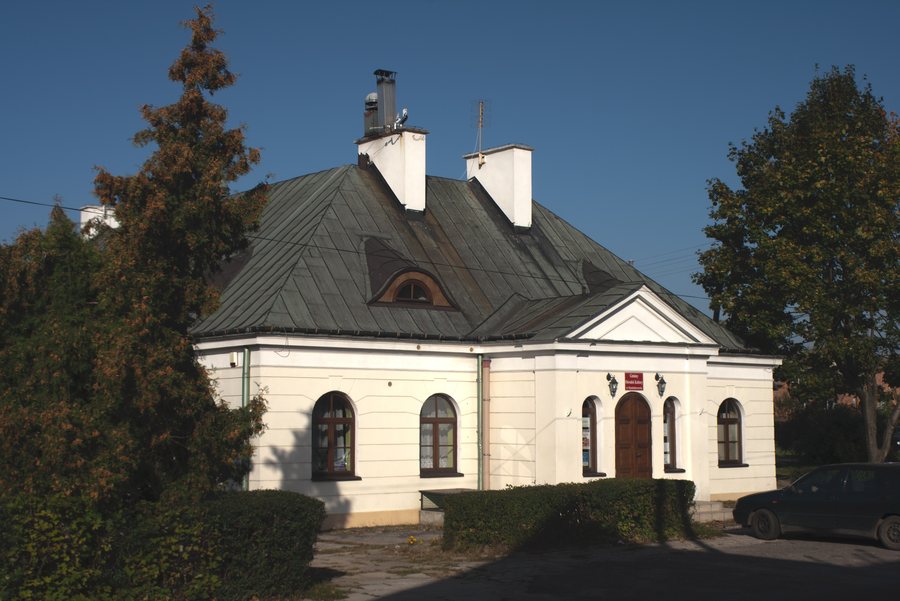
- The rebuilt former inn is now home to the Gminny Ośrodek Kultury.
- The private Muzeum Ziemi Stanisławowskiej is nearby; visits must be arranged in advance.
Which historical landmarks shape Stanisławów?
The different dates associated with the church and parish should be distinguished. The brick Church of St John the Baptist and St Stanislaus, Bishop and Martyr, was built in Stanisławów in 1530. The second parish priest, Stanisław Szymborski, built it using his own funds. The church’s history at that time also includes a hospital for the poor.
The parish was established on 6 October 1525 by Bishop Rafał Leszczyński and, at the request of Janusz, Duke of Masovia, assigned to the Deanery of Liw. Another date gives its establishment as 1473. These dates therefore reflect different historical accounts: 1530 refers to the construction of the church, while 1525 and 1473 appear as differing dates in the parish’s history.
Other architectural and commemorative landmarks add to this timeline. The wooden bell tower dates from the 18th century and was renovated in the 20th century; its bell was cast as early as 1773. In the market square, a monument unveiled in 1938 commemorates local residents killed between 1914 and 1920.
What cultural activities are available in the town?
The former brick inn is now home to the Gminny Ośrodek Kultury (GOK). The building was destroyed in 1944 and rebuilt between 1958 and 1962; it was renovated in 1986 and comprehensively refurbished in 2007. The building’s history thus extends beyond its former use as an inn to its current role as a cultural centre.
The GOK organises outdoor events, concerts, exhibitions, and workshops for children, young people, and adults. Its programme therefore includes both events and hands-on activities. If you would like to include a particular event in your trip, check the GOK’s latest announcements.
What does the nearby museum display?
In Kolonie Stanisławów, nearby and within the municipality, is the private Muzeum Ziemi Stanisławowskiej. Visits must be arranged in advance with the owner. This is an important distinction from a spontaneous visit: arrange your visit before including the museum in your plans.
The museum includes a thatched residential house dating from the turn of the 19th and 20th centuries, relocated from Dłużka, with historical household items inside. Another stop is a partially reconstructed thatched wooden barn from the mid-20th century. Relocated from Michałów, it houses agricultural tools and machinery. Household items and agricultural technology thus form distinct areas of the collection.
Discover more destinations: Starogród, Halinów, Mińsk Mazowiecki, Grebiszew, Dębe Wielkie, Grabina, Łęka, Siennica
FAQ
What year was the church built?
The brick church was built in 1530. The dates 1525 and 1473 refer to different accounts of the parish’s establishment.
What activities does the GOK organise?
The programme includes outdoor events, concerts, exhibitions, and workshops for children, young people, and adults. Check the GOK’s announcements for the latest dates.
What should you know before visiting the museum?
The private Muzeum Ziemi Stanisławowskiej is in Kolonie Stanisławów, nearby. Contact the owner in advance, as visits must be arranged beforehand.
For the wider travel overview: Miński.

