
Góra Kalwaria: Discover culture and history
Accommodation in Góra Kalwaria
Góra Kalwaria offers several ways to explore its history: themed routes, neoclassical architecture, and traces of Jewish life. If you are planning a stay, you can organize these themes according to your interests and decide what you would like to explore more closely.
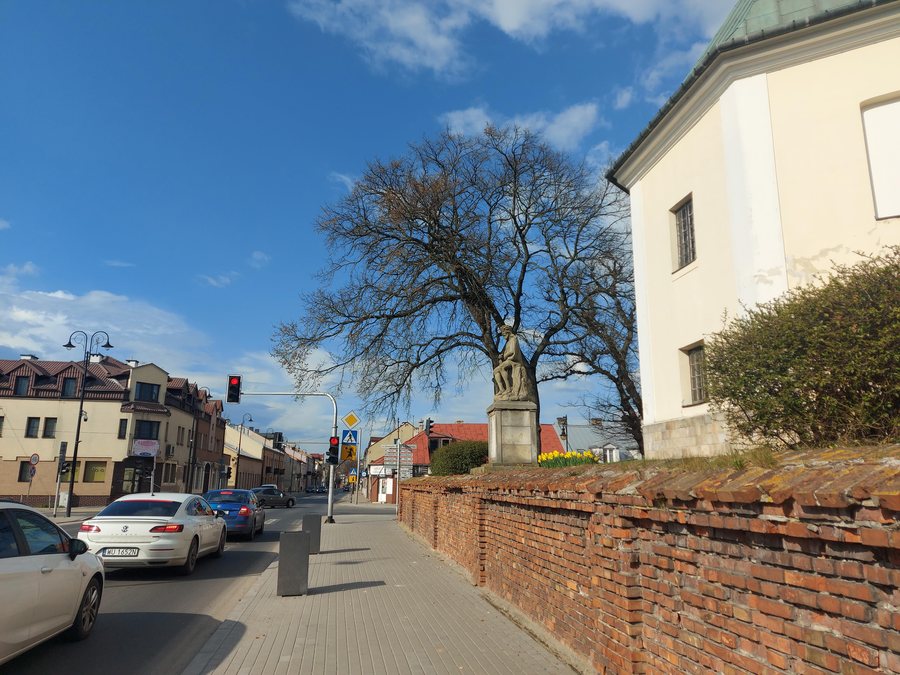 Church of the Exaltation of the Holy Cross in Góra Kalwaria (6)
Photo: Sylwia Botev via Wikimedia Commons, CC BY 3.0 pl
Church of the Exaltation of the Holy Cross in Góra Kalwaria (6)
Photo: Sylwia Botev via Wikimedia Commons, CC BY 3.0 pl
Góra Kalwaria at a glance
- A notice from the municipality in 2021 named four themed routes: covering historic sites, people, places, and events.
- The neoclassical town hall with arcades was completed in 1834; it was designed by Bonifacy Witkowski.
- The Alter family prayer house was built in 1903 for religious study and is not open to visitors.
- The former synagogue was built in the early 20th century and is now used as a shopping arcade.
- The Jewish cemetery was established in 1802; around 400 gravestones remain.
- The Church of the Elevation of the Holy Cross is known as “Na Górce” and houses a wax Pietà.
What themes guide the routes?
The four routes named in the municipal notice are called Szlak Nowej Jeruzalem, Szlak Kultury Żydowskiej, Szlak Formacji Wojskowych, and Szlak Wielokulturowej Góry Kalwarii. Their themes range from Jewish culture and military formations to the town’s multicultural history. This lets you first choose the historical focus that interests you most, rather than giving equal weight to every theme.
The 2021 notice invited people to explore Góra Kalwaria on foot. Check the current signage and condition of the routes locally. Their names help you understand their subject matter; they also make clear that the four routes focus on different themes and should not be understood as a single chapter of history.
Which buildings tell different stories?
At the town hall, architecture and building history take center stage: the neoclassical building has arcades, was completed in 1834, and was designed by Bonifacy Witkowski. The Alter family prayer house, by contrast, is notable for its religious function. It was built in 1903 as a house for religious study and was intended for Jews visiting the tzaddik. Features that have been preserved include round windows with Stars of David and an oven for baking matzah. The building is not open to visitors.
The former synagogue represents a different approach to a historic building: it was built in the early 20th century and is now used as a shopping arcade. This contrast helps you distinguish between original purpose and current use when planning your trip. The prayer house’s visitor restriction is also important; its preserved architectural details nevertheless offer insight into the building’s history.
Which places add to the picture of the town’s history?
The Jewish cemetery was established in 1802. Around 400 gravestones remain there—a rough estimate, not an exact count. At the Church of the Elevation of the Holy Cross, commonly known as “Na Górce,” a local name is paired with a special sculpture: the wax Pietà depicts Mary with the dead Christ on her lap and is described as Poland’s most valuable wax sculpture.
Taken together, the sites differ in their functions and in what they contribute to the story of the town: the town hall and prayer house can be understood through their architecture and original purpose; the former synagogue and cemetery represent other aspects of Jewish life. The church adds the Pietà and its traditional significance to this selection. If you are considering Góra Kalwaria as a cultural destination, you can deliberately focus your stay on architecture, religious history, or the themed routes.
You can also include Kiełbaska in your selection of other destinations.
Discover more destinations: Chojnów, Biały Ług, Borowiec, Jeziórko, Jaroszowa Wola, Złotokłos, Baniocha.
FAQ
Which four themed routes were named?
Szlak Nowej Jeruzalem, Szlak Kultury Żydowskiej, Szlak Formacji Wojskowych, and Szlak Wielokulturowej Góry Kalwarii. The municipal notice in which they were named dates from 2021.
Is the Alter family prayer house open to visitors?
No. The building, which was built in 1903, is not open to visitors.
How many gravestones remain in the Jewish cemetery?
Around 400 gravestones remain.
Go to the regional travel overview: Piaseczyński.

.jpg)