
Tarczyn: Discover the town’s history and fruit growing
Accommodation in Tarczyn
Tarczyn is an important fruit-growing center, with a history reflected in its churches, memorial sites and market square.
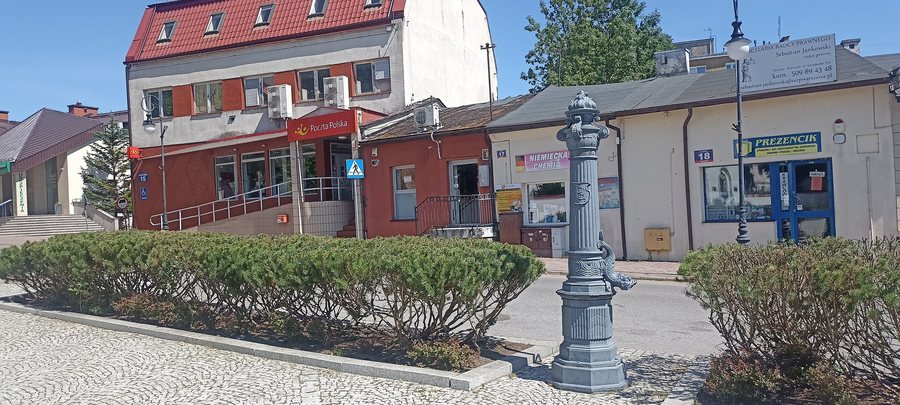
Tarczyn at a glance
- Tarczyn is considered an important center of fruit growing.
- The parish of St. Nicholas was founded in the 14th century; the exact year the church was built is unknown.
- At the market square, a monument commemorates soldiers from Tarczyn who fell in 1920, while a fountain with a stone apple represents the fruit-growing region.
- The historic post office was numbered 11 in the Kingdom of Poland.
What traces of history can you find in St. Nicholas Church?
The history of the parish and church can be understood through several points in time. Although the parish of St. Nicholas was founded in the 14th century, the exact year the church was built is unknown. It was destroyed in the town fire of 1704. Its parish priest at the time, Kazimierz Szczuka, rebuilt it from the ruins ten years later; he later became Bishop of Chełmno.
The chapels also tell a story of change: the Chapel of St. Anne, endowed by Jan and Marianna Mokronowski in the 16th century, was later converted into a vestibule. A Chapel of St. Stanislaus, endowed by parish priest Adam Chełkowski, was demolished. The church has five altars. The Neo-Gothic high altar features an image of the Immaculate Conception, while the other altars are Baroque.
The church complex also includes a 19th-century Neoclassical bell tower. It houses three bells: “Św. Trójca” dates from 1841, while “Maria” and “Mikołaj” date from 1974. Together, the different architectural and decorative details offer several concrete clues to the town’s history, but they do not establish the exact year the church was built.
Which memorial sites shape Tarczyn?
A monument to soldiers from Tarczyn who fell in 1920 stands in the market square. The square slopes gently down toward the Tarczynka valley. There is also a fountain with a stone apple, symbolizing the fruit-growing region. In this one place, a local memorial and an image representing Tarczyn’s agricultural character come together.
A mass grave for insurgents who fell in 1863 is located in the parish cemetery. The Jewish cemetery lies on the outskirts of town. It was destroyed by the Nazis; volunteers later cleaned it over several years and arranged for an enclosure to be built. Only a few matzevot remain. This history is one of the town’s somber chapters and should be considered alongside its architectural and civic memorials.
Irena Sendlerowa’s connection to Tarczyn is also part of the town’s history: she lived there during the interwar period and rescued around 2,500 Jewish children from the Warsaw Ghetto during World War II. The approximate figure matters: it conveys the scale and should not be taken as an exact number.
What does Tarczyn’s character reveal about the town?
Calling Tarczyn an important fruit-growing center gives the town an agricultural context. The stone apple on the fountain reflects this connection as a symbol of the fruit-growing region. The post office is another part of local history: it was among the first post offices in the Kingdom of Poland and was numbered 11. Fruit growing, town history and memorial sites thus offer distinct, clearly identifiable perspectives on the place.
If you are looking for a hotel, you could first consider whether the historical sites or Tarczyn’s agricultural character will shape your trip. To choose a specific hotel, compare the details of the available offers with your personal requirements. The sights and historical context described here provide orientation about the destination, but do not give information about the features of individual accommodations.
Discover more destinations: Baniocha, Kamionka, Jeziórko, Mysiadło, Nowa Iwiczna, Bielawa, Tomice and Jabłonowo.
FAQ
When was the parish of St. Nicholas founded?
The parish was founded in the 14th century. The exact year the church was built is unknown.
What commemorates fruit growing in Tarczyn?
Tarczyn is an important fruit-growing center. The fountain in the market square features a stone apple symbolizing the fruit-growing region.
What is known about the historic post office?
The post office in Tarczyn was among the first post offices in the Kingdom of Poland and was numbered 11.
For the broader travel overview: Piaseczyński.

