
Czerwińsk nad Wisłą: Monastic history and places of remembrance
Accommodation in Czerwińsk nad Wisłą
Monastic history, places of remembrance, and views of the Vistula from the monastery courtyard give Czerwińsk nad Wisłą its distinctive character. Here, culture enthusiasts and travelers interested in the landscape will find striking themes to inform their travel plans.
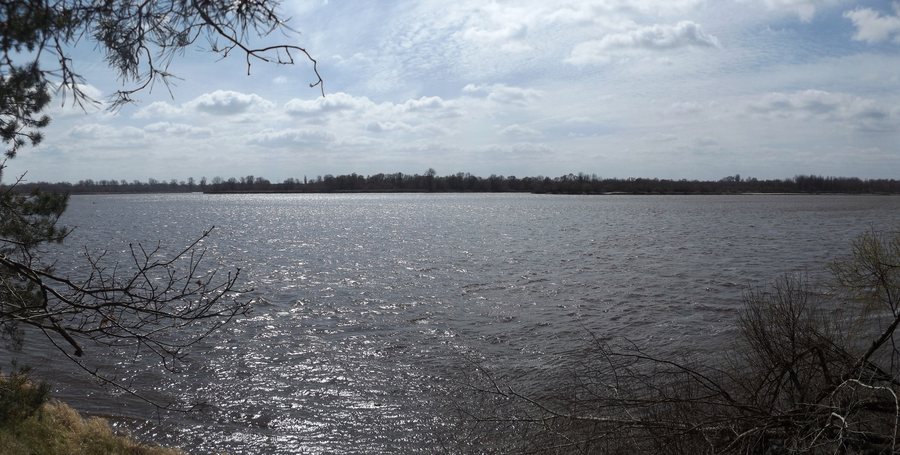 File:Wisła widoczna z nadrzecznej polany śródleśnej, u krańca wąwozu między dawnymi cmentarzami, w lesie w Woli (gmina Czerwińsk nad Wisłą) w 2015 r.jpg
Photo: Photo: VVerka5
File:Wisła widoczna z nadrzecznej polany śródleśnej, u krańca wąwozu między dawnymi cmentarzami, w lesie w Woli (gmina Czerwińsk nad Wisłą) w 2015 r.jpg
Photo: Photo: VVerka5
Key facts about Czerwińsk nad Wisłą
The former provostry of the Canons Regular is considered one of the oldest and most valuable monastic complexes and is recognized as a Polish Monument of History. Two stone obelisks on Plac Batorego commemorate the thousand-year anniversary of the Polish state and the crossing of the Vistula by the army of King Władysław Jagiełło. From the monastery courtyard, the view stretches across the Vistula to the distant Kampinos Forest.
What is the significance of the former provostry?
The former provostry holds an important place in Polish history and in the history of Romanesque architecture and visual arts. It is considered one of the oldest and most valuable monastic complexes. This distinction connects the site with several cultural and historical interests: the history of the abbey, Polish history, and the history of art and architecture. The complex was recognized as a Polish Monument of History in 2021. The designation “former provostry of the Canons Regular” also preserves its historical classification.
What subjects does the monastery museum cover?
A travel account from 2012 mentions collections on the history of Czerwińsk Abbey and an exhibition about the Salesian missions. In that account, two distinct subjects are presented side by side: the history of the abbey and the missions of the Salesians. For travelers with a particular interest in culture, this provides a specific point of reference alongside the former provostry’s historical significance.
What do the obelisks on Plac Batorego commemorate?
The two stone obelisks commemorate two points of reference: the thousand-year anniversary of the Polish state and the crossing of the Vistula by the army of King Władysław Jagiełło. These themes give the square a commemorative dimension that extends beyond the history of the monastery. It is important to consider both commemorations together; they are the specific subjects named for the monuments.
What is the landscape like from the monastery courtyard?
From the monastery courtyard, you can see the broad expanse of the Vistula, with the distant Kampinos Forest beyond it. The river and the forest are not equally close: the Vistula spreads out before you, while the forest lies in the distance. This view adds a distinct landscape dimension to the historical themes. Those considering culture and landscape side by side can see the view from the monastery courtyard as a different motif from the history of the abbey and the monuments.
Which focus suits your travel plans?
The themes can be distinguished by interest: the former provostry leads to the history of the abbey and Romanesque art; the obelisks, to two commemorative references in Polish history; and the view from the monastery courtyard, to the Vistula and the distant forest. If you are looking for a hotel in Czerwińsk nad Wisłą, you can first consider which of these aspects most shapes your travel plans. This lets you choose a focus without combining cultural history and landscape into a single experience.
Discover more destinations: Joniec, Przepitki, Kamienica, Załuski, Drożdżyn, Sobieski, Siedlin, Sochocin.
FAQ
What is known about the history of the former provostry?
It is considered one of the oldest and most valuable monastic complexes and holds an important place in Polish history and in the history of Romanesque architecture and visual arts. It was recognized as a Polish Monument of History in 2021.
What exhibitions are mentioned at the monastery museum?
A travel account from 2012 mentions collections on the history of the abbey and an exhibition about the Salesian missions.
What do the obelisks on Plac Batorego commemorate?
The two stone obelisks commemorate the thousand-year anniversary of the Polish state and the crossing of the Vistula by the army of King Władysław Jagiełło.
What can you see from the monastery courtyard?
From there, you can see the broad expanse of the Vistula and the distant Kampinos Forest beyond it.
To the main travel overview: Płoński.
