
Discover Przysucha: Culture and Nature
Accommodation in Przysucha
Przysucha combines Jewish heritage and museum history with trails and landscapes in the wider area. The places and topics below can help you decide what interests you during your stay and find hotels for your trip.
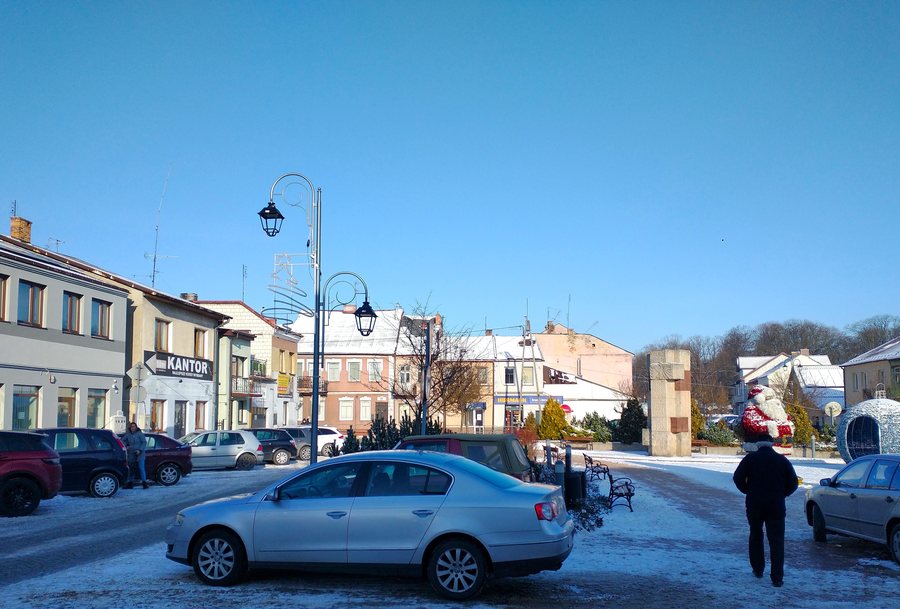 File:MOs810 WG 30 2023 (Oskar Kolberg Square in Przysucha) (2).jpg
Photo: MOs810 via Wikimedia Commons, CC BY 4.0
File:MOs810 WG 30 2023 (Oskar Kolberg Square in Przysucha) (2).jpg
Photo: MOs810 via Wikimedia Commons, CC BY 4.0
Przysucha at a glance
- The “Przysucha-Krakowa Góra” geographical and ecological educational trail is about 8 km long and has nine stops.
- The Oskar Kolberg Museum presents temporary exhibitions on history, ethnography and art.
- The Jewish cemetery in Przysucha dates from the early 18th century; about 20 fragments of gravestones have been preserved there.
- Nearby, Skałki is a woodland area for walks and recreation, about 1 km from the forestry office building in Przysucha.
Which nature and walking experiences shape a stay?
For a stay focused on nature, there are two different points of reference. Skałki is a woodland area near Przysucha, used for walks and recreation. The stated distance is measured from the forestry office building in Przysucha. At about 8 km long and with nine marked stops, the “Przysucha-Krakowa Góra” geographical and ecological educational trail offers a separate way to explore the area on a longer route. It runs through the municipalities of Przysucha and Borkowice. Its approximate length and number of stops give you different reference points for planning, without specifying a walking time.
On a broader municipal scale, the Radomka and Wązownica rivers also shape the landscape; both flow through the municipality of Przysucha. The Lasów Przysuskich woodland complex lies in the southwest of the municipality. There, the “Puszcza u źródeł Radomki” nature reserve protects species-rich woodland with a natural character. These descriptions of the landscape complement the specific walking destinations with a view of the wider region.
Which cultural and historical topics can you explore?
The Oskar Kolberg Museum in Przysucha presents temporary exhibitions on history, ethnography and art. Through its ongoing cultural work, the museum shares knowledge about Kolberg’s life, his research in ethnography and folklore, his musical work and his ties to Przysucha. It is housed in a historic manor house built for the Dembiński family in the second half of the 19th century. A museum visit therefore offers several perspectives: exhibitions, Kolberg’s work and the history of the building.
The city’s Jewish heritage is another topic. The Jewish cemetery dates from the early 18th century. About 20 fragments of gravestones remain today; the oldest dates from 1771. Every year, Hasidim associated with the Przysucha dynasty of tzaddikim make a pilgrimage to Przysucha. The graves of Jaakow Icchak Ben Ascher and Symcha Bunim in the cemetery have become pilgrimage sites for Hasidim.
The wider Przysucha destination also has historic and religious sites. The present-day Church of St. Wojciech in Skrzyńsko was built between 1760 and 1768, funded by Karol Szydłowiecki. It is considered the oldest Marian shrine in the Radom region; it houses an image of Our Lady of Staroskrzyńsko, to which many worshippers make pilgrimages.
What is there for children?
The Oskar Kolberg Museum offers children aged four and above three themed sessions: on legends from the Przysucha area, on the museum and its collection, and on fashion and customs in the historic salon. The educational program for school students also includes age-appropriate ethnographic workshops with folk artists, using original exhibits. Groups should confirm the specific arrangements with the museum.
What does the wider municipality offer?
If you are considering water activities as well as culture, the broader Przysucha destination includes the Topornia Reservoir, which is suitable for swimming and water sports. Check the facilities and conditions in advance if you plan to take part in these activities. The municipality’s tourist infrastructure also includes accommodation and the Topornia and Nieznamierowice reservoirs. Ruski Bród lies in the Garb Gielniowski upland, in a bend of the Radomka River and at the center of the large Lasów Przysuskich woodland complex; the village belongs to the municipality of Przysucha.
When looking for accommodation, you could first consider whether museums and history, a walk in the woods or the wider municipality’s landscape are the main focus of your trip. Discover more destinations: Ossa, Zawady, Wieniawa, Krzesławice, Potworów.
FAQ
How long is the “Przysucha-Krakowa Góra” educational trail?
The geographical and ecological educational trail is about 8 km long and has nine marked stops. It runs through the municipalities of Przysucha and Borkowice.
What historical information is available about the Jewish cemetery?
The cemetery dates from the early 18th century. About 20 fragments of gravestones have been preserved; the oldest dates from 1771.
What museum topics are offered for children?
Children aged four and above can attend three themed sessions: on legends from the Przysucha area, on the museum and its collection, and on fashion and customs in the historic salon. Groups should confirm the arrangements with the museum.
For the main travel overview: Przysucha.

_(2).jpg)