
Wołomin: The Nałkowski House and Historic Summer Residences
Accommodation in Wołomin
Wołomin brings together a distinct chapter of cultural history, memorial sites, and traces of its former role as a summer retreat. This raises one particularly relevant question when choosing where to stay: would you like to explore the city’s history and its past as a holiday destination?
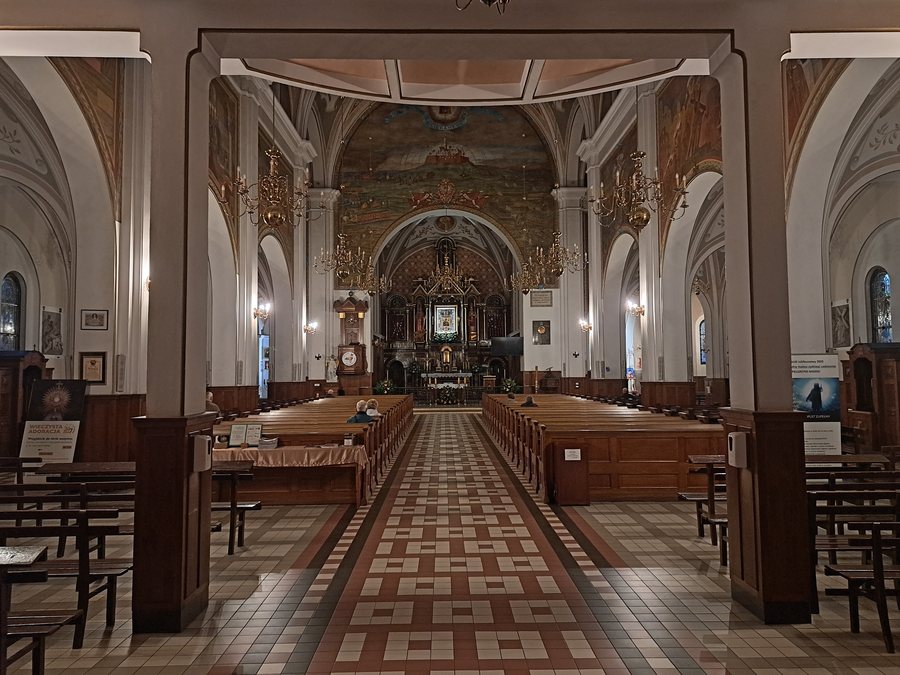 Wołomin Church of Our Lady of Częstochowa - interior
Photo: Olowirnik via Wikimedia Commons, CC BY-SA 4.0
Wołomin Church of Our Lady of Częstochowa - interior
Photo: Olowirnik via Wikimedia Commons, CC BY-SA 4.0
Wołomin at a glance
The Museum of Zofia and Wacław Nałkowski is housed in a wooden summer house built in the late 19th century by Wacław Nałkowski (1851–1911), a prominent geographer and publicist. The house is known as “Dom nad Łąkami” (“House Above the Meadows”). A memorial walk leads to places connected with events and people who shaped the history of Wołomin and Poland. In the interwar period, Wołomin was known for its summer recreation and spa qualities, as well as its distinctive pine microclimate. Some of the summer villas and residences built at that time have survived to this day.
What does the Nałkowski House tell us about Wołomin?
The museum is housed in a summer house whose origins are linked to a specific person and a clearly defined period: Wacław Nałkowski had the wooden house built in the late 19th century. His dates, 1851–1911, and his work as a geographer and publicist give the place a biographical and cultural connection. The name “Dom nad Łąkami” also provides the distinctive name by which the house is known.
What perspective does the memorial walk offer?
The memorial walk draws attention to several places connected with events and people from the history of Wołomin and Poland. This gives it a different focus from a visit to the Nałkowski House: rather than centering solely on a building and a biography, it takes in memorial sites in the context of the history of the city and the country.
What recalls Wołomin’s past as a holiday destination?
In the interwar period, Wołomin was considered an attractive place for recreation and leisure for Warsaw residents. Its reputation at the time was associated with summer recreation and spa qualities, as well as a distinctive pine microclimate.
Some of the summer villas and residences built during this period have survived to this day. They recall Wołomin’s years as a holiday destination and add an architectural trace to the historical story.
If you are looking for a hotel in Wołomin, its historical themes can help you decide what you would like to focus on during your stay. The Nałkowski House offers a cultural and historical connection to Wacław Nałkowski; the memorial walk links places to the history of the city and Poland. The surviving summer villas, in turn, point to Wołomin’s past as a holiday destination.
Find more destinations in Ząbki Ząbki, Słupno Słupno, Kobyłka Kobyłka, Borki Borki, Tłuszcz Tłuszcz, Radzymin Radzymin, Zielonka Zielonka, and Zawady Zawady.
FAQ
What is “Dom nad Łąkami”?
This is the name by which the wooden summer house housing the Museum of Zofia and Wacław Nałkowski is known. Wacław Nałkowski had it built in the late 19th century.
What is the memorial walk about?
It leads to places connected with events and people who shaped the history of Wołomin and Poland.
What recalls Wołomin’s former role as a summer destination?
Some of the summer villas and residences built in the interwar period have survived and recall Wołomin’s past as a holiday destination.
For the broader travel overview: Wołomin.

