
Discover Kobyłka: Church and History
Accommodation in Kobyłka
Kobyłka brings together a striking Baroque church and memorial sites from different eras. If you want to focus on culture and local history during your stay, the Church of the Holy Trinity, the cemetery, and the market square offer concrete points of interest.
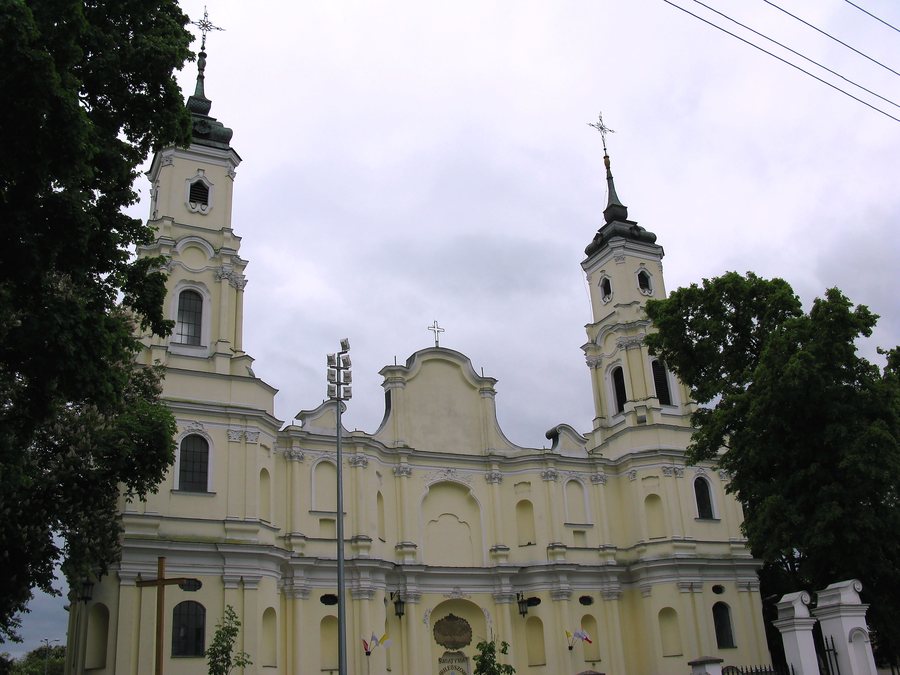 File:Church of Holy Trinity in Kobyłka.JPG
Photo: Maciej Szczepańczyk via Wikimedia Commons, CC BY 3.0
File:Church of Holy Trinity in Kobyłka.JPG
Photo: Maciej Szczepańczyk via Wikimedia Commons, CC BY 3.0
Kobyłka at a glance
- The Church of the Holy Trinity is a Baroque parish church; construction began in 1740 and was completed in its original form in 1763.
- Kobyłka’s market square, near the church, has a rare triangular shape and was once the center of settlement life.
- Local memorial sites include cemetery graves and a chapel in the market square.
- The designated cycling route VeloMazovia, Section I, is 205 km long and starts at Kobyłka Ossów PKP.
What makes the Church of the Holy Trinity special?
The church is a defining part of Kobyłka’s local history. Its late Baroque design is by the Italian architect Guido Antonio Longhi, and construction began in 1740. The Warsaw architect Jakub Fontana continued the work and completed the church in its original form in 1763. Its long construction history thus links two named architects to a clear timeframe.
The brick building is a three-aisled basilica with a rectangular floor plan. Two towers stand on the north façade. The interior features figurative polychrome paintings and decorative drawings. In 2011, the church was elevated to the rank of a minor basilica by decree of the Holy See. It is considered Kobyłka’s finest historic monument. These architectural and historical features give you several concrete aspects to focus on when exploring the building.
What stories do the cemetery and market square tell?
The cemetery has two notable family tomb chapels. The brick chapel of the Matuszewski and Pieniążek families was built in 1837. Its gable bears the Topór and Odrowąż coats of arms. The second chapel, belonging to the Orszagh family, was built from granite blocks in 1927 and designed in the Neo-Romanesque style. The two buildings offer different points of interest: their construction dates, materials, and styles, as well as the family names and coats of arms.
The cemetery also preserves memories of armed conflicts. It contains a mass grave of participants in the Kościuszko Uprising and a communal grave from 1920 for soldiers of the 47th Kresy Infantry Regiment, who defended the Kobyłka area. The penultimate battle of the uprising took place in Kobyłka in 1794. After a fierce five-hour clash, local residents buried more than 400 insurgents in a mass grave and erected a burial mound at a site known as Kąpiel.
The market square adds to this historical picture. The square near the church was once the center of settlement life and has a rare triangular shape. A brick chapel in the square commemorates the 1920 war. This allows you to explore local history, remembrance, and urban form together within a small area.
What is known about Park Podworski and the cycling route?
Park Podworski was created toward the end of the 19th century on the site of an earlier park established by the Jesuits in connection with the church. Valuable trees remain, including an avenue of hornbeams and lindens, as well as a pond. The park is privately owned; check whether access is possible before visiting.
The designated cycling route VeloMazovia, Section I, is 205 km long and starts at Kobyłka Ossów PKP. Check current route conditions before setting off.
Discover more destinations: Cegielnia, Zielonka, Trojany, Marki, Nowe Załubice, Tłuszcz, Wołomin, Borki.
FAQ
What architectural features does the Church of the Holy Trinity have?
The brick Baroque church is a three-aisled basilica with a rectangular floor plan and two towers on the north façade. The interior features figurative polychrome paintings and decorative drawings.
What memorial sites are there in the cemetery?
It contains two family tomb chapels, a mass grave of participants in the Kościuszko Uprising, and a communal grave from 1920 for soldiers of the 47th Kresy Infantry Regiment.
What should you know about Park Podworski?
The park was created toward the end of the 19th century on the site of an earlier Jesuit park. Park Podworski has an avenue of hornbeams and lindens and a pond. It is privately owned; check in advance whether access is possible.
What information is available about VeloMazovia, Section I?
The designated cycling route is 205 km long and starts at Kobyłka Ossów PKP. Check current route conditions before setting off.
For the broader travel overview: Wołomin.

