
Marki: Forests, Rivers and Industrial History
Accommodation in Marki
Marki can be understood in terms of both its historic wool processing and its forests, rivers and fauna reserve. This reveals two distinct areas of interest to consider when planning your trip: industrial history and natural features.
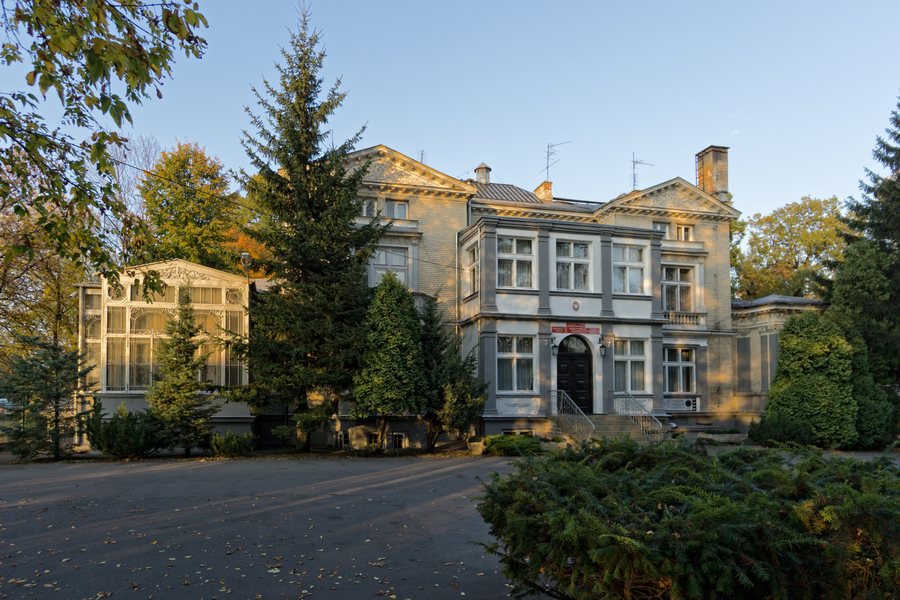
Marki at a glance
Marki lies on the Długa and Czarna rivers, which flow into the Zegrze Reservoir. Forests cover 39% of the city’s area, and the “Horowe błota” fauna reserve lies within the city limits. The “Gajos” oak is 30 metres tall and has a trunk circumference of 630 centimetres. Historically, in 1884, Marki became one of the most modern centres of wool processing in Central and Eastern Europe at the time, thanks to its spinning mills.
What does Marki’s industrial history tell us?
The year 1884 places the development of wool processing in its historical context. The focus is on the spinning mills, built to a design by Edward Lilpop. Three Britons from Bradford—Edward, Alfred and John Briggson—were involved in their construction. This distinguishes two aspects of the factory’s history: its architectural design and the execution of the building project.
The Briggs family residence is also part of this historical context. It was built alongside the factory, and its architect was Antoni Beill. The names and construction details offer a second perspective on Marki’s industrial history: alongside wool processing and the factories, there is the architecture of the residence. Edward Lilpop is associated with the design of the spinning mills, while Antoni Beill is associated with the residence. These details give you specific points of reference if you want to understand the town’s history not only through production, but also through the architects involved.
What natural features shape Marki?
The information about nature covers different scales. The 39% forest coverage refers to the city’s total area. The Długa and Czarna rivers provide another geographical reference point: both flow into the Zegrze Reservoir. Taken together, these details show both a proportion of the land and a connection between the rivers and their named destination.
“Horowe błota” refers to a fauna reserve within the city limits. The “Gajos” oak adds a single natural landmark to these features: it is 30 metres tall, with a trunk circumference of 630 centimetres. These measurements describe two different dimensions of the tree. Forest area, the reserve and the oak thus offer different points of reference for comparing Marki’s natural features.
How can you put these features into context?
The industrial history spans wool processing, the design of the factory and the residence built alongside it; the information about nature ranges from forest cover to a single tree. This comparison helps you avoid reducing Marki to a single theme. When planning your trip, first consider whether you are more interested in the town’s historical development or its varied natural features.
Discover more destinations: Cegielnia, Zawady, Słupno, Borki, Kobyłka, Zielonka, Trojany, Nowe Załubice
FAQ
What was the significance of wool processing in Marki?
In 1884, Marki became one of the most modern centres of wool processing in Central and Eastern Europe at the time, thanks to its spinning mills.
How big is the “Gajos” oak?
The oak is 30 metres tall, and its trunk circumference is 630 centimetres.
Which rivers flow into the Zegrze Reservoir?
The Długa and Czarna rivers flow into the Zegrze Reservoir.
Go to the wider travel overview: Wołomin.

