
Kujau
Accommodation in Kujau
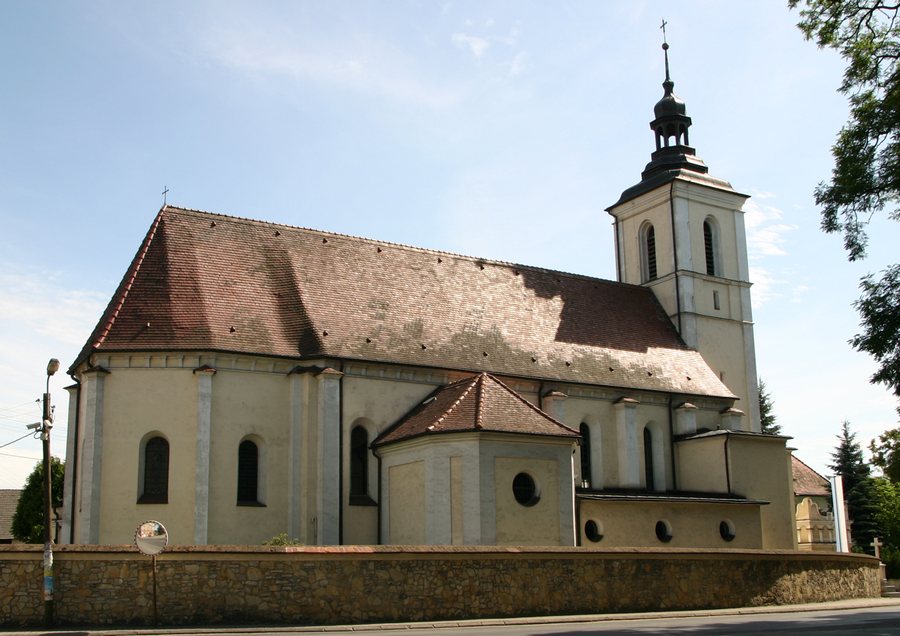
Kujau offers points of interest for travellers interested in architectural and art history, archaeological traces or cycling. The local history of the Church of the Holy Trinity goes back to an early mention of a wooden church; a marked cycling route also passes through Kujau.
Key facts about Kujau
The first mentions of a wooden church in Kujawy date back to 1447. The present-day brick Church of the Holy Trinity was founded in 1583 by the Protestant owners of Kujawy, Baltazar Pückler von Groditz and his wife Poliksena. The two dates therefore refer to different details in the church’s history.
A marked cycling route passes through Kujau and forms part of a 45-kilometre route through the municipality of Strzeleczki and neighbouring municipalities. Other historical points of interest in the village include a palace, four roadside chapels or shrines, and archaeological sites.
What stories do the church and palace tell?
The Church of the Holy Trinity has late Renaissance polychrome paintings dating from the 16th century. The depicted motifs include two angels blowing trumpets with the Arma Christi, the Instruments of Christ’s Passion. The paintings add an art-historical aspect to the recorded details about the early mentions of the wooden church and the founding of the present-day brick church.
The palace also has its own architectural history: it was built after 1900, later extended in the Neoclassical style, and its north wing was added in 1909. This sequence distinguishes the palace’s construction from its later extension. Visitors exploring Kujau for its architectural history can consider both the church’s older history and the palace’s development.
What other historical traces are there?
Two archaeological sites in Kujau are listed in the heritage protection register. A settlement site in AZP area 94-35, site number 10/3, is assigned to the earlier phase of the Early Middle Ages. Another site, AZP area 94-36, site number 13/21, shows settlement traces from the Early Middle Ages, the 9th to 10th centuries, as well as from the Middle Ages, the 14th century. These details refer to different sites and periods.
The gate bell tower in Kujau is also listed in the heritage protection register of the Opole Voivodeship: it is recorded under number 559/59, with an entry date of 24.02.1959. The park in Kujau is also listed there, under number 257/90, with an entry date of 27.06.1990. The village also has four roadside chapels or shrines. These historic and registered features offer culture enthusiasts a range of topics to explore when learning about Kujau.
What should you know about the cycling route?
The cycling route through Kujau is part of a 45-kilometre route through the municipality of Strzeleczki and neighbouring municipalities. This distance refers to the entire cycling route, not just the section through Kujau. If you are considering including this route in your travel plans, this distinction will help you put the stated distance in context. The route offers a second way to explore Kujau, alongside its historic buildings and archaeological sites.
What interests make a stay in Kujau a good fit?
For comparison with other destinations, you can also find Zabierzów, Krapkowice, Zdzieszowice, Kamień Śląski, Rogów Opolski, Gogolin, Moschen and Mallnie.
FAQ
When was the brick Church of the Holy Trinity founded?
The Protestant owners of Kujawy founded the present-day brick Church of the Holy Trinity in 1583.
What is known about the paintings in the Church of the Holy Trinity?
The church has late Renaissance polychrome paintings dating from the 16th century, including two angels blowing trumpets with the Arma Christi.
How long is the cycling route through Kujau?
The marked cycling route through Kujau is part of a 45-kilometre route through the municipality of Strzeleczki and neighbouring municipalities. The 45 kilometres refer to the entire route.
For the broader travel overview: Krapkowice.

