
Discover Niemodlin
Accommodation in Niemodlin
Niemodlin combines a Renaissance heritage at the castle with destinations in nearby Lipno and a region shaped by forests and ponds. This lets you treat culture, cycling and swimming as distinct focuses for your trip.
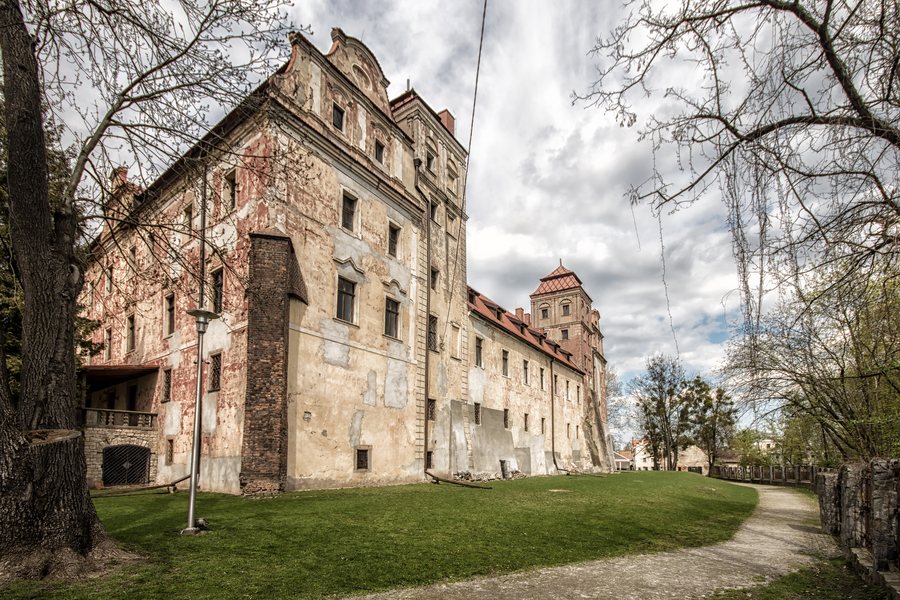
Niemodlin at a glance
- The Renaissance bridge at the castle features statues of Saints Anthony, Florian, Wendelin and John of Nepomuk.
- The castle courtyard hosts knight performances, craft workshops and culinary events.
- The Lipno Dendrological Garden was established around 1783 and covers 4.18 hectares.
- Nearby, the Lipno summer swimming pool offers several pools and other leisure facilities.
- Maps for the “Wokół Niemodlina” cycling route project have been published in several language versions.
What culture can you discover at the castle?
The Renaissance bridge at Niemodlin Castle offers a specific detail to look for in this historic building: its four statues depict Saints Anthony, Florian, Wendelin and John of Nepomuk. If you are interested in sculptures and religious figures, you can look out for these saints by name during your visit.
The castle courtyard is also associated with various types of events. It hosts knight performances and craft workshops, as well as culinary events. Examples include the Etnofestiwal, the “Czas na rybę” cooking competition and the Wojewódzkie Święto Karpia. If you would like to plan your trip around an event, check its dates in advance.
What do the destinations in nearby Lipno offer?
The Lipno Dendrological Garden was established around 1783 by Jan Nepomucen Karol Praschma, the owner of the Niemodlin estates. It is part of the Lipno Nature and Landscape Complex and covers 4.18 hectares. This offers a different focus from the castle bridge: here, the main attraction is a garden within a protected nature and landscape complex.
The nearby Lipno summer swimming pool has a swimming pool, a leisure pool and a children’s pool. Facilities also include a playground, a beach volleyball court, a mini football pitch, table tennis tables and a high ropes course. The pool is operated by the Niemodlin Sports and Recreation Centre and is on the edge of the Bory Niemodlińskie forest. An avenue lined with old linden trees leads to it. If you are making a firm plan to visit the pool, check whether it is open beforehand.
The outdoor pool also has a historical connection: it was built in 1935 as an Olympic training centre, where swimmers trained for the 1936 Olympic Games in Berlin. This history adds a glimpse of its former use to the pool’s present-day description.
What guidance does the cycling route project offer?
A map guide in four language versions and a bilingual map leaflet have been published for the “Wokół Niemodlina” cycling route project. The map guide is available in Polish, Czech, German and English; the leaflet is in Polish and Czech and contains a map and short descriptions of particularly interesting places. The two formats have different focuses: the map guide offers several language versions, while the leaflet combines a map with descriptions of places. These details can help you understand the project and its materials as you plan your trip.
What characterises the region’s landscape?
In the wider travel area, the Bory Niemodlińskie forest lies within the triangle formed by the Oder, the Nysa Kłodzka and the Biała with the Osobłoga. There is a dense network of ponds, particularly in the municipalities of Niemodlin and Tułowice. Sangów is the largest pond in the Opole Voivodeship. These regional landscape features add another aspect to the area’s cultural and swimming destinations; they should not be confused with the individual attractions at the castle or in Lipno.
Discover more destinations: Turawa, Lipowa, Zedlitz, Sosnówka, Stare Siołkowice, Szczedrzyk, Sławice, Łubniany.
FAQ
Which saints are depicted on the Renaissance bridge?
The four statues depict Anthony, Florian, Wendelin and John of Nepomuk.
Which languages are covered by the cycling route materials?
The map guide was published in Polish, Czech, German and English. The map leaflet is in Polish and Czech and combines a map with short descriptions of places.
What is the Olympic history of the Lipno outdoor pool?
It was built in 1935 as an Olympic training centre. Swimmers trained there for the 1936 Olympic Games in Berlin.
Back to the wider travel guide: Opolski.

_2023.jpg)