
Proskau: Castle, Church and Arboretum
Accommodation in Proskau
Proskau brings together historic buildings, garden culture and blacksmithing traditions. If you are looking for accommodation, the different places and experiences can help you choose a destination that suits your interests.
Key facts about Proskau
- The first brick church in Prószków was built in 1578.
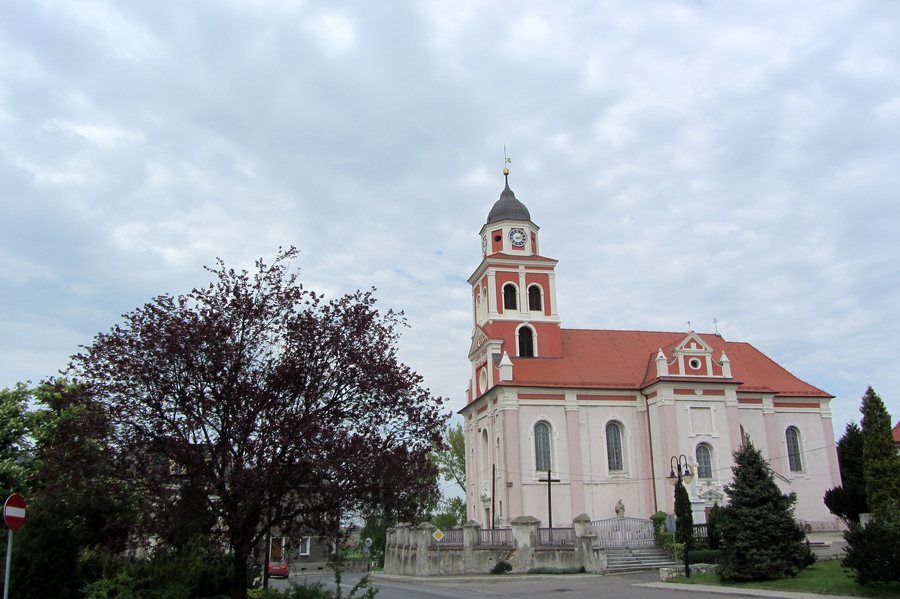
- Reconstruction of the church, which burned down in 1644, was completed in 1687, giving it a Baroque appearance.
- The castle has four wings, a rectangular courtyard and two towers on the front façade.
- The arboretum park was laid out in 1866–1867 and today covers about 15 hectares.
- Traditional blacksmithing techniques are demonstrated at the Kuźnia; it is best to check current arrangements with the operator.
What stories do the church and castle tell?
The church can be understood through several clearly dated milestones. The first brick church in Prószków was built in 1578. During the Thirty Years’ War, troops under Field Marshal Lenart Torstensson burned it down in 1644. Reconstruction was completed in 1687, giving the building a Baroque appearance. The history of the church building thus spans its early brick form and the later influence that shaped it.
The castle’s architecture and surviving features take centre stage. Four wings surround a rectangular courtyard; bastion-like corners and two towers on the front façade are part of its architecture. The exterior façade retains the coats of arms of the Prószkowski family, dating from 1563. The Knights’ Hall contains stucco decorations with plafond ceilings, while the courtyard has a marble fountain basin from the 18th century. This allows you to distinguish the building’s overall form from the specific details on its façade, in the hall and in the courtyard.
What does the arboretum offer, and where is the boardwalk?
The arboretum park in Prószków was laid out in 1866–1867. Its collection includes around 46 oak species; this figure is approximate. Today, the park covers about 15 hectares. Its trees include specimens from China, Manchuria, Japan and Europe. This brings into focus both a collection named for its tree species and the different regions from which the trees originate.
Another natural area lies near the destination: the Staw Nowokuźnicki nature reserve is in Nowa Kuźnia, not in Prószków itself. A wooden boardwalk several hundred metres long runs along the eastern shore. At its end is an observation tower overlooking the densely overgrown pond. Here, the shoreline and viewpoint offer a different way to explore the area from the variety of trees in the arboretum park.
What blacksmithing and cycling experiences are available?
At the Kuźnia w Prószkowie, you can see a blacksmith’s workshop in a condition comparable to workshops from 100 to 150 years ago. The Muzeum Kowalstwa presents demonstrations of traditional blacksmithing techniques. During workshops, participants can touch items made there. If you are planning to attend a demonstration or workshop, check current arrangements and availability directly with the operator.
The municipality of Prószków also invites visitors to take a bike tour to crosses and chapels scattered across its villages, fields and meadows. This perspective on several places in the municipality adds another dimension to the buildings and experiences in the town.
Discover more destinations: Polish New Village, Krasiejów, Lipowa, Stare Siołkowice, Komprachcice, Przysiecz, Chrząstowice, Dębie Hammer.
FAQ
Which milestones shaped the church’s history?
The first brick church in Prószków was built in 1578. After it was destroyed by troops in 1644, reconstruction was completed in 1687; the church was given a Baroque appearance.
Which details have been preserved at the castle?
The exterior façade bears the coats of arms of the Prószkowski family, dating from 1563. Stucco decorations with plafond ceilings survive in the Knights’ Hall, and the courtyard retains a marble fountain basin from the 18th century.
What can you expect at the Staw Nowokuźnicki nature reserve?
In nearby Nowa Kuźnia, a wooden boardwalk several hundred metres long runs along the pond’s eastern shore. At its end is an observation tower overlooking the water.
How can you plan demonstrations or workshops at the Kuźnia?
The Muzeum Kowalstwa presents demonstrations of traditional blacksmithing techniques; during workshops, participants can touch items that have been made. Check current arrangements and availability with the operator in advance.
Back to the higher-level travel overview: Opole Voivodeship.

