
Krasiejów – Fossils, Culture and Forest Landscape
Accommodation in Krasiejów
Krasiejów combines a setting surrounded by extensive woodland in the Mała Panew river basin with a strong focus on paleontology. When planning your trip, it is therefore worth considering which experiences you are looking for: a museum visit, fossils, interactive presentations, family-oriented attractions or a stay at the “Granica” landing site.
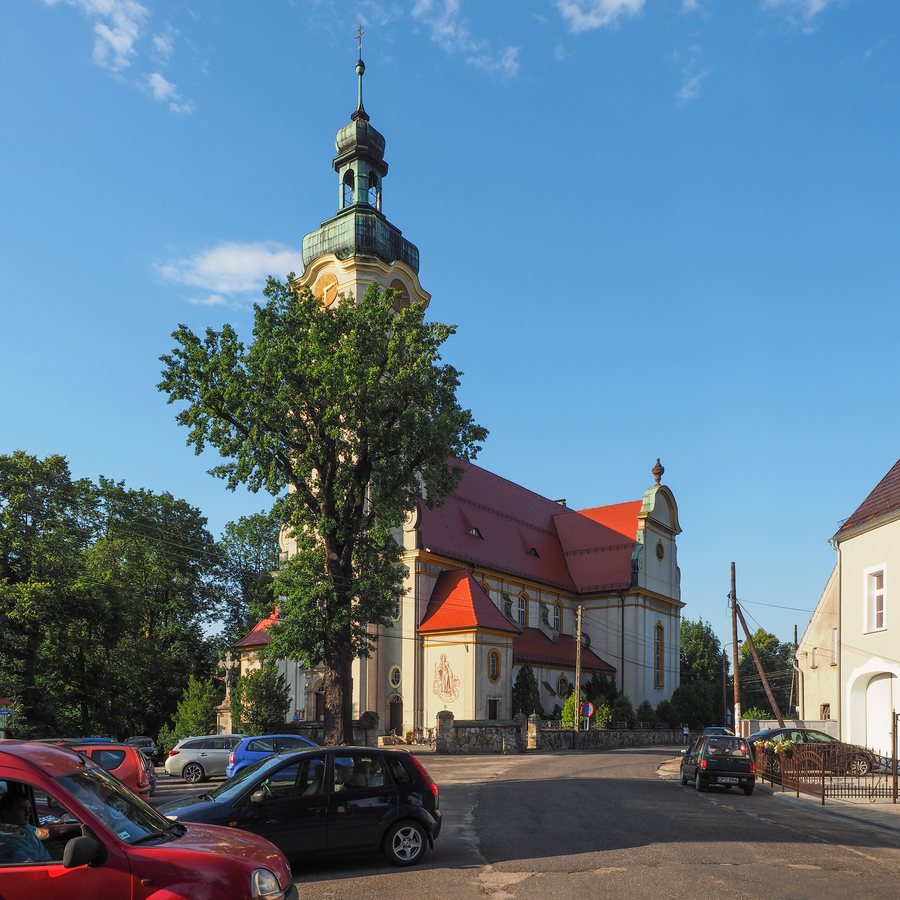
Krasiejów at a glance
The Paleontological Museum is located in the former school building in the centre of Krasiejów. It officially opened on 21 January 2005. At the Paleontological Pavilion, fossils can be viewed through a glass floor; the pavilion houses Europe’s largest collection of Triassic amphibian and reptile fossils. Other attractions mentioned include the JuraPark Krasiejów complex, a Park of Science and Human Evolution, and the historic neo-Baroque St Margaret’s Church, dating from 1912.
Which paleontological experiences suit your interests?
The museum and pavilion have different focuses. The museum is housed in the former school building in the centre of the village. The pavilion is dedicated to fossils: they can be viewed through the glass floor, and its collection includes Triassic amphibian and reptile fossils. If you are particularly interested in these groups of animals and their fossils, you will find a clear thematic connection here.
The JuraPark Krasiejów complex includes an interactive Time Tunnel. The Prehistoric Oceanarium displays life-size models of a megalodon, a mosasaur, a liopleurodon and a plesiosaur. The experiences described therefore differ: the pavilion focuses on fossils, while the Oceanarium features large models of extinct marine animals. JuraPark is described as a family-oriented place for recreation and learning.
What do the science and learning attractions offer?
The Park of Science and Human Evolution uses interactive presentations to illustrate important events in human evolution. Another educational trail, part of the Park of Science and Entertainment in Krasiejów, features life-size models of reptiles, amphibians and dinosaurs. These attractions have different emphases: human evolution is presented through interactive displays, while the trail incorporates animal models.
Scientific camps have also been held regularly at the paleontological excavation site in JuraPark since 2000. Participants research the fossil remains of prehistoric animals.
What other interests can you include in your plans?
The historic neo-Baroque St Margaret’s Church dates from 1912 and adds a distinct cultural dimension to the paleontological attractions. If you would rather focus on nature and spending time outdoors, consider the “Granica” landing site. It has a campsite, a fire pit, a playground, a volleyball court, bicycle racks, and seating and rest areas. These facilities show that there is more to Krasiejów than museums and fossils.
For comparison with other town pages, you can also view information about Bierdzan, Stare Siołkowice, Sosnówka, Lipowa, Niemodlin, Łubniany, Tarnau and Chronstau. When looking for a hotel in Krasiejów, you can use the cultural, fossil and nature themes described here as a starting point for your own travel decision.
FAQ
Where is the Paleontological Museum located?
It is located in the former school building in the centre of Krasiejów.
What can you see at the Paleontological Pavilion?
Fossils can be viewed through a glass floor. The pavilion houses one of Europe’s largest collections of Triassic amphibian and reptile fossils.
Which models are on display at the Prehistoric Oceanarium?
On display are life-size models of a megalodon, a mosasaur, a liopleurodon and a plesiosaur.
For the broader travel overview: Opole Voivodeship.

