
Białystok
Accommodation in Białystok
Białystok offers several reasons to stay: a well-preserved Baroque residence, sites of Jewish heritage, distinctive wooden architecture and a municipal forest complex. If you are looking for a hotel in Białystok, you can first consider which of these sides of the city will shape your trip most.
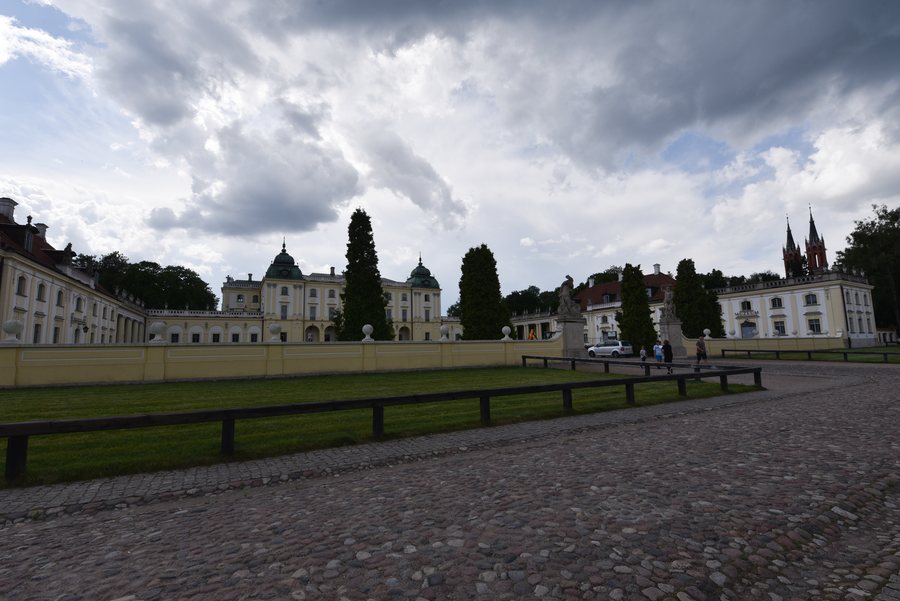 File:Pałac Branickich - wjazd do pałacu od strony głównego wejścia 15.jpg
Photo: Sylwpak via Wikimedia Commons, CC BY-SA 4.0
File:Pałac Branickich - wjazd do pałacu od strony głównego wejścia 15.jpg
Photo: Sylwpak via Wikimedia Commons, CC BY-SA 4.0
Białystok at a glance
Among the city’s defining cultural sites is the Branicki Palace, a well-preserved Baroque magnate residence. Routes lead to sites connected with Jewish history and the Branicki family. Nature and architecture are also part of the picture, including the Las Zwierzyniecki nature reserve and routes highlighting wooden buildings or murals.
What can you discover at the Branicki residence?
Branicki Palace is a focal point for anyone interested in Baroque architecture and the city’s history. The “Polski Wersal” tourist route takes you through the Branicki palace and garden complex. The Branicki family route focuses on sites connected with the lives and work of Stefan Mikołaj Branicki, Jan Klemens Branicki and Izabela z Poniatowskich. The two routes have different focuses: one on the complex, the other on the people and their history.
The “Spacer w przeszłość Pałacu Branickich w Białymstoku” walk brings together several aspects of the palace. It includes exhibitions on the site’s “medical” history dating back to the Branicki era, a multimedia narrative in the palace cellars and selected representative rooms, including the vestibule and the Aula Wielka. The palace also houses the mechanism of one of Poland’s oldest still-functioning tower clocks. The clock can be visited during the tourist season. The Branicki Garden is open free of charge all year round.
Which places tell the story of Jewish history?
The Jewish Heritage Trail leads to places and sites connected with the centuries-long presence of the Jewish population in Białystok. It draws attention to notable figures, initiatives and memorial sites. Alongside the history of the palace, it presents another important historical perspective on the city, which you can take into account when choosing what to visit.
A central memorial site is the Great Synagogue Monument. It commemorates the synagogue, built in 1903–1913, and the events of 27 June 1941: about 800 people were locked inside the synagogue before the building and the surrounding Jewish quarter of Szulhof were set on fire. The site thus commemorates both the building and the people and neighbourhood associated with this history.
Which routes reveal other sides of the city?
The Wooden Architecture Route highlights particularly interesting wooden buildings and cohesive enclaves of wooden construction in Białystok. Those interested in architectural forms will find a different thematic approach here than on the palace routes: the focus is on individual buildings and groups of wooden structures.
Murals are also featured on an official Białystok route. In 2019, a printed map described versions of the route for walking, cycling and travelling by bus. The map therefore documents several ways to explore the subject; this information refers to the versions printed in 2019.
Where can you find nature in Białystok?
The Las Zwierzyniecki nature reserve is part of a municipal forest complex of about 70 hectares near Park Zwierzyniecki. It complements the cultural and historical themes with a natural area within the city surroundings described here. When planning, you can decide whether your stay will focus more on the history of the palace and the city, architectural themes or nature as well.
You can also visit the destination pages for Czarna Białostocka, Wasilków, Mińce, Uhowo, Sokołda, Piećki, Porosły and Łapy.
FAQ
Is the Branicki Garden open all year round?
Yes. The garden is open free of charge all year round.
When can the tower clock in Branicki Palace be visited?
The clock can be visited during the tourist season.
Which versions of the mural route were described?
A map printed in 2019 described versions for walking, cycling and travelling by bus.
To the overview of the wider area: Białostocki.

