
Grajewo: Discover culture and city history
Accommodation in Grajewo
Discover Grajewo from a variety of cultural perspectives: the Muzeum Mleka is devoted to the dairy industry, historic buildings tell the story of the city and its churches, and a seasonal ice rink adds to the attractions on offer.
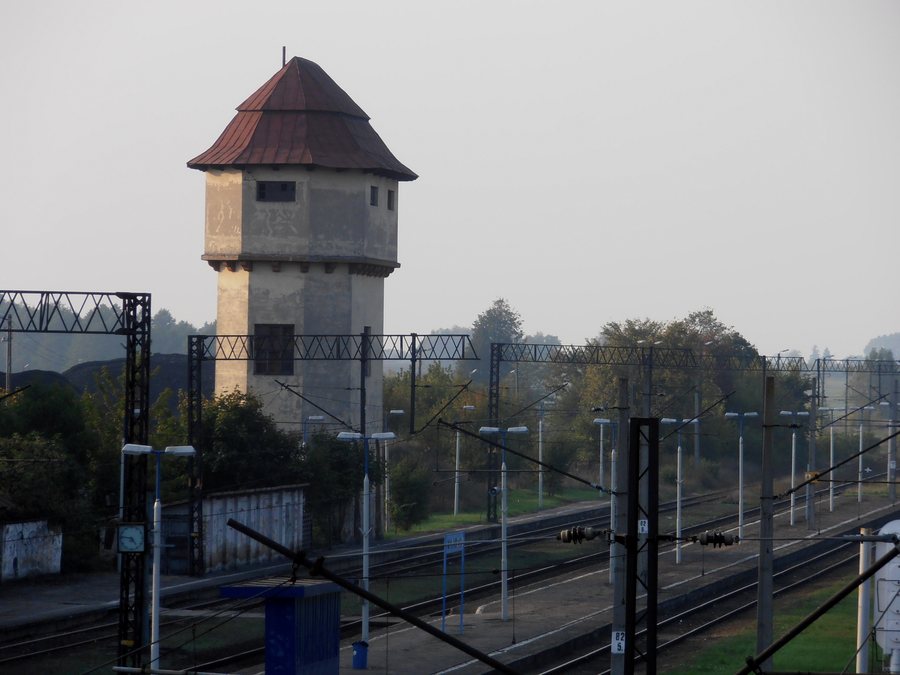 File:Wodociągowa wieża ciśnień w Grajewie 4.JPG
Photo: Emilia.ailime via Wikimedia Commons, CC BY-SA 3.0 pl
Grajewo at a glance
- The Centrum Tradycji Mleczarstwa – Muzeum Mleka was established in 2016 and is intended for adults and children.
- The church in the Holy Trinity parish church complex was built between 1879 and 1882 in the Neo-Gothic style with Neo-Romanesque elements.
- The complex’s Late Classicist bell tower was donated and built in 1837 by Kajetan and Anna Wilczewski.
- The Muzeum Historyczne w Grajewie organizes permanent and temporary exhibitions on cultural history.
- The Miejskiego Ośrodka Sportu i Rekreacji ice rink is seasonal and can be assembled; its area is 416 m².
What does the Muzeum Mleka tell you about Grajewo?
The Centrum Tradycji Mleczarstwa – Muzeum Mleka was established in 2016. Its multimedia design is intended for adults and children. It places a subject at the center that the museum also frames in a regional context: it presents Grajewo and the entire Podlachia region as the “capital of Polish dairy farming.” Those interested in cultural attractions with a distinct regional focus will find a special way to explore the history of milk here.
The stated audience explicitly includes adults and children. This may be relevant when planning if you need to take into account different age groups and interests in your travel party. The multimedia design describes the museum’s format; this is a different aspect from the historic architecture you can discover elsewhere in Grajewo.
What architectural history can you discover in Grajewo?
Different building phases come together in the Holy Trinity parish church complex. The church was built between 1879 and 1882 in the Neo-Gothic style with Neo-Romanesque elements. The Late Classicist bell tower stands at the northwest corner of the surrounding wall. Kajetan and Anna Wilczewski donated and built it in 1837. The church and tower thus represent different, precisely dated periods and styles.
The railway station building also features architectural details: it is a Renaissance building with a decoratively designed platform canopy inspired by Russian or Swiss wooden architecture. Its most valuable interior features include well-preserved cast-iron spiral staircases. These details offer architecture enthusiasts different features to look out for, without reducing the buildings to a single style label.
Another historic building is the preserved Kasyno oficerskie. It is considered tangible evidence of the city’s former barracks complex.
Where can you encounter the history of the city and its residents?
The Muzeum Historyczne w Grajewie, also known as the Grajewska Izba Historyczna, organizes permanent and temporary exhibitions on the tangible and intangible cultural and historical heritage of the residents of Grajewo and the region. This offers a broader perspective on the subject of history: in addition to objects and buildings, intangible heritage is also a focus of the exhibitions. The institution also has a reference library and an archive.
The Grajewska Izba Historyczna makes its materials available completely free of charge to interested individuals and institutions. If you would like to use the collection, check the institution’s rules. The exhibitions are a separate offering: they focus on cultural and historical heritage, while the library and archive are additional resources provided by the institution.
The educational and historical trail “Historyczne Grajewo” focuses on selected buildings and places in Grajewo. Signs featuring historical photographs and information have been installed at these locations. The project thus connects specific places with images and historical explanations, adding another way to explore the city’s history alongside the museum and its architecture.
What should you know about seasonal attractions?
The Miejski Ośrodek Sportu i Rekreacji in Grajewo operates a seasonal, temporary ice rink. It covers an area of 416 m², and the ice layer is 5–7 cm thick. This attraction differs from the museums and historic buildings described as permanent features: its season is a factor to consider when planning. Details may vary, so check the operator’s current information before visiting.
When looking for a hotel in Grajewo, you can use these different points of interest as a guide for your own travel plans: dairy history, exhibitions, historic architecture or a seasonal leisure attraction. Consider which subjects matter to you and compare accommodation based on the criteria that suit your plans.
Discover more destinations: Tama, Rajgród, Kownatki, Konopki, Woźnawieś.
FAQ
When was the Muzeum Mleka established?
The Centrum Tradycji Mleczarstwa – Muzeum Mleka in Grajewo was established in 2016. It features a multimedia design and is intended for adults and children.
What construction dates are documented for the parish church complex?
The church was built between 1879 and 1882. The Late Classicist bell tower at the northwest corner of the surrounding wall was donated and built in 1837 by Kajetan and Anna Wilczewski.
Is the ice rink open year-round?
No. The Miejski Ośrodek Sportu i Rekreacji operates a seasonal ice rink. Check the operator’s current information before visiting.
For the main travel overview: Grajewski.

