
Discover Orzeszkowo
Accommodation in Orzeszkowo
Orzeszkowo brings together a historic memorial site, an Orthodox church and two distinct routes. When planning your trip, it is worth distinguishing between the tourist trail and the cycling route: both are marked in blue, but only one is suitable for cycling.
Orzeszkowo facts at a glance
- On the outskirts of the village is the grave of insurgents who were executed in 1863.
- The tourist trail “Śladami Powstania Styczniowego” passes through Orzeszkowo and continues to the grave.
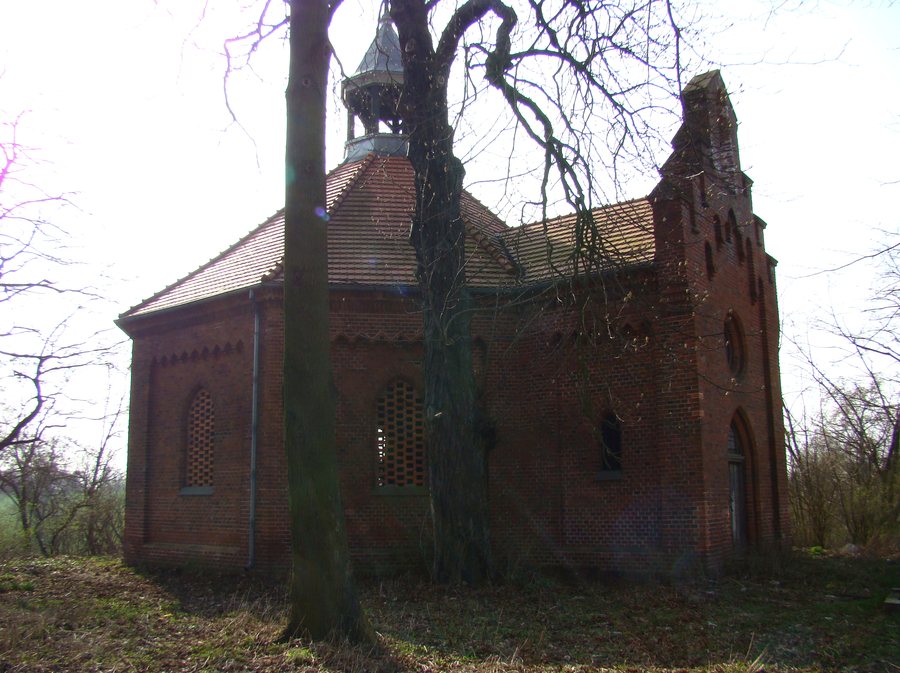
- The Orthodox church pw. Wniebowzięcia Pańskiego is located in the village.
- The Hajnówka–Topiło–Hajnówka cycling route also passes through Orzeszkowo and is marked in blue along its entire length.
How do the routes differ?
The 31-kilometre blue trail “Śladami Powstania Styczniowego” starts in the Judzianka district of Hajnówka, on ul. Warszawska. From there, it runs along Droga Dubińska, crosses the Chwiszczej River and passes through Orzeszkowo, Olszynka and Łozice. In Orzeszkowo, the route continues to the grave of the insurgents executed in 1863, on the outskirts of the village. Important for planning: this blue trail is not suitable for cycling.
The Hajnówka–Topiło–Hajnówka cycling route is a separate route. It also passes through Orzeszkowo and is marked in blue along its entire length. The colour alone therefore does not distinguish the two routes. If you want to travel by bike, the designated cycling route is the suitable choice of the two routes described here; the historic trail is not suitable for bicycles.
Which historic and cultural sites define Orzeszkowo?
The grave on the edge of the village commemorates insurgents who were executed in 1863. It is also a destination on the tourist trail “Śladami Powstania Styczniowego” — here, history and the route meet at a specific place. The Orthodox church pw. Wniebowzięcia Pańskiego is another named landmark in Orzeszkowo. Together, the memorial and the church invite visitors to appreciate the village not just as a point along a route, but also for its history and architecture.
What is included in the wider Hajnowski destination?
The Białowieża Forest is an important landscape feature of the wider Hajnowski destination: it is the most significant forest complex in Hajnowski County and is considered the best-preserved lowland forest in Europe’s deciduous and mixed-forest zone. The Białowieża National Park lies within this forest, in Hajnowski County. The park covers 10.5 thousand hectares and was established in 1921. These are regional features of the Hajnowski destination, not characteristics of Orzeszkowo itself.
The wider Hajnowski destination also includes the “Kraina Puszczy i Żubra” Nordic Walking Park in Hajnówka. It has seven marked routes, equipped with maps, ranging from three to 21 kilometres. One of them, the “Pętla Żubra”, is listed as 15 kilometres long, with an estimated duration of three hours. The routes start at the water park in Hajnówka or at the “Zwierzyniec” car park on voivodeship road 689 between Hajnówka and Białowieża. For these regional routes, check the latest information about the routes and starting points; the stated duration may vary by season.
If you would like to compare more destinations, discover Kleszczele, Lewkowo Stare, Czeremcha, Tarnopol, Nowoberezowo, Trześcianka, Leśna and Siemianówka.
FAQ
Which historic route passes through Orzeszkowo?
The 31-kilometre blue trail “Śladami Powstania Styczniowego” passes through Orzeszkowo and continues to the grave of the insurgents on the outskirts of the village. This trail is not suitable for cycling.
What does the grave on the outskirts of the village commemorate?
It is the grave of insurgents who were executed in 1863.
Which Orthodox church is located in Orzeszkowo?
The Orthodox church pw. Wniebowzięcia Pańskiego is located in the village.
For the wider travel overview: Hajnowski.

