
Sokółka: Culture, History and the Tyzenhauz Trail
Accommodation in Sokółka
Sokółka reveals itself through a range of historical traces: Orthodox church architecture, a museum in an 18th-century building, Jewish heritage and memorial sites. The Tyzenhauz Trail also adds a cross-border route to your travel plans.
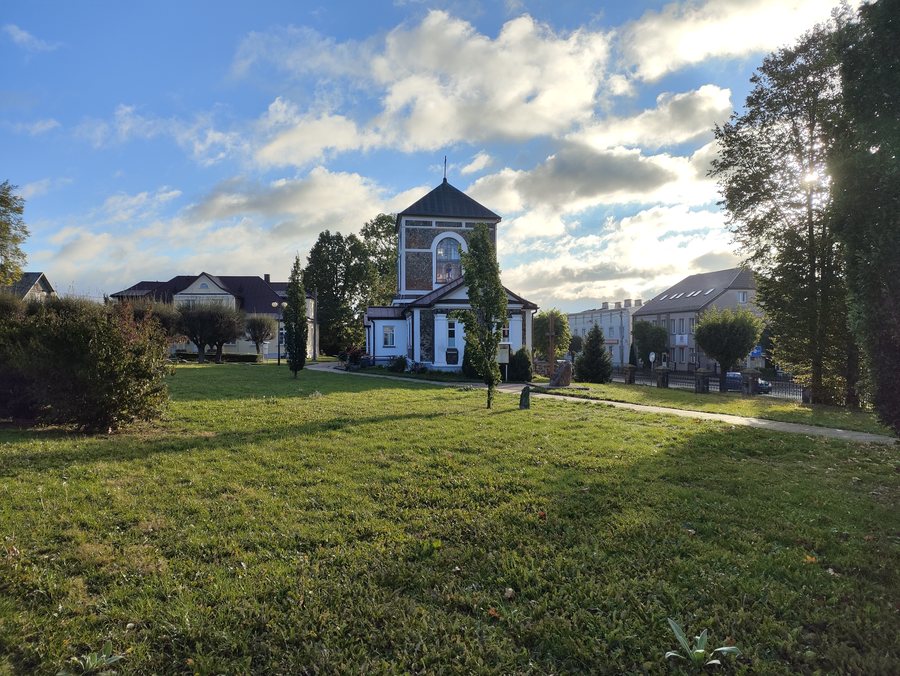
Sokółka at a glance
- The Orthodox Church of St Alexander Nevsky was built in the mid-19th century; visits are possible after contacting the parish in advance.
- The Museum of the Sokółka Region presents historical, ethnographic and Tatar exhibitions.
- The 59-kilometre Tyzenhauz Trail connects Sokółka and Grodno: 26 kilometres run through Poland and 33 kilometres through Belarus.
Which historical traces shape Sokółka?
The Church of St Alexander Nevsky combines several clearly identifiable features: it has five domes, was designed in the Russian-Byzantine style and houses an iconostasis dating from 1905. You need to contact the parish in advance to arrange a visit. This lets you plan your visit ahead of time instead of expecting access without prior arrangements.
Another site of Jewish heritage is the cemetery on Zamenhofa Street. Dating from the 17th century, it is considered the most important historical site of Sokółka’s Jewish community. This designation refers to the city’s community. The cemetery thus complements the church architecture with a different perspective on the history of the place.
The townscape can also be viewed at several scales: Sokółka’s historic centre has an urban layout dating from the 17th and 18th centuries; a historic row of houses has been preserved on Białostocka Street. Sokółka is also home to several woodcarving workshops. Together, these themes offer points of interest for travellers interested in urban history and traditional crafts.
What do the museum and memorial sites tell us?
The Museum of the Sokółka Region is housed in a historic 18th-century building dating from the rule of Antoni Tyzenhauz, Lithuanian court treasurer. Its exhibitions focus on three areas: history, ethnography and Tatar heritage. Temporary exhibitions may change; if a particular display is important to your visit, check what is currently on offer.
At Kamienica Tyzenhauza, Sala Tyzenhauza displays historical costumes and furniture in the style of the 18th century. If you are planning your visit specifically around this exhibition, check in advance whether it will be on display during your visit.
Other memorial sites offer their own points of focus: a memorial stone in the park at Plac Kościuszki commemorates 300 years of Tatar settlement. The monument to the multicultural town of Sokółka stands at the corner of Piłsudskiego and Wróblewskiego streets. The museum and exhibition present collections; the two monuments commemorate Tatar settlement and Sokółka’s multicultural history in the townscape.
What should cyclists know about the Tyzenhauz Trail?
The Tyzenhauz Trail begins in Sokółka and connects the town with Grodno. Of its 59 kilometres in total, 26 are in Poland and 33 in Belarus. This breakdown helps put the cross-border route into perspective; conditions for crossing the border along the route may change. Check the current conditions before planning your route.
The tourist information point in Sokółka is designated as a “Cyclist-Friendly Place” on the eastern Green Velo route. It has a bicycle rack, parking and a rest area. Confirm the current facilities before your visit if you are counting on using them. This helps you weigh the route as a separate focus alongside the town’s cultural and historical attractions.
The church, museum, cemetery and memorials offer concrete points of interest for those interested in culture; the route gives cyclists a separate planning consideration. These interests can guide your search without assuming any particular accommodation or facilities.
If you would like to explore other destination pages for your own travel planning after Sokółka, find information about Kuźnica, Krynki, Suchowola, Małowista, Nowinka, Kruszyniany.
FAQ
How long is the Tyzenhauz Trail?
The route is 59 kilometres long. Of this, 26 kilometres run through Poland and 33 kilometres through Belarus; it connects Sokółka and Grodno.
Can you visit the Church of St Alexander Nevsky?
Visits are possible after contacting the parish in advance.
What does Sala Tyzenhauza display?
Sala Tyzenhauza at Kamienica Tyzenhauza displays historical costumes and furniture in the style of the 18th century. Check in advance whether the exhibition will be on display during your visit.
For the main travel overview: Sokółka.
More destinations
More places within the same destination:

