
Brusy: Culture and Historic Architecture
Accommodation in Brusy
Brusy combines striking historic buildings with Kashubian culture. The church with its two pointed towers, the cultural centre and preserved older buildings offer different points of interest when you compare the town as a destination or a place to stay.
Brusy at a glance
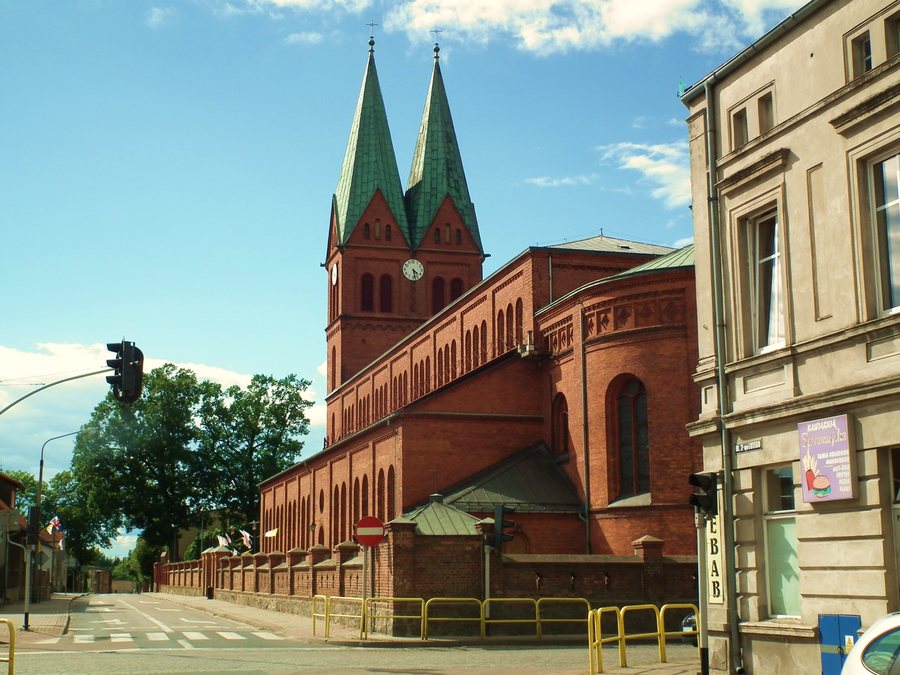
The Church of All Saints (Kościół pw. Wszystkich Świętych) was built from 1876 to 1879 to replace a wooden church that had previously been demolished. It is Neo-Romanesque in style and has three naves. The Jan Karnowski Centre of Culture and Library (Centrum Kultury i Biblioteki im. Jana Karnowskiego) hosts exhibitions, concerts, workshops and author events; its library has a particular focus on Kashubian literature. At the International Folklore Festival, folk groups from around the world perform during the last week of July.
Which historic buildings define Brusy?
The Church of All Saints (Kościół pw. Wszystkich Świętych) brings together several clearly identifiable architectural features: Neo-Romanesque style, three naves and two connected, pointed towers. It was built between 1876 and 1879, on the site of a wooden church that had previously been demolished. This also lets you consider the present-day church in the context of an older place of worship on the same site, without confusing the two buildings.
One of the oldest surviving masonry buildings in Brusy is the house at ul. 2-go Lutego 10. It dates from around 1873; the approximate date is important to note. Another historic residential building is the tenement house at ul. 2-go Lutego 3, which dates from the 19th century. These are two specific examples of older residential architecture in Brusy.
What does the cultural centre offer culture enthusiasts?
The Jan Karnowski Centre of Culture and Library (Centrum Kultury i Biblioteki im. Jana Karnowskiego) offers a range of cultural activities. These include exhibitions, concerts, workshops and author events. It also runs craft workshops that promote Kashubian traditions. The library complements this offer with an extensive collection and a particular focus on Kashubian literature. If you are interested in regional culture, you can explore literature, craft traditions and different types of events.
What other details can help you find your bearings?
Gdańska Street still has its historic cobbled surface. For architecture enthusiasts, it offers a different example of preserved older fabric from the church and the two houses. At the railway station, the station building is part of a red-brick complex built around 1904. The complex also includes two residential buildings and two utility buildings.
If you would like to compare other destinations, you can also find Charzykowy, Parszczenica, Chojnice, Konarzyny, Pawłowo, Olszyny, Rytel and Czersk.
FAQ
What is the design of the Church of All Saints (Kościół pw. Wszystkich Świętych)?
It is Neo-Romanesque in style and has three naves. Two connected, pointed towers are among its defining features.
Which older buildings are mentioned in Brusy?
They include the house at ul. 2-go Lutego 10, dating from around 1873, and the 19th-century tenement house at ul. 2-go Lutego 3.
What cultural activities are available at the Centre of Culture and Library?
The centre hosts exhibitions, concerts, workshops and author events. It also runs craft workshops that promote Kashubian traditions; the library has a particular focus on Kashubian literature.
When do performances take place at the International Folklore Festival?
Folk groups from around the world perform during the last week of July.
For the broader travel overview: Conitz.

