
Discover Leśno: Church and Cultural Route
Accommodation in Leśno
Discover Leśno on a cultural trip through two distinct themes: the Church of the Holy Cross and the “Leśno – Kręgi Kamienne” cultural route south of the village. Sacred wooden architecture and an archaeologically significant cemetery offer different points of focus. This can help you decide which aspect is of particular interest when planning your trip.
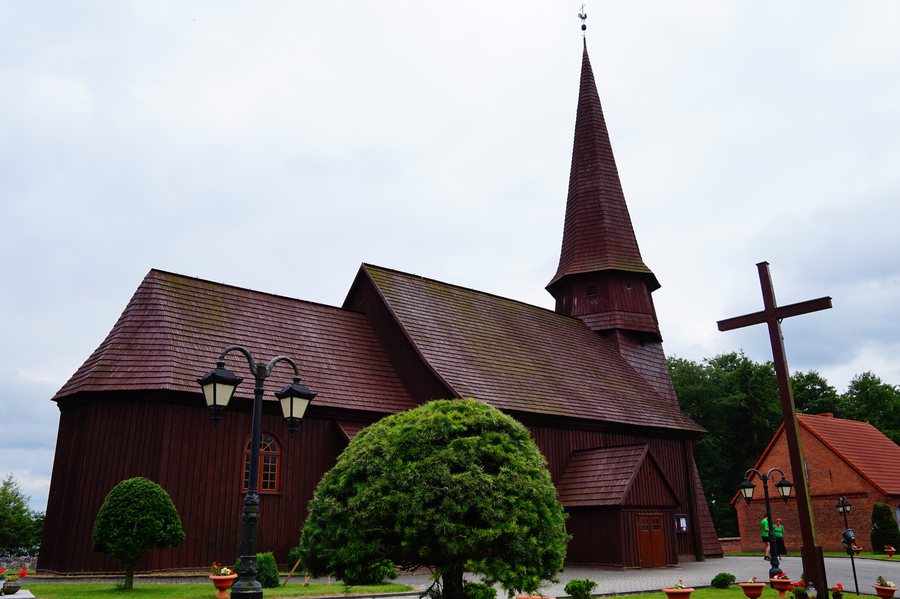 File:Wieś Leśno, pow. chojnicki. Kościół pw. Podwyższenia Krzyża Świętego - panoramio.jpg
Photo: Krzysztof Rakowski via Source, CC BY-SA 3.0
Leśno at a glance
- The Church of the Holy Cross was built between 1634 and 1687 and founded by Queen Maria Ludwika Gonzaga.
- Its present-day architecture took shape over several construction phases; the church is considered an unusual example of sacred architecture in Kashubia.
- The “Leśno – Kręgi Kamienne” cultural route lies about 2.5 km south of Leśno and passes through a multicultural cemetery.
What makes the Church of the Holy Cross distinctive?
The construction period from 1634 to 1687 provides a timeframe for the church, while its foundation by Queen Maria Ludwika Gonzaga adds a historical connection. Its present-day architecture took shape over several construction phases. The building is a monument to sacred wooden architecture and is considered unusual in Kashubia because of its distinctive style.
One specific feature is the three-aisled interior, which is described as rare for small village churches. This links the church’s general architectural character to a clearly identifiable feature of its interior. Those interested in church architecture can distinguish between several aspects: the building’s history, its wooden architecture and its spatial layout.
Which historic furnishings have been preserved?
The furnishings include several items from different centuries. A Baroque Crucifixion group is located on the chancel arch. Also preserved are 17th-century altars, an organ case dating from the early 18th century and a side altar from the mid-18th century in the chancel.
The dates help distinguish the furnishings by period without grouping them into a single phase of construction. They are also located in different parts of the church: the Crucifixion group is on the chancel arch, while the side altar is in the chancel. The church’s architecture and furnishings therefore offer two distinct perspectives: its architectural form and its preserved historic elements.
What is the cultural route south of Leśno about?
The “Leśno – Kręgi Kamienne” cultural route lies approximately 2.5 km south of Leśno. It passes through a multicultural cemetery associated with Bronze Age and Iron Age settlements, including settlements of Scandinavian Goths. This focuses on an archaeological context, while the church highlights sacred architecture and historic furnishings.
This distinction can help with planning: the church is a specific building with architecture developed in several phases and preserved furnishings, while the route connects a cemetery with settlement history from two prehistoric periods. When comparing cultural experiences in Leśno, you can consider whether you are more interested in sacred wooden architecture or archaeological contexts.
Discover more destinations: Męcikał, Parszczenica, Chojnice, Charzykowy, Krzyż, Brusy, Czersk and Rytel.
FAQ
When was the Church of the Holy Cross built?
The church was built between 1634 and 1687. Queen Maria Ludwika Gonzaga is named as its founder.
What is distinctive about the church’s architecture?
Its present-day architecture took shape over several construction phases. The three-aisled interior is considered rare for small village churches; the church is also described as an unusual example of sacred wooden architecture in Kashubia.
What is the “Leśno – Kręgi Kamienne” cultural route associated with?
The route, located about 2.5 km south of Leśno, passes through a multicultural cemetery associated with Bronze Age and Iron Age settlements, including those of the Scandinavian Goths.
For the main travel overview: Chojnice.

