
Leźno: Palace, Park and Church History
Accommodation in Leźno
Leźno’s history combines the development of a palace with park design and the later history of its church and parish. These themes provide a starting point for putting the place in context as you plan your trip.
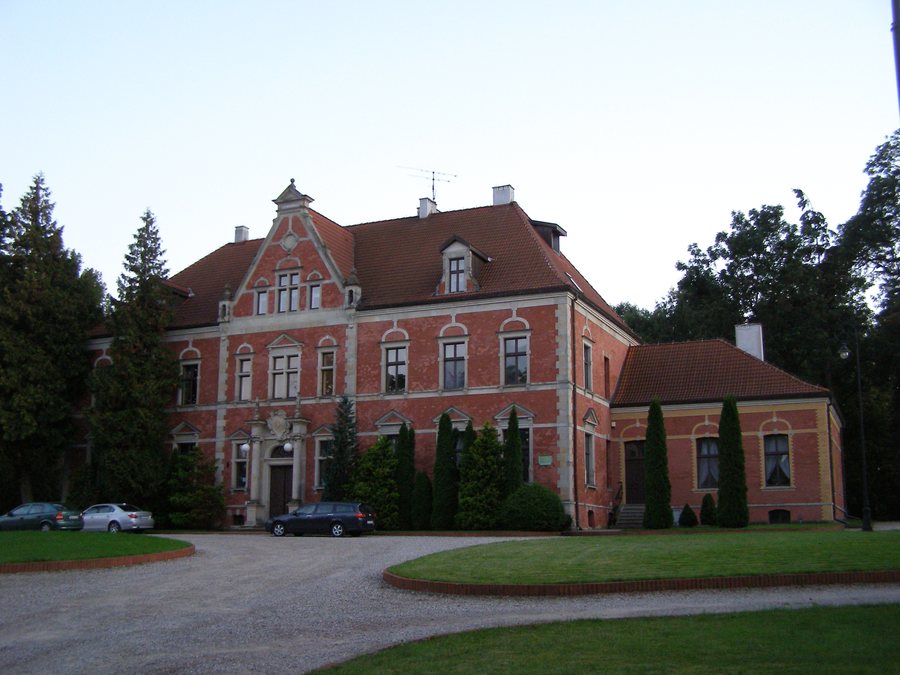
Leźno at a glance
- The palace in Leźno was built between 1720 and 1722 and was surrounded by a small landscaped park.
- In 1884, Georg Hoene had the palace extensively remodelled; as part of this transformation, the landscaped park was redesigned.
- In the park, illuminated paths lead to a dance floor, a gazebo and a barbecue area.
- The Church of Św. Stanisława Biskupa i bł. Karoliny Kózkówny was built between 1985 and 1992.
- The parish in Leźno was established in July 1982.
- A fresco in the church’s presbytery depicts the martyrdom of Saint Stanisław and covers an entire wall.
How did the palace and park develop?
Two dates are important to the palace’s history: its construction between 1720 and 1722 and its extensive remodelling in 1884. Georg Hoene commissioned the later transformation of the 18th-century palace. The landscaped park was also redesigned as part of the same project. The building’s construction and the later changes to the palace and park thus represent different periods in the area’s history.
The small landscaped park that originally surrounded the palace and its redesign in 1884 therefore refer to two different historical details. This distinction helps put things in context: it prevents the early construction period from being automatically associated with the park’s later design. The park features mentioned include illuminated paths leading to a dance floor, a gazebo and a barbecue area. These three destinations give the park description concrete detail: it covers not only the paths but also places for different kinds of activities.
What do the church and parish tell us?
The timeline of the parish and church construction goes back to the 1980s. The parish in Leźno was established in July 1982; the Church of Św. Stanisława Biskupa i bł. Karoliny Kózkówny was built between 1985 and 1992. These details refer to separate stages: the establishment of the parish and the church’s later construction period.
A distinctive interior feature is the fresco in the presbytery. It covers an entire wall and depicts the martyrdom of Saint Stanisław. This links the church’s construction history with a large-scale religious image. For visitors putting Leźno in the context of its cultural history, this offers a different period and focus from the older palace and park history.
How can you choose a hotel in Leźno?
If you’re looking for hotels in Leźno, you can start by considering which cultural focus shapes your travel plans: the palace and park represent the area’s older history, while the church and parish reflect developments in the 1980s. Use this distinction as a guide for your search, then compare accommodation based on your own requirements for your stay.
Discover more destinations: Golubie, Widlino, Nowa Sikorska Huta, Egiertowo, Suleczyno, Borowo, Prokowo, Kczewo.
FAQ
When was the palace in Leźno built?
The palace was built between 1720 and 1722. Georg Hoene had it extensively remodelled in 1884.
What characterises the park’s history?
The palace was surrounded by a small landscaped park. The park was redesigned as part of the 1884 transformation; illuminated paths lead to a dance floor, a gazebo and a barbecue area.
What does the fresco in the presbytery depict?
The fresco covering an entire wall in the Church of Św. Stanisława Biskupa i bł. Karoliny Kózkówny depicts the martyrdom of Saint Stanisław.
For the wider travel overview: Karthaus.

