
Prokowo
Accommodation in Prokowo
Prokowo is characterized by small lakes, wooded hills, and Kashubian architectural styles. The village therefore offers different points of interest to consider when planning your trip: the landscape, a long Kashubian trail, and preserved examples of local design.
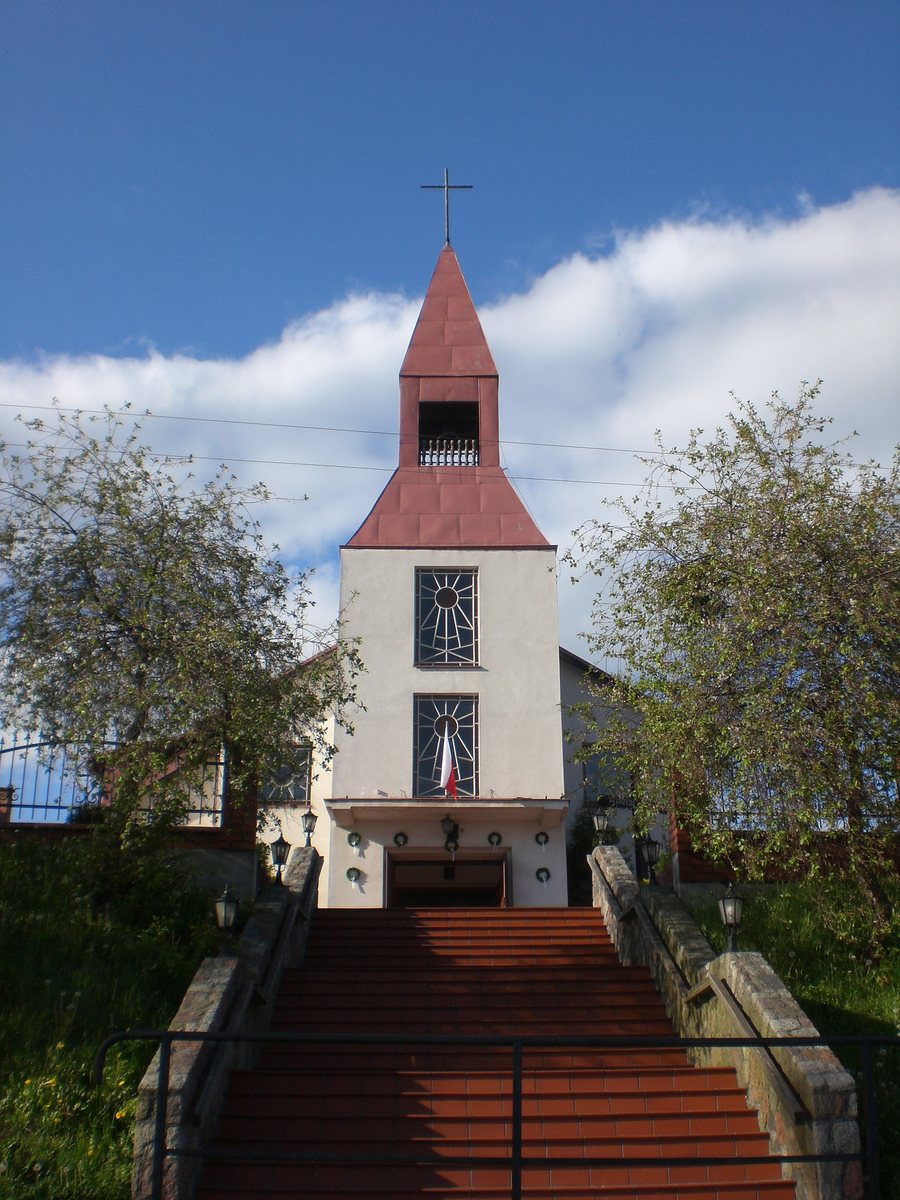
Prokowo at a glance
Prokowo lies beside the small lakes Prokowski and Lityniec in a local valley. The red Kashubian Trail is 139.5 km long and passes through Prokowskie Chrósty, which is now part of Prokowo. The village’s features include a historic square-and-street layout in one part of the village and Kashubian houses with raised knee walls.
What kind of landscape characterizes Prokowo?
Prokowo’s setting combines two named lakes with a wooded valley: Prokowski and Lityniec lie by the village. The valley is surrounded on three sides by a continuous, dense forest. Added to this are the wooded hills and elevations among which Prokowo lies. Water, valley, and wooded heights thus stand out as distinct features of the local landscape.
If you choose destinations based on their landscape, you can consider these features separately: the lakes give the village a connection to the water, while the wooded slopes and hills describe the surrounding natural area. This information concerns Prokowo and its local valley; it does not imply a specific route between the individual landscape features.
How should the Kashubian Trail be understood?
The red Kashubian Trail, known in Polish as Szlak Kaszubski, is 139.5 km long in total. It passes through Prokowskie Chrósty, which is now part of Prokowo. This connects the village with a trail of considerable length, without equating the entire route with the section through Prokowskie Chrósty. If you are interested in trails when choosing a destination, this distance is a specific point of reference; however, it does not indicate the length of any section within the village.
What characterizes the village layout and Kashubian houses?
A historic square-and-street layout is preserved in one part of Prokowo. It includes a small triangular square in the south. The village can therefore also be considered in terms of its spatial layout: alongside individual buildings, the historic relationship between the square and the street structure is a distinct aspect of local design. This description applies to one part of Prokowo, not to the village as a whole.
Kashubian houses also have specific architectural features. These include raised knee walls and half-timbered houses with clay infill. There are also similarly interesting and well-preserved brick houses, likewise with raised knee walls. The different materials make half-timbering with clay infill and brick construction recognizable as two described architectural styles. Anyone interested in regional architecture will find more than one house type to consider when exploring local building traditions.
Which protected habitat is mentioned?
Lake Jezioro Białe is protected in the Natura 2000 site Prokowo PLH220080 as habitat type 3140: a hard-water lake with underwater meadows of stoneworts (Charetea). For travelers interested in protected habitats, this is a specific nature-related point of interest.
If you would like to visit pages for other places in addition to Prokowo, you will also find Przewóz, Ręboszewo, Puzdrowo, Goreczyno, Sulmin, Długi Kierz, Suleczyno and Stare Czaple here.
FAQ
Which lakes is Prokowo located beside?
Prokowo lies beside the small lakes Prokowski and Lityniec.
How long is the red Kashubian Trail?
The red Kashubian Trail (Szlak Kaszubski) is 139.5 km long and passes through Prokowskie Chrósty, which is now part of Prokowo.
What architectural styles are found among Kashubian houses?
The styles mentioned are half-timbered houses with clay infill and well-preserved brick houses with raised knee walls; both have raised knee walls.
For the broader travel overview: Karthaus.

.JPG)