
Discover Konarzyny
Accommodation in Konarzyny
Konarzyny can be explored through three distinct themes: the Roman Catholic Parish of St. Anthony, a nature reserve at Lake Krąg, and municipal information on hiking and cycling routes. For planning your trip, the church chronology, the reserve’s purpose, and the route information offer different points of reference.
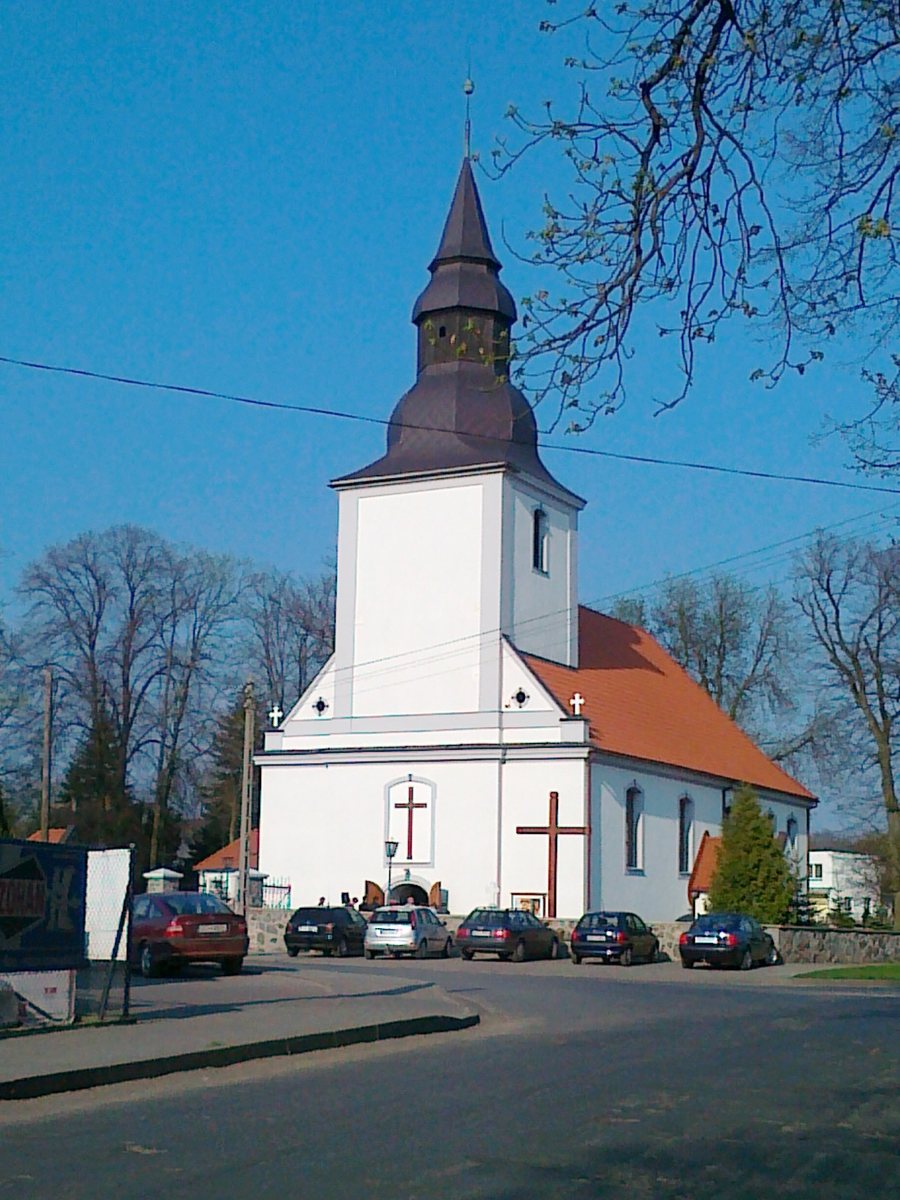 File:Kościół Św. Apostołów Piotra i Pawła - panoramio.jpg
Photo: geo573 via Wikimedia Commons, CC BY 3.0
Konarzyny at a glance
- The Roman Catholic Parish of St. Anthony of Padua belongs to the Zblewo Deanery in the Diocese of Pelplin.
- The parish was established in 1933; the church was built between 1934 and 1960.
- A nature reserve for wading birds and wetland vegetation is located at Lake Krąg in Konarzyny.
- Municipal tourism texts mention hiking routes of 5 and 8 kilometres, as well as a 12-kilometre cycling route.
What story does the Parish of St. Anthony tell?
The parish was established in 1933. Construction of the Church of St. Anthony of Padua followed, from 1934 to 1960. These dates represent two distinct milestones: the establishment of the parish and the period when the church was built. If you are interested in religious history, this gives you a clear chronology of the area.
The parish’s ecclesiastical affiliation is also clearly specified: it belongs to the Zblewo Deanery and the Diocese of Pelplin. This places the historical dates for the area alongside its wider church affiliation. The connection to St. Anthony of Padua and the lengthy construction period give the cultural theme a clearly defined focus.
What does the area around Lake Krąg protect?
The nature reserve protects wading birds and wetland vegetation. Wading birds are bird species associated with shores and wetlands; the second focus is the plant life of wet habitats. This describes the protected features more precisely than the lake’s name alone.
For nature enthusiasts, this focus offers a different way to explore Konarzyny than the history of the parish: here, the emphasis is on birds and wetland vegetation. The nature reserve is located at Lake Krąg in Konarzyny. Its stated purpose helps you understand the area’s natural significance without equating it with a general visit to the lake.
Which hiking and cycling routes are mentioned?
A municipal description from 2003 mentions an unmarked, 5-kilometre hiking route from Stara Kiszewa to Wygonin. An older municipal tourism website also lists an unmarked, 8-kilometre hiking route from Stara Kiszewa to Konarzyny. Both hiking routes relate to the municipality in question.
The same older tourism website mentions an unmarked, 12-kilometre cycling route via Stara Kiszewa and Wygonin to Konarzyny. Comparing the information, the hiking routes differ in length and destination; the cycling route is another option involving a different mode of travel. The distances, endpoints, and mode of travel help you assess the information against your travel plans without treating the routes as the same. Since the descriptions are older, check the current route and signage before setting out.
Discover more destinations: Wiele, Lipuska Huta, Dębogóry, Bartoszylas, Stary Bukowiec, Śluza, Piątkowo, Olpuch.
FAQ
When was the parish established, and when was the church built?
The parish was established in 1933. The Church of St. Anthony of Padua was built between 1934 and 1960.
What does the area around Lake Krąg protect?
The nature reserve protects wading birds and wetland vegetation.
Which hiking and cycling routes are described?
The routes mentioned are a 5-kilometre hiking route from Stara Kiszewa to Wygonin, an 8-kilometre hiking route from Stara Kiszewa to Konarzyny, and a 12-kilometre cycling route via Stara Kiszewa and Wygonin to Konarzyny. The older descriptions identify the routes as unmarked.
For the broader travel overview: Berent.

