
Discover Tiegenhof
Accommodation in Tiegenhof
Tiegenhof, now Nowy Dwór Gdański, combines its location on the Tuga River with cultural sites and the history of the Żuławy region. The Mennonite exhibition, the bascule bridge and the city’s cultural institutions are particularly interesting when planning your trip.
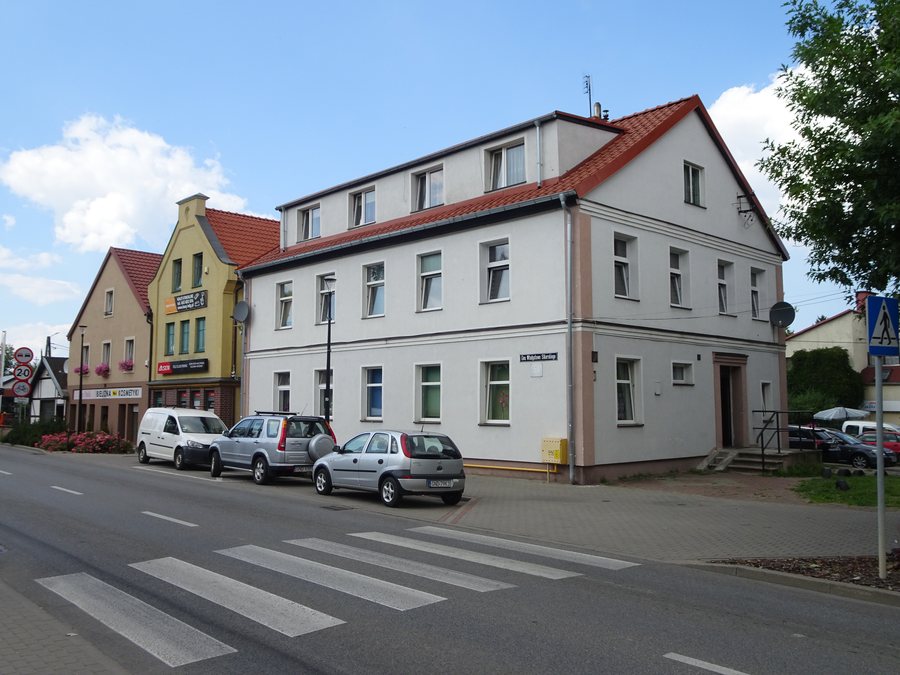
Tiegenhof at a glance
Tiegenhof lies in the area of the Great Żuławy Wiślane, on the Tuga River. The Tuga flows through Nowy Dwór Gdański and is the main waterway in the municipality. Among the city’s landmarks are a bascule bridge built in 1936 and restored in 2019, and a 30-metre-high water tower built in 1909. The Żuławy Museum focuses on the region’s history and houses Poland’s largest exhibition about Mennonites.
What defines the city on the Tuga?
The Tuga is more than a geographical landmark: there is a canoe station on Wejhera Street, along the riverside promenade in Nowy Dwór Gdański. For anyone interested in waterways, it provides a specific local point of reference for planning a trip. The bascule bridge over the river is in the centre of Nowy Dwór Gdański. Built in 1936, it was restored in 2019. Together with the city’s location on the Tuga, it makes the connection between the city and the waterway a theme for a walking tour.
What cultural and historical attractions are there?
The Żuławy Museum is located in the Żuławski Park Historyczny, in a former cheese and dairy building dating from 1902. Its exhibition about Mennonites is the largest of its kind in Poland. The museum therefore offers a specific introduction to the history of Mennonites in the region. The Mennonite Trail in the surrounding municipality includes several historic cemeteries in Orłowo, Stawiec, Marynowy, Różewo and Żelichowo. Numerous stelae, cippi and cast-iron crosses have been preserved there. The cemeteries and their surviving features offer another distinct historical perspective on the subject.
The Żuławski Ośrodek Kultury in Nowy Dwór Gdański hosts workshops, concerts, performances, meetings and art projects. It also operates the ŻUŁAWY cinema.
What other sights and cycling routes are worth noting?
The water tower stands in the city park on Tuwima Street. Built in 1909 and standing 30 metres tall, it is another notable landmark in the city. Machandel’s local history is also part of Tiegenhof’s profile: the Stobbes Machandel distillery was established in Nowy Dwór Gdański in 1776. The famous Machandel juniper schnapps was produced there until 1945.
For cycling travellers, the project status is important: a project envisages the construction of 23 kilometres of cycle paths in the municipality of Nowy Dwór Gdański. These planned routes are part of EuroVelo R-10 and the Wiślana Trasa Rowerowa R-9. For more local pages to help plan your trip, you can also explore Jazowa, Myszewko, Sztutowo, Żuławki, Drewnica, Kobyla Kępa, Nowy Dwór Gdański, Nowa Cerkiew, Mikoszewo, Jantar, Stegna, Krynica Morska and Junoszyno.
FAQ
Where is Tiegenhof?
Tiegenhof lies in the area of the Great Żuławy Wiślane, on the Tuga River; the town is now called Nowy Dwór Gdański.
What does the Żuławy Museum exhibit?
The museum houses Poland’s largest exhibition about Mennonites. It is located in a former cheese and dairy building dating from 1902.
Which cycling routes are planned in the municipality?
A project envisages the construction of 23 kilometres of cycle paths in the municipality of Nowy Dwór Gdański. They are part of EuroVelo R-10 and the Wiślana Trasa Rowerowa R-9.
For the broader travel overview: Pomerania.

