
Kłanino: Palace, Park and History
Accommodation in Kłanino
Kłanino can be explored through its historic ensemble, a large park and several cultural sites. When planning your trip, it is worth looking at the palace’s architectural history, the landscape beside the building and the location of the museum in the town.
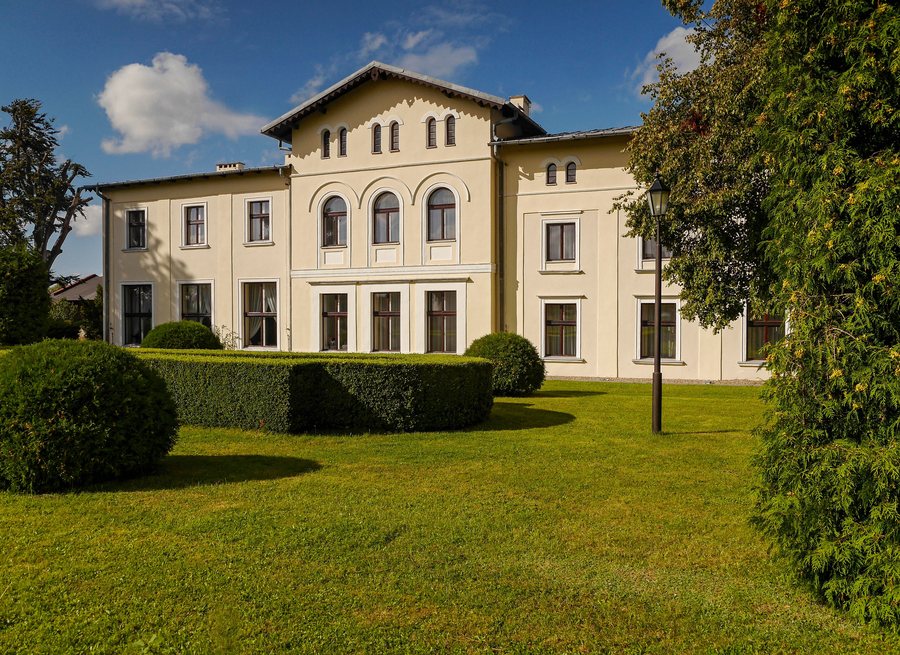
Kłanino at a glance
- The Kłanino palace ensemble includes the palace, the park and buildings of the former manor farm.
- The palace was originally built in the mid-17th century and acquired its present eclectic appearance after a renovation at the end of the 19th century.
- The park beside the palace covers more than 2 hectares; it contains natural monuments and rare trees.
- The Museum of Military Technology and Pomeranian History is based in the Kłanino palace.
What does the palace tell us about the town’s history?
The palace is part of a larger manor complex that includes the park and buildings of the former manor farm. These features give the town a clear historical connection without reducing its history to a single building. Two construction phases are also important for understanding the palace itself. It was originally built in the mid-17th century and acquired its present eclectic appearance after a renovation at the end of the 19th century. Several centuries of local history therefore separate the original building from its later transformation.
A preserved linden avenue leads through a 19th-century gate to the Kłanino palace. Together with the park and former manor buildings, it adds an approach that also points to the historic ensemble. The palace, gate and avenue have a specific spatial relationship: the avenue leads through the gate to the estate. This is a useful reference point if you are interested in historic estates and their design.
What connections are there to nature and the landscape?
A park covering more than 2 hectares lies directly beside the palace. Its features include numerous natural monuments and rare trees, including Japanese arborvitae and ginkgo. The park thus complements the historical focus with a distinct connection to the landscape. The named tree species provide concrete examples of what distinguishes the park; they can also help you connect cultural and nature-related interests when planning your trip.
The linden avenue offers another link between landscape and history: it leads through the 19th-century gate to the palace. The park, avenue and buildings can therefore be viewed as different parts of the same historic setting. The park lies beside the palace, while the avenue leads to the estate. This distinction helps you understand each element, rather than treating them as interchangeable parts of a single complex.
Which cultural sites can you explore in Kłanino?
The Museum of Military Technology and Pomeranian History is based in the Kłanino palace; the museum is also known as the Armoured Museum in Kłanino. If you plan to visit, it is a good idea to confirm its location shortly before your trip.
A historic wayside shrine dedicated to Matka Boska Siewna (Our Lady of the Sowing) also stands on the outskirts of the town. It is on the road towards Świecino and Wejherowo. Its location on the edge of town and its dedication distinguish it clearly from the palace ensemble at the heart of the town’s history: the shrine is a separate historical point of interest that you can locate using the directions given.
How do you choose accommodation for your trip?
When looking for a hotel in Kłanino, first consider which themes matter to your trip: the palace’s architectural history, the park with its rare trees or the museum’s military-history connection. These features describe the town but do not replace comparing individual offers. Check the information about each accommodation and its location when making your choice. If the museum is a fixed part of your plans, confirm again before your trip that it is based in the palace.
Discover more destinations: Słuchowo, Bialogora, Rozewie, Mosty, Karwia, Hel, Osłonino, Minkowice.
FAQ
What is included in the Kłanino palace ensemble?
The ensemble includes the palace, the park and buildings of the former manor farm. A preserved linden avenue leads through a 19th-century gate to the palace.
What is the palace’s architectural history?
The palace was originally built in the mid-17th century. It acquired its present eclectic appearance after a renovation at the end of the 19th century.
Where is the Museum of Military Technology and Pomeranian History based?
The museum is based in the Kłanino palace and is also known as the Armoured Museum in Kłanino. If you are planning a visit, confirm its location before your trip.
To the main travel overview: Puck.

