
Kluki
Accommodation in Kluki
Kluki brings together the history of village life and a landscape of sandy, dry rises and lower-lying, wet areas. The main considerations for planning your trip are the Muzeum Wsi Słowińskiej, Czarne Wesele, and a 39 km hiking trail.
Kluki at a glance
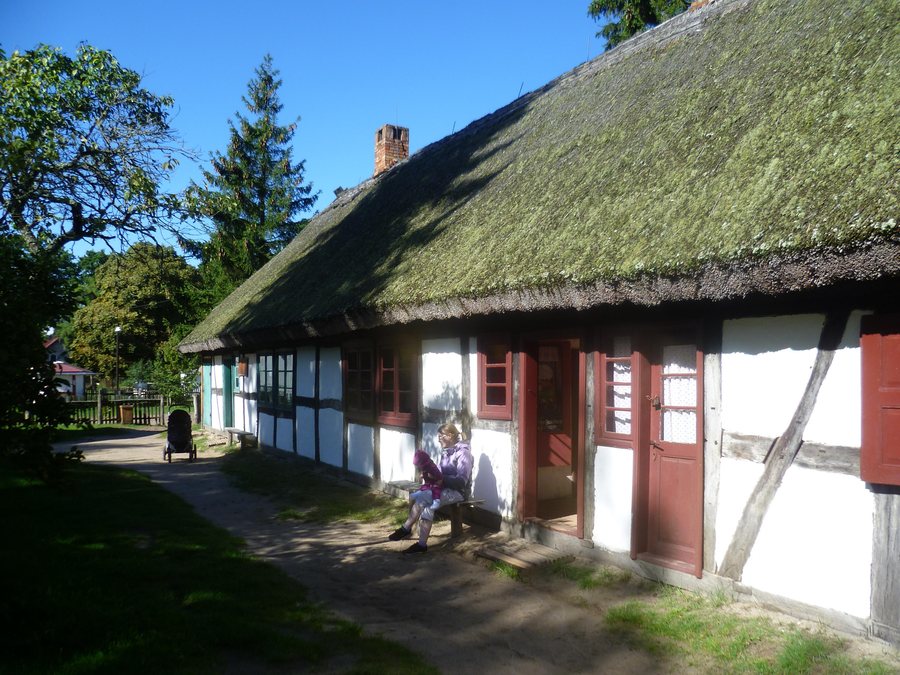
Kluki developed on the southwestern shore of Lake Łebsko. Its settlements are scattered across sandy, dry rises between lower-lying, wet, peat-rich areas. The Muzeum Wsi Słowińskiej presents the lives of former village residents in ten permanent exhibitions, covering the period from the turn of the 19th and 20th centuries to the mid-20th century. Czarne Wesele opens the tourist season in Kluki and has been held there since 1995. A hiking trail runs via Żarnowska, Gać, Izbica, and Kluki to Smołdzino; it is 39 km long.
What can you learn at the Muzeum Wsi Słowińskiej?
The ten permanent exhibitions focus on the lives of Kluki’s former residents. The period covered begins at the turn of the 19th and 20th centuries and continues to the mid-20th century. The museum visit therefore focuses on a clearly defined period of village life, rather than offering a general account of all eras. Visitors can also tour the interiors of residential and farm buildings. Both the exhibitions and the interiors of these buildings are part of the museum visit.
If you are interested in everyday history, the museum offers a different focus from the long hiking trail through several places. The cemetery in Kluki is also part of the place’s history: it is the only surviving Slovincian cemetery. This distinction makes it a cultural point of interest in its own right when exploring Kluki.
What special experiences does Czarne Wesele offer?
Czarne Wesele opens the tourist season in Kluki and has been held there since 1995. During the event, museum visitors can try peat cutting for themselves. This opportunity is specifically tied to Czarne Wesele; it distinguishes the experience from visiting the permanent exhibitions and the interiors of the museum. So if you are interested in the event, it is important to treat it as a separate occasion, rather than as an activity available at the museum at any time.
How do the landscape and hiking trail differ?
The description of the terrain reveals a striking contrast: settlements are scattered across sandy, dry rises, while lower-lying, wet, peat-rich areas lie between them. These features give the landscape around Kluki its distinctive character.
The hiking trail runs along the southern side of Lake Łebsko and leads via Żarnowska, Gać, Izbica, and Kluki to Smołdzino. At 39 km, its length is an important planning consideration. If you are considering Kluki because of this trail, you can take the full stated distance into account when planning your trip; no walking time or level of difficulty is specified. Unlike the museum visit, whose subject and exhibitions are in Kluki, this trail passes through several named places.
What accommodation suits your visit to Kluki?
When looking for accommodation in Kluki, it helps to first decide what you want to focus on during your trip. If the permanent exhibitions and museum interiors are your main interest, you can plan your stay around the history of village life. If peat cutting is what interests you most, Czarne Wesele is the specific occasion to consider. If you want to include the 39 km hiking trail, you should take its full length into account. These different interests can guide your trip planning without assuming any particular accommodation or location.
If you would also like to compare other destination pages, you can find information about Smoldzino, Wodnica, Dębina, Stojcino, Sycewice, Stara Dabrowa K Slupska, Objazda, and Ustka.
FAQ
What does the Muzeum Wsi Słowińskiej show?
In ten permanent exhibitions, the museum presents the lives of Kluki’s former residents from the turn of the 19th and 20th centuries to the mid-20th century. Visitors can also tour the interiors of residential and farm buildings.
How long is the hiking trail through Kluki?
The trail via Żarnowska, Gać, Izbica, and Kluki to Smołdzino is 39 km long and runs along the southern side of Lake Łebsko.
When can museum visitors try peat cutting?
Museum visitors can try peat cutting for themselves during Czarne Wesele. The event opens the tourist season in Kluki and has been held there since 1995.
For the parent travel overview: Słupsk.

