
Skorcz
Accommodation in Skorcz
Skorcz combines a medieval town layout and a Gothic church with several hiking trails that begin in or pass through the town. When planning your trip, the distinction between shorter and longer routes is especially interesting: you can consider trails toward Osiek, an approximately 18-kilometer historical route, or a 25-kilometer loop through forest and lake landscapes.
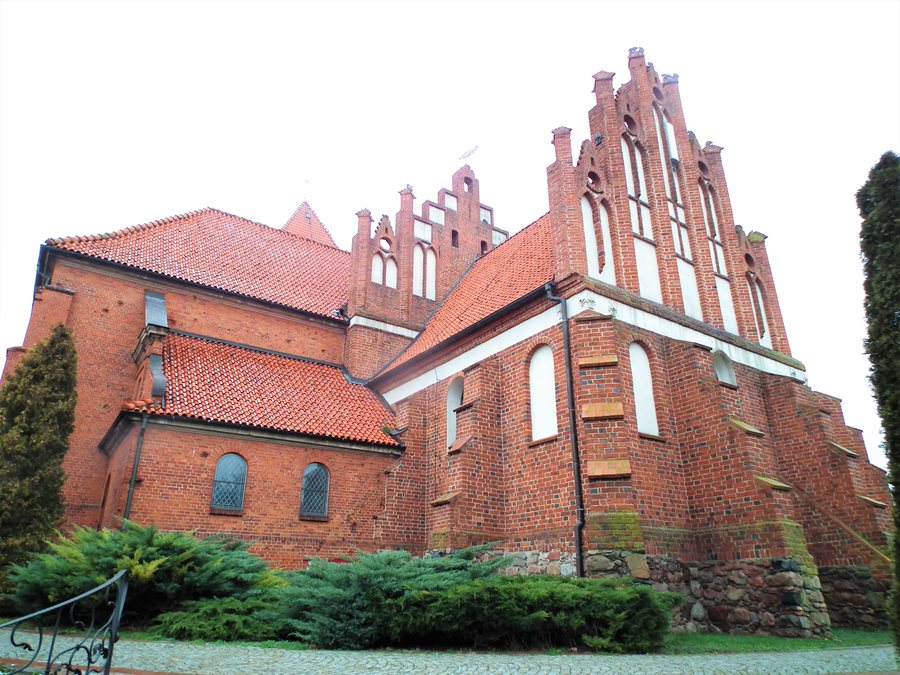
Skorcz at a glance
The medieval urban layout is entered in the register of monuments and has been preserved unchanged since the mid-14th century. The Gothic Kościół pw. Wszystkich Świętych also dates from the 14th century. Several hiking trails begin in Skórcz; their themes range from forest and lake landscapes to the history of the Jania estates. West of the historic town layout is also an area with an early Iron Age settlement, which is under unrestricted archaeological protection.
Which hiking trails begin in Skórcz?
The green PTTK hiking trail “Wzdłuż Jeziora Czarnego” leads from Skórcz to Osiek. Its starting point in town is the former railway station on ul. Dworcowa. Within Skórcz, the trail passes the parish cemetery and the Kościół pw. Wszystkich Świętych, then continues along ul. Główna. After leaving the town, it follows forest paths through the Bory Tucholskie around Jezioro Czarne. The route thus combines a section through Skórcz with a continuation through woodland.
Another hiking route that begins and ends in Skórcz is 25 kilometers long. It runs through forests and alongside numerous large lakes. The named stops and places along the route include the Czarne and Kałębnica foresters’ lodges, the lakes Tuszynek, Słone, and Głuche, Skrzynia, Skorzenno, and Osiek. The 25-kilometer distance and the stops listed give this loop its own character among the hiking trails described.
What do the church and historic trails tell us?
The Kościół pw. Wszystkich Świętych has several clearly distinguishable periods in its construction history. The church dates from the 14th century; the gable between the nave and chancel was built around 1500. In 1927, side aisles were added to the church. Its tower, destroyed in 1945, was rebuilt in 1957. The furnishings include Late Gothic and Baroque pieces.
An approximately 18-kilometer hiking route from Skórcz also explores the area’s history. It begins and ends in town and runs through Barłożno, along the Janka River, and through Kościelna Jania, Stara Jania, and Mirotki. Its focus is the early settlement of the Jania estates, as well as the life and anti-German policies of the Teutonic Order pursued by the knight Jan z Jani. This sets it apart thematically from the trails whose descriptions chiefly highlight forests, lakes, and the route around Jezioro Czarne.
Which route suits your interests?
If you are mainly interested in the landscape, you can consider the 25-kilometer loop with its forests and lakes, or the green trail toward Osiek. For a combination of hiking and regional history, the approximately 18-kilometer route to the Jania estates and Jan z Jani offers a thematic point of reference. The distances given refer to each complete route as described; on their own, they say nothing about walking time or difficulty.
More places in this section: Białachowo, Godziszewo, Nowy Wiec, Suchobrzeźnica, Dunajki, Osiek K Skórcza, Skorzenno and Skarszewy.
FAQ
Where does the green “Wzdłuż Jeziora Czarnego” hiking trail begin?
It begins at the former railway station in Skórcz on ul. Dworcowa and leads from Skórcz to Osiek.
Which hiking route is described as a loop?
The 25-kilometer suburban hiking route begins and ends in Skórcz. It runs through forests and alongside numerous large lakes.
Which route focuses on the history of the Jania estates?
The approximately 18-kilometer route through Barłożno, along the Janka River, and through Kościelna Jania, Stara Jania, and Mirotki covers the early settlement of the Jania estates, as well as the life and policies of Jan z Jani.
For the main travel overview: Preußisch Stargard.

.jpg)