
Przezmark: Castle Ruins and a Lakeside Rest Area
Accommodation in Przezmark
In Przezmark, you can consider two different topics when planning your trip: the castle’s architectural history and the lakeside rest area. The historical details span the castle’s earliest construction through to the surviving structures. The rest area also has facilities for taking a break.
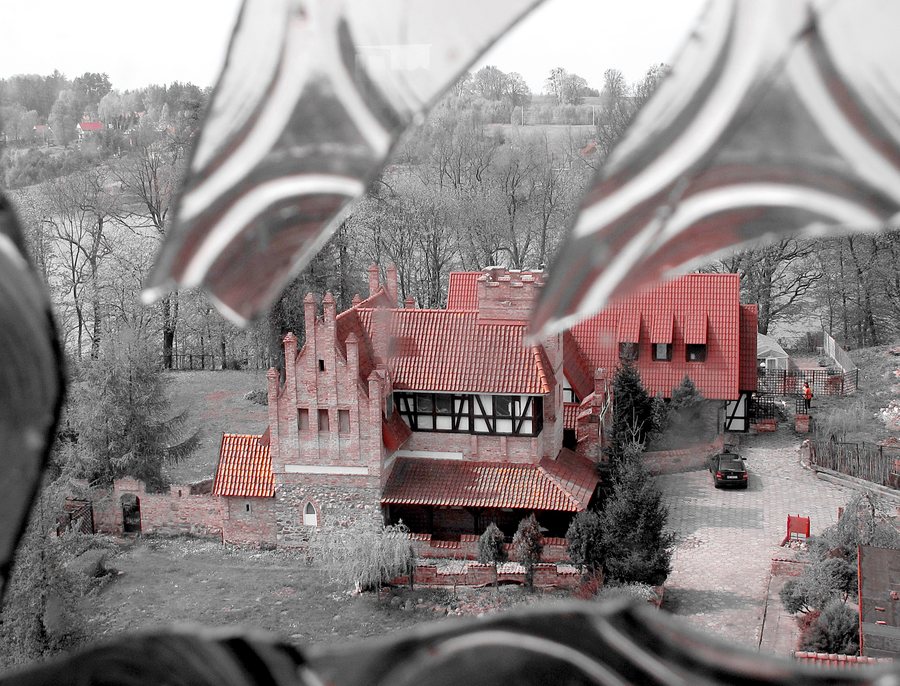
Przezmark at a Glance
- The castle was originally a 13th-century timber-and-earth structure.
- Luter z Brunszwiku, the komtur of Dzierzgoń, converted it into a stone fortress.
- The imposing tower on the outer bailey, remains of the walls, and fragments of the castle buildings have survived.
- A rest area was created by the lake, with a brick-built grill, covered picnic tables with benches, and a playground for children.
How did Przezmark Castle develop?
The castle’s history begins with a timber-and-earth structure in the 13th century. Later, Luter z Brunszwiku, the komtur of Dzierzgoń, converted the castle into a stone fortress. This makes it possible to trace its development through two distinct forms of construction: the original timber-and-earth structure was followed by stone fortifications.
If you are interested in historic buildings, this sequence offers a concrete way to understand the castle. It leads from the early structure to the later fortress, making the change in building material a central part of the town’s history. The conversion to a stone fortress is attributed to Luter z Brunszwiku.
Which parts of the castle have survived?
The imposing tower on the outer bailey has survived to this day; remains of the substantial walls and fragments of the castle buildings are also still there. The tower is considered the castle’s most distinctive architectural feature. In addition, remains of the substantial walls and fragments of the castle buildings can be seen. When exploring the ruins, you can distinguish three different features: the prominent tower, the wall remains, and the building fragments.
This distinction adds a second perspective to the castle’s history. The timber-and-earth structure and the later conversion describe how the castle developed; the tower, walls, and building fragments identify the surviving architectural elements. If cultural history is a particular interest of yours, you can use these tangible features as a guide rather than viewing the castle solely through the lens of one historical building phase.
What does the lakeside rest area offer?
A rest area was created by the lake in Przezmark, with a brick-built grill, covered picnic tables with benches, and a playground for children. Its facilities combine a place to sit with a grill and amenities for children. The rest area thus adds another aspect to your trip planning alongside the castle’s history: the focus is on the lakeside facilities, not the castle’s historical development.
If you would like to include the rest area in your plans, check the condition of the facilities before your visit. The rest area also has a playground for children. The covered picnic tables with benches and brick-built grill are also listed features of the rest area, and you can take their condition into account in advance.
How can you use these topics when looking for accommodation?
First, consider which aspect matters more to your trip: the castle’s architectural history or the facilities at the lakeside rest area. This can help you prioritize your interests in Przezmark before searching for a hotel. These two topics provide an overview of the town; when choosing a hotel, you can then base your decision on your own accommodation requirements.
Discover more destinations: Stary Dzierzgoń, Kiersity, Sztumskie Pole, Górki, Zajezierze, Dzierzgon, Stanowo, Sztum.
FAQ
What was the castle originally built from?
It was originally a 13th-century timber-and-earth structure.
Who converted the castle into a stone fortress?
Luter z Brunszwiku, the komtur of Dzierzgoń, commissioned the conversion.
What facilities are there at the lakeside rest area?
The rest area has a brick-built grill, covered picnic tables with benches, and a playground for children. Check the condition of the facilities before your visit.
To the main travel overview: Stuhm.

