
Bolszewo: Discover the Park, River and History
Accommodation in Bolszewo
The park and river, kayaking facilities and historic sites shape Bolszewo’s character.
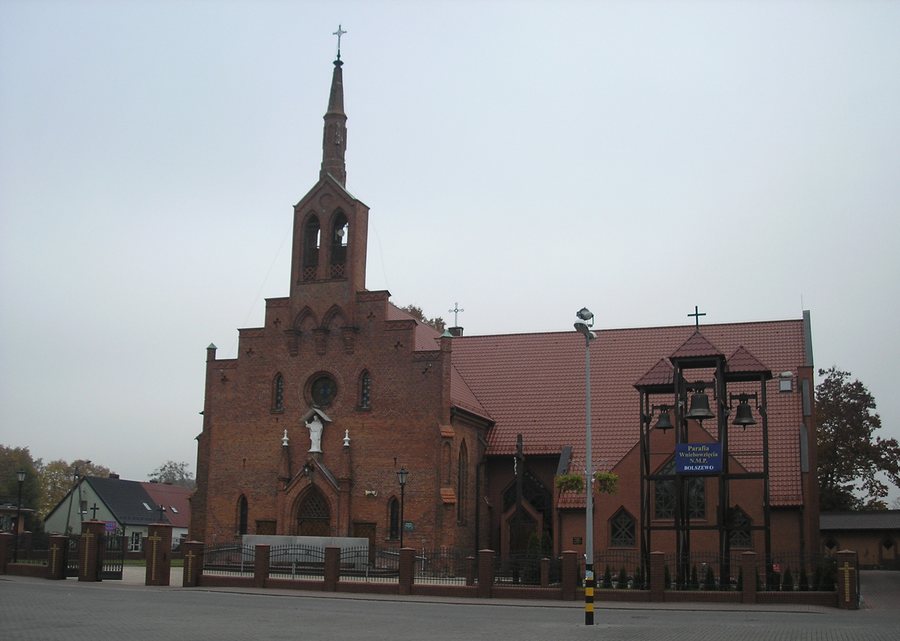 Church of the Assumption of the Blessed Virgin Mary in Bolszewo
Photo: Michael Tav via Wikimedia Commons, CC BY-SA 4.0
Bolszewo at a glance
The Bolszewka flows through Bolszewo and is a tributary of the Reda. The park of the manor house and park complex covers 2.77 hectares. A 768-metre foot and cycle path connects Bolszewo with Orle and was opened for use after completion. The parish church, “kościół par. pw. Wniebowzięcia NMP”, dates from 1857. The Jewish cemetery was established in the 18th century and is located on the so-called Żydowska Górka.
What leisure activities shape Bolszewo?
The park of the manor house and park complex offers space for relaxation, sport and leisure activities. Those who want to include different kinds of exercise in their travel plans will find both a foot and cycle route and kayaking facilities in Bolszewo. The route to Orle is 768 metres long, providing a specific destination for a walk or cycle ride. The kayaking facilities offer a different focus.
The public kayak station has a landing stage, storage spaces, kayak dryers, a fire pit, and tables and benches. The Flisaka kayak landing has a landing stage and steps. A 2022 report by the regional tourism authority also names the ArtPark entertainment centre in Bolszewo as a possible stop on kayaking trips.
What historic and natural features are there?
The manor house and park complex dates from the late 19th century or the turn of the 20th century. The parish church dates from 1857; the Jewish cemetery was established as early as the 18th century.
Natural features include legally protected English oaks designated as natural monuments. Check the specific protection status before visiting. The Bolszewka is another distinctive feature of the area: it flows through Bolszewo and is a tributary of the Reda.
What cultural attractions does the wider destination of Neustadt offer?
The wider destination of Neustadt includes further cultural attractions in Wejherowo. The Muzeum Piśmiennictwa i Muzyki Kaszubsko-Pomorskiej was founded there in 1968. It is a treasure trove of regional artefacts and a centre of Kashubian culture, especially the Kashubian language. The Książnica prof. Gerarda Labudy in Wejherowo presents a permanent exhibition on the history of the Kashubians.
The Muzeum Piaśnickie in Wejherowo commemorates the victims of the Pomeranian crimes in a permanent exhibition spread across two floors, using the Piaśnica crime as an example. Relics of the Piaśnica crime are displayed in the basement. These cultural attractions add to the picture of Neustadt; Bolszewo’s own character, by contrast, is shaped by features including the manor house and park complex, the Bolszewka and the historic sites in the village.
How do you choose Bolszewo as a place to stay?
To decide whether Bolszewo suits your trip, you can compare your interests with the area’s different features: the park and natural monuments offer a different focus from the kayaking facilities, the route to Orle or the historic sites. If you are looking for hotels in Bolszewo, compare specific offers based on location and the criteria that matter for your trip.
Discover more destinations: Lewinko, Linia, Reda, Kopalino, Osetnik, Wejherowo, Nadole, Sasino.
FAQ
What does the park of the manor house and park complex offer?
The park covers 2.77 hectares and offers space for relaxation, sport and leisure activities.
Is there a foot and cycle path from Bolszewo to Orle?
A 768-metre foot and cycle path connects Bolszewo with Orle. The completed route was opened for use.
Which historic sites shape Bolszewo?
The parish church, “kościół par. pw. Wniebowzięcia NMP”, dates from 1857. The Jewish cemetery was established in the 18th century and is located on Żydowska Górka.
For the wider travel overview: Neustadt.

