
Ciekocinko
Accommodation in Ciekocinko
Ciekocinko offers a tangible starting point for anyone interested in historic estates and the architectural history of a place: a former estate complex with a manor house, farm buildings, and a park. There is also historical information about Ciekocino, which should be clearly distinguished because of the similar name.
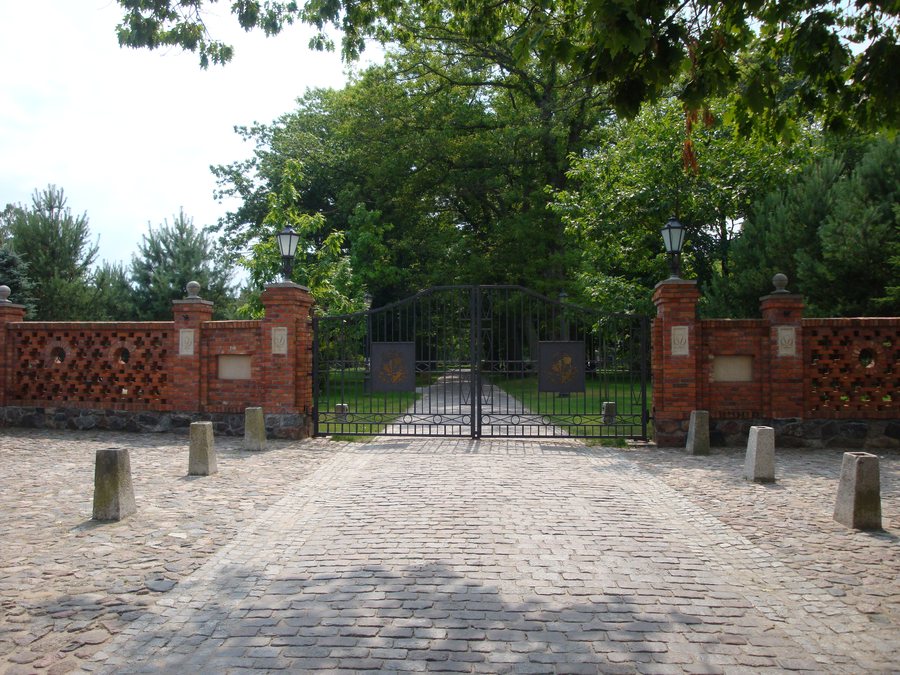
Ciekocinko at a glance
In Ciekocinko, south of the road from Kurowo to Ciekocino, there is a former estate complex. It includes a manor house, a residential building, the estate manager’s house, a barn, a distillery, a cowshed, and a park. The park dates from around the turn of the 19th and 20th centuries. The manor house was built between 1907 and 1910.
What characterizes the historic estate?
The complex includes not only the manor house but also buildings that once served different purposes: a residential building, the estate manager’s house, and farm buildings such as a barn, distillery, and cowshed. Together with the park, this list conveys the variety of the estate without reducing all its components to the manor house. This historical focus may be of particular interest when planning a trip if you would like to take local architectural and estate history into account when making your choice.
The manor house’s architectural form is also described in detail. The building has two floors and a converted attic beneath a mansard roof, which is covered with fish-scale tiles. These specific architectural features complement the information that it was built between 1907 and 1910. The park, in turn, is not assigned a single year but is dated to around the turn of the 19th and 20th centuries. The manor house and the park can therefore be considered as distinct parts of the historic complex.
What local history is associated with Ciekocino?
The church, school, and cemetery are associated with Ciekocino, not Ciekocinko. The Church of St. Peter and Paul, a branch church in Ciekocino, was built in 1891 as a branch church of the Evangelical parish in Osieki. Ciekocino became an independent parish in 1903. Until 1945, the church was owned by the Evangelical-Augsburg parish in Sopot. Since April 16, 1988, the church has been listed in the register of monuments under number A-1035.
The history of the school also goes back a long way: schools were established in Ciekocino between 1782 and 1785. A former school is now a residential building. The former German cemetery was converted into a Polish cemetery. Remains of old graves or iron enclosures are still visible among the trees.
How can you factor Ciekocinko into your accommodation search?
If you are looking for a hotel in Ciekocinko, the buildings described can provide a factual basis for choosing your destination: the focus here is the history of a former estate complex with a manor house described in detail. By contrast, the information about the church, school, and cemetery concerns Ciekocino. When planning your trip, keep these different place references in mind so you can associate the historical features with the correct location.
More local pages: Sasino, Dobrzewino, Linia, Rumia, Kłosówko, Gowino, Zamostne and Osetnik.
FAQ
When was the manor house in Ciekocinko built?
The manor house was built between 1907 and 1910.
Which buildings belonged to the former estate complex?
They included the manor house, a residential building, the estate manager’s house, a barn, a distillery, a cowshed, and a park.
What has become of the former school in Ciekocino?
The former school is now used as a residential building.
To the main travel overview: Neustadt.

