
Smazyno
Accommodation in Smazyno
The Bolszewka Valley, the Bolszewka River and several historic buildings shape Smażyno. The “Wokół Smażyna” route is one of the hiking and cycling trails in the municipality of Linia and runs along the Bolszewka. Nature and local history are therefore concrete topics to consider when planning your trip; note that the palace is not accessible to tourists.
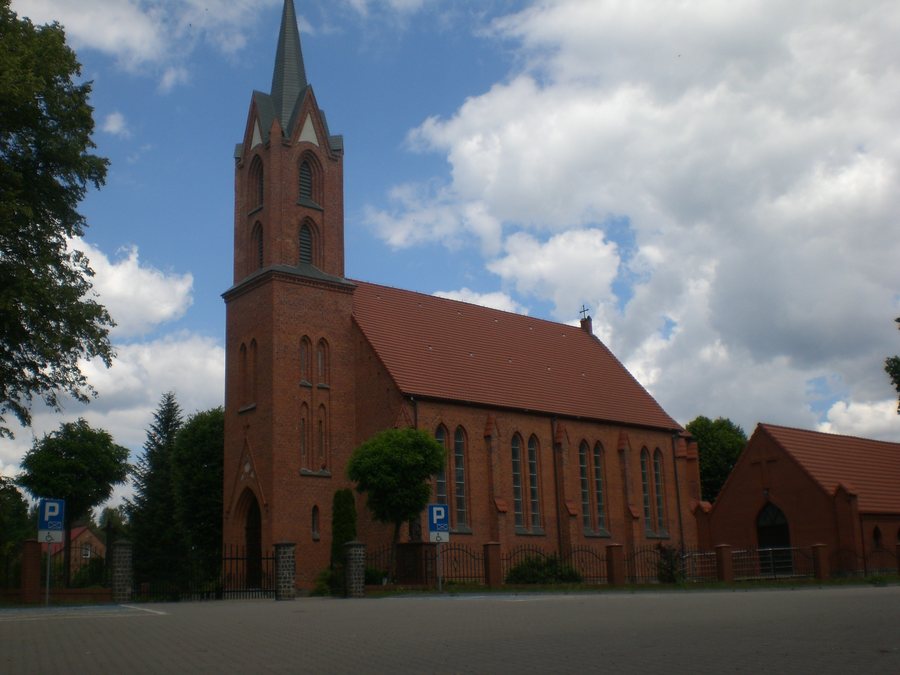 File:Smażyno, kościół św. Antoniego Padewskiego 8024.jpg
Photo: Gdaniec via Wikimedia Commons, CC BY 4.0
Smazyno at a glance
The Bolszewka Valley is a landscape feature of Smażyno, and the Bolszewka River flows through the village. The “Wokół Smażyna” route is one of the hiking and cycling trails in the municipality of Linia and runs along the river. Historic buildings include a former Protestant church, a 19th-century manor house, a 16th-century mill and a neoclassical palace. The palace is not accessible to tourists.
What shapes the landscape of Smażyno?
The valley and river give the area two clearly identifiable landscape features. The Bolszewka Valley is part of Smażyno; the Bolszewka flows through the village and is also part of the “Wokół Smażyna” route. So if you like to consider nature and local history together when choosing a destination, you will find both a river and buildings with different historical associations here.
Which historic buildings are important for culture enthusiasts?
The church was built for the local Protestant community between 1862 and 1865 in the Neo-Gothic style. It is a single-nave religious building made of red brick, not oriented eastward, with a set-back chancel. Notable features include a tower that rises above the landscape and a gabled roof. Smażyno is home to the only former Protestant church in the municipality of Linia.
The manor house, mill and palace also represent different historical associations. The 19th-century manor house is considered the best preserved in the municipality of Linia. The mill dates from the 16th century. The palace was built in the 19th century by the Wejher family in the neoclassical style. When planning a visit, bear in mind this clear restriction: the palace is not accessible to tourists.
What is the route of the “Wokół Smażyna” trail?
The route first follows a paved road to the church and then a field path to the Bolszewka. Both the surface and the places along the way change on this section: first the church, then the river. This makes it possible to follow the route by its specific stops. As the route is one of the hiking and cycling trails in the municipality of Linia and runs along the river, you can consider including it in your travel plans if you are interested in outdoor activity and scenery. The information about the road and field path helps you understand the sequence of the route; no distance or walking time is specified.
If you would like to compare other destination pages, you can also find Bojano, Lewinko, Nadole, Bychowo, Reda, Zbychowo, Zakrzewo and Gniewino.
FAQ
Which buildings date from the 19th century?
The church was built between 1862 and 1865. The manor house dates from the 19th century; the palace was also built in that century.
What types of surfaces does the “Wokół Smażyna” route follow?
The route follows a paved road to the church and then a field path to the Bolszewka.
Is the palace in Smażyno accessible to tourists?
No. The palace is not accessible to tourists.
For the overview of the wider area: Neustadt.

