
Discover Rybarzowice
Accommodation in Rybarzowice
A historic watermill, a 19th-century church and traces of regional cultural history give Rybarzowice a distinctive character. If you compare destinations by their cultural themes, you will find several points to consider when choosing where to visit.
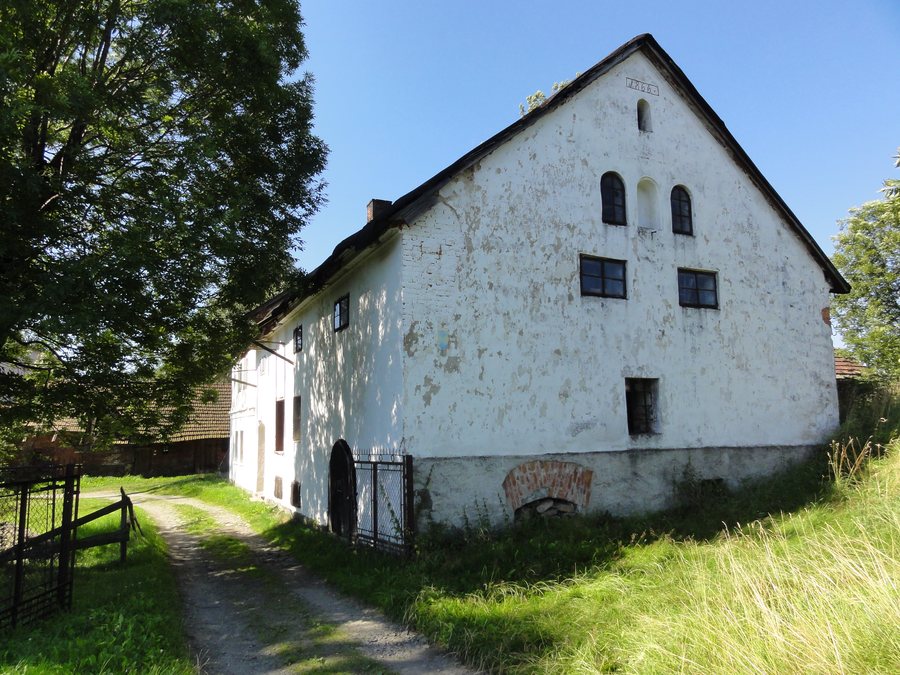
Rybarzowice at a glance
- The stone-and-brick watermill was built in 1866 on the site of an earlier wooden mill.
- The mill complex includes a millrace with masonry banks, a well and the remains of brick cellars.
- The parish Church of Our Lady of Consolation dates from 1868 to 1879.
- A section of cycle path was planned to be 3,118 metres long and 2.5 metres wide for use.
What does the mill complex tell us about the town’s history?
The mill’s history dates back to the beginning of the 17th century, when a wooden mill was already operating on this site. The present stone-and-brick building was constructed in 1866. These two dates mark different phases in the history of the mill site: the start of its use and the construction of the later complex.
The complex’s later use can also be placed in context. A bakery was established at the mill in 1927. After the Second World War, the building was damaged and had lost some of its equipment. The mill was decommissioned in the 1950s, while the bakery continued operating until the 1970s. This sequence shows that the mill and the bakery did not close at the same time.
The complex also includes a section of millrace with masonry banks, a well and the remains of brick cellars. It is regarded as the best-preserved remnant of historic milling in Bielski County, the county’s only mill complex entered in the heritage register, and one of the few surviving watermills in Poland. The surviving structures and the complex’s status add further aspects of the former mill site to its architectural history.
What other traces of culture are there?
The parish Church of Our Lady of Consolation was built between 1868 and 1879. Its construction period was close to that of the watermill, although the two buildings represent different aspects of the town’s history. A stone cross depicting the Passion of Christ is another cultural landmark in Rybarzowice. Together, the mill, church and cross offer different themes to consider when choosing a destination for its cultural history.
A regional perspective adds intangible cultural heritage to these places: about a hundred years ago, people in Rybarzowice, as well as in Buczkowice, Godziszka and Meszna, celebrated, danced and sang differently from their neighbours. The folklore of the area also differed from that of the Highlanders. These distinctions form part of the regional cultural history of the named places and their wider surroundings.
What is known about the planned cycle path section?
A 3,118-metre-long cycle path section was planned in Rybarzowice, with a usable width of 2.5 metres. The plan also provided for local motor-vehicle traffic to be permitted for access to properties. The dimensions and intended use describe the project proposal, which is a different topic from the dated cultural sites.
When comparing Rybarzowice as a travel destination, you can consider the cultural landmarks and the planned path section separately: the mill’s history, the church’s construction date and the history of local folklore appeal to different interests.
Discover more destinations: Bielsko-Biała, Czechowice-Dziedzice, Wilkowice, Rudzica, Jaworze, Świętoszówka, Dankowice, Jasienica.
FAQ
How long has there been a mill in Rybarzowice?
A wooden mill had been operating on the site of the present stone-and-brick watermill since the beginning of the 17th century. The present building was constructed in 1866.
What structures are part of the mill complex?
The complex includes a section of millrace with masonry banks, a well and the remains of brick cellars. The mill was decommissioned in the 1950s; the bakery established there operated until the 1970s.
What dimensions were planned for the cycle path section?
A 3,118-metre-long section with a usable width of 2.5 metres was planned. Local motor-vehicle traffic was to be permitted for access to properties.
For the broader travel overview: Bielsko-Biała.

