
Discover Katowice: Culture, Nature and Urban History
Accommodation in Katowice
Get to know Katowice through its historic miners’ settlements, industrial sites, museums, parks and natural areas. If you’re looking for a hotel in Katowice, start by narrowing down the purpose of your trip: are you most interested in urban history and art, nature, or activities on the water?
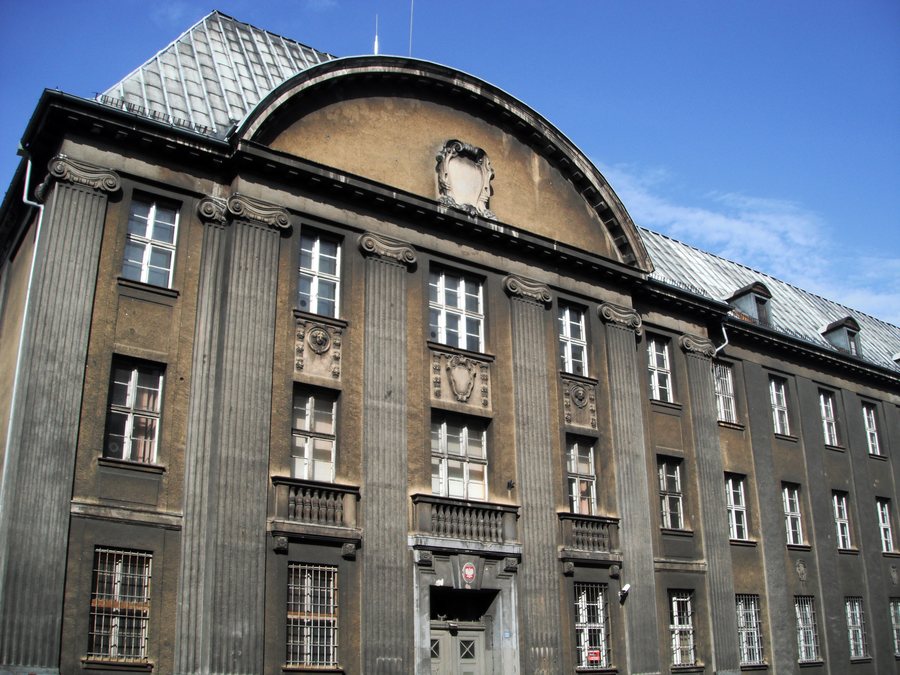 File:Katowice, siedziba Der Königlichen Polizeidirektion Kattowitz 2.JPG
Photo: Aiwlys via Wikimedia Commons, CC BY-SA 3.0 pl
Katowice at a glance
Katowice’s oldest city park is Kościuszko Park, where a wooden church dating from 1510 stands. Other cultural sites include the Silesian Museum, Nikiszowiec and Giszowiec. The Las Murckowski and Ochojec nature reserves are also within the city. Dolina Trzech Stawów offers, among other things, a roller-skating track, cycling and running routes, kayak rental, and a landscaped beach with a swimming area.
What nature and water experiences does Katowice offer?
Dolina Trzech Stawów brings together a range of leisure activities in one place: the roller-skating track is almost four kilometres long, and there are also cycling and running routes and kayak rental. A landscaped beach with a swimming area adds to the offer. At the water sports facility near Camping MOSiR, you can rent boats, kayaks, pedal boats and surfboards. Check seasonal availability in advance for kayak rental, the swimming area and water sports.
Nature reserves are also part of the city’s landscape: Las Murckowski and Ochojec are in Katowice. Las Murckowski was established in 1953 and later expanded. Today, the area covers more than 100 hectares, including the slopes of Wzgórze Wandy, the highest point in Katowice. This offers a different perspective on nature from the leisure activities in Dolina Trzech Stawów: here, the focus is on a named protected area and its topography.
Where can you discover urban history and culture?
Kościuszko Park combines park history with a specific architectural landmark: it is Katowice’s oldest city park and is home to the wooden Church of St Michael the Archangel, dating from 1510. At the Silesian Museum, the permanent exhibition “Światło historii. Górny Śląsk na przestrzeni dziejów” (The Light of History. Upper Silesia Through the Ages) tells the story of Upper Silesia from the earliest times to the political transition of 1989. The exhibition is located on the grounds of the former Katowice Coal Mine.
The annual cultural calendar includes the OFF, Tauron and Rawa music festivals. Details and schedules vary; if you want to plan your trip around a festival, check the relevant dates. Fabryka Porcelany is another site on the Route of Industrial Monuments. Walcownia – Muzeum Hutnictwa Cynku is a historic post-industrial building with a rolling mill and steam engines dating from 1903. Galeria Szyb Wilson presents contemporary art in a revitalised building that once housed the colliery’s hoist house and bathhouse at the “Wieczorek” mine’s Wilson Shaft; current exhibitions may change.
What do Nikiszowiec and Giszowiec tell us?
Nikiszowiec is a historic miners’ settlement built from 1908 to 1927 to designs by Emil and Georg Zillmann. Since 2011, it has been on Poland’s list of historic monuments. An audio guide can be downloaded or borrowed from a branch of the Katowice History Museum. Check in advance whether borrowing is currently available.
Giszowiec was built between 1907 and 1910 as a garden-city settlement for employees of the “Giesche” mine. The workers’ houses were modelled on old Upper Silesian country cottages. In Giszowiec, Izba Śląska Gawlikówka displays paintings by Edward Gawlik; check current visiting arrangements in advance. The two settlements each offer a distinct perspective on the city’s residential and architectural history.
What can you see from the former mine shaft?
From the former “Warszawa II” mine shaft, you can take in views of the Culture Zone and the city panorama. Access may depend on current museum operations. If this viewpoint is important to your plans, check whether it is currently accessible before visiting.
FAQ
Which nature reserves are in Katowice?
Las Murckowski and Ochojec are in Katowice. Las Murckowski now covers more than 100 hectares and includes the slopes of Wzgórze Wandy, the city’s highest point.
What does Dolina Trzech Stawów offer?
Dolina Trzech Stawów has an almost four-kilometre-long roller-skating track, cycling and running routes, kayak rental, and a landscaped beach with a swimming area. Various watercraft and surfboards are also available at the water sports facility near Camping MOSiR. Seasonal availability may vary.
How can you explore Nikiszowiec?
Nikiszowiec has a downloadable audio guide, and another can be borrowed from a branch of the Katowice History Museum. Check in advance whether borrowing is currently available.
What does the permanent exhibition at the Silesian Museum tell you?
“Światło historii. Górny Śląsk na przestrzeni dziejów” (The Light of History. Upper Silesia Through the Ages) covers the history of Upper Silesia from the earliest times to the political transition of 1989. It is a permanent exhibition on the grounds of the former Katowice Coal Mine.
For the general travel overview: Katowice.

