
Pszczyna
Accommodation in Pszczyna
Pszczyna combines an extensive Historic Park with the history of its castle and town, as well as several museums. When planning your trip, consider whether you are most interested in historic rooms, exhibitions, musical instruments, or nature and animals.
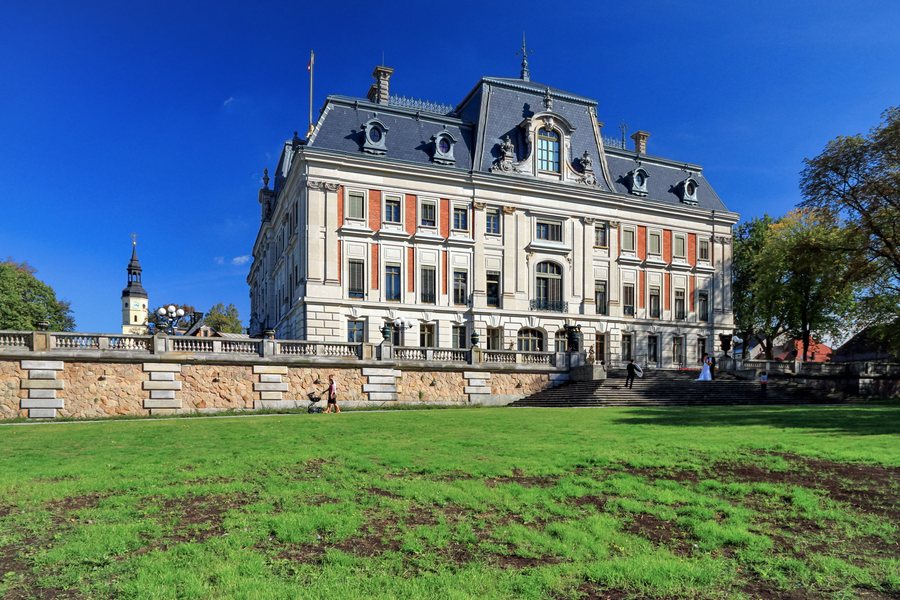 File:2012 Powiat pszczyński, Pszczyna, Pałac (01).jpg
Photo: Marcin Konsek via Wikimedia Commons, CC BY-SA 3.0 PL
File:2012 Powiat pszczyński, Pszczyna, Pałac (01).jpg
Photo: Marcin Konsek via Wikimedia Commons, CC BY-SA 3.0 PL
Pszczyna at a glance
Pszczyna’s Historic Park covers 156 hectares. It includes the Castle Park, Dworcowy Park and Dziką Promenada. The Old Town retains an urban layout dating from the Middle Ages. Piastowska Street is the city’s main pedestrian zone. Long-distance and local transport routes run through Pszczyna.
Which aspects of the Historic Park appeal to you?
The park comprises several named areas; Dziką Promenada offers its own points of interest to help you choose what to see: it features a well-maintained golf course and the Pokazowa Zagroda Żubrów, a showcase reserve for European bison. The park’s different attractions offer a variety of focuses. Zagroda Żubrów has enclosures and paths across 10 hectares. You can also see fallow deer, red deer, roe deer and pheasants there.
What cultural themes can you discover in Pszczyna?
The Castle Museum is an example of the residences once inhabited by European nobility. Around 80 percent of its original furnishings from around the turn of the 20th century have been preserved. This gives travelers interested in culture a clear focus on historic interiors. Baroque concerts have been held in the museum’s Mirror Room since 1979 under the name “Wieczory u Telemanna.”
The town’s history can also be explored through other collections. The Silesian Press Museum presents the history of the Silesian press from its beginnings to 1939 and collects historic printing presses and equipment. Izba Telemanna displays historic musical instruments, including an 18th-century positive organ. Those interested in different cultural themes can explore press history and musical instruments as distinct areas of interest alongside the history of the residence.
The Zagroda Wsi Pszczyńskiej open-air museum is included in the Silesian Wooden Architecture Trail as part of the Pszczyna loop. The Prince’s Stables complex, taken over by the Castle Museum in June 2013, regularly hosts exhibitions on a range of topics. The cultural venues mentioned therefore range from historic buildings and furnishings to changing exhibition themes; for the Baroque concerts, the Mirror Room is specifically named as the venue.
What should you bear in mind when planning your trip?
Long-distance and local transport routes run through Pszczyna. Take this transport information into account when planning your journey.
More town pages: Piasek, Brzeźce, Pielgrzymowice, Bad Gottschalkowitz, Warszowice, Wisła Mała, Studzienice, Suszec, Łąka, Pszczyna and Kobior.
FAQ
Which areas are part of Pszczyna’s Historic Park?
The Historic Park includes the Castle Park, Dworcowy Park and Dziką Promenada. It covers 156 hectares.
Which animals can you see at Zagroda Żubrów?
In addition to European bison, you can see fallow deer, red deer, roe deer and pheasants from the enclosures and paths of the 10-hectare reserve.
What does the Silesian Press Museum show?
Its exhibition covers the history of the Silesian press from its beginnings to 1939. The museum also collects historic printing presses and equipment.
For the main travel overview: Silesia.

.jpg)