
Wisła Mała: EuroVelo R4 and a historic church
Accommodation in Wisła Mała
Wisła Mała brings together two specific topics to help you plan your trip: the EuroVelo R4 section that passes through the town and the history of the Church of St. James.
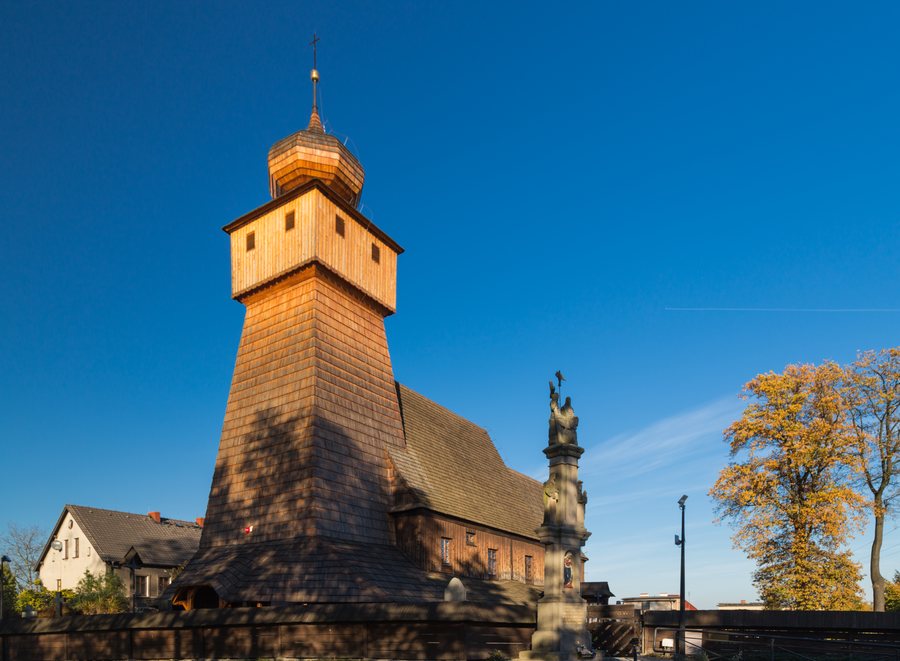 File:2021 Powiat pszczyński, Wisła Mała, Kościół św. Jakuba Starszego 04.jpg
Photo: Marcin Konsek via Source, CC BY-SA 4.0
File:2021 Powiat pszczyński, Wisła Mała, Kościół św. Jakuba Starszego 04.jpg
Photo: Marcin Konsek via Source, CC BY-SA 4.0
Key facts about Wisła Mała
- The 36 km section of the EuroVelo R4 passes through Wisła Mała and is marked with green trail signs. Check the signage on site before setting off.
- The Church of St. James the Greater and its later-built bell tower date from the 18th century. The church lies on the Wooden Architecture Trail of the Silesian Voivodeship.
These facts offer different points of reference when choosing a destination: the cycle route is a practical consideration for a cycling trip, while the church brings architectural history and historic furnishings to the fore.
What does the EuroVelo R4 offer in Wisła Mała?
The EuroVelo R4 section through Wisła Mała is 36 km long and marked with green trail signs. If you plan your route around the markings, check the signage on site before setting off.
What story does the Church of St. James tell?
The Church of St. James the Greater was built in the 18th century, replacing an earlier structure dating from the 15th or 16th century. The bell tower, built later, also dates from the 18th century. The church was extended during the interwar period. These construction phases provide a timeline for the building’s history, distinguishing its original construction from later alterations.
The furnishings include a main altar dating from 1776. It contains an image of St. James, while the altarpiece features an image of the Virgin and Child. The side altars also have dated images: the left one depicts Divine Providence and dates from 1776, while the right one contains an image of St. Valentine from 1804. A baptismal font dating from 1780 and an 18th-century confessional add to the historic furnishings. The church is also part of the Wooden Architecture Trail of the Silesian Voivodeship. This is another point of reference if you are interested in historic buildings and their furnishings.
What other themes can you explore in the wider destination of Pszczyna?
The Historic Park in the wider destination of Pszczyna covers 156 hectares. It includes the Castle Park, Dworcowy Park and Dziką Promenada. A well-maintained golf course is located in the promenade, along with the Pokazowa Zagroda Żubrów, a European bison viewing enclosure. Covering ten hectares, the site includes enclosures and paths from which you can also observe fallow deer, red deer, roe deer and pheasants. These park and nature themes belong to Pszczyna and are distinct from the local sights in Wisła Mała.
Pszczyna’s cultural attractions also cover a range of themes. The Castle Museum represents a residence once inhabited by European nobility; around 80 percent of its original furnishings from around the turn of the 20th century have been preserved. The Silesian Press Museum presents the history of the Silesian press from its beginnings to 1939 and collects historical printing presses and equipment. Izba Telemanna displays historic musical instruments, including an 18th-century positive organ. At the Zagroda Wsi Pszczyńskiej open-air museum, meanwhile, you can explore wooden architecture: it is included in the Silesian Wooden Architecture Trail as part of the Pszczyna Loop.
Discover more destinations: Warszowice, Piasek, Kobior, Goczałkowice-Zdrój, Pszczyna, Łąka, Brzeźce and Studzienice.
FAQ
How long is the EuroVelo R4 section through Wisła Mała?
The section is 36 km long and marked with green trail signs. Check the signage on site before setting off.
Which construction phases are known for the Church of St. James?
The church and its later-built bell tower date from the 18th century; the earlier structure on this site dated from the 15th or 16th century. The church was extended during the interwar period.
What cultural attractions does Pszczyna offer?
The Castle Museum combines the history of a residence with historic furnishings. The Silesian Press Museum focuses on press history and historic printing equipment; Izba Telemanna displays historic musical instruments. These institutions are located in the wider destination of Pszczyna.
Back to the wider travel overview: Pszczyna.

