
Miasteczko Śląskie: educational trail, wooden architecture and hotels
Accommodation in Miasteczko Śląskie
Miasteczko Śląskie is suitable for travelers who want to combine historic buildings, routes through protected landscapes and a distinctive transport history. Various formats are available for choosing your activities: a signposted educational trail on foot or by bicycle, a 10-kilometer route to a flooded mine, as well as historic and tourist narrow-gauge connections.
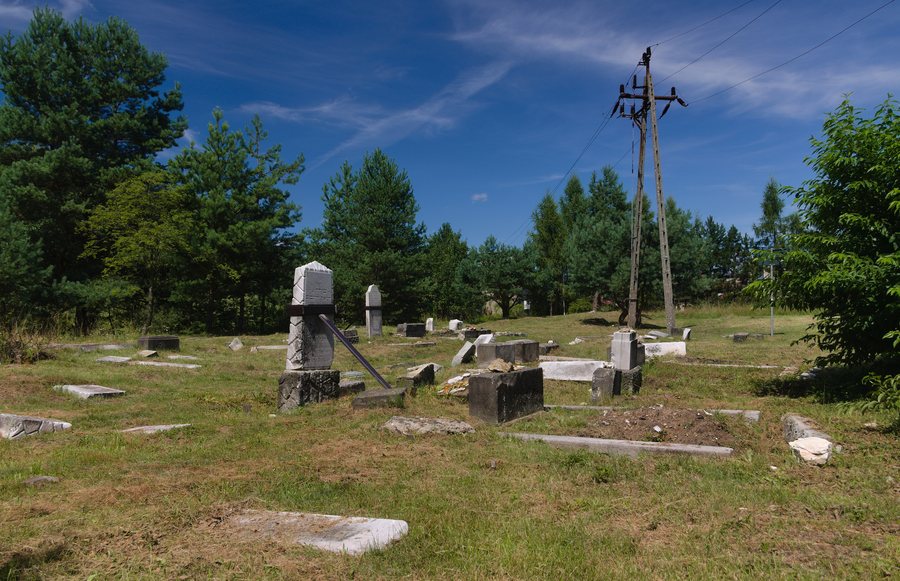 File:Miasteczko Slaskie Jewish cemetery 2021.jpg
Photo: Adrian Tync via Wikimedia Commons, CC BY-SA 4.0
File:Miasteczko Slaskie Jewish cemetery 2021.jpg
Photo: Adrian Tync via Wikimedia Commons, CC BY-SA 4.0
Quick facts about Miasteczko Śląskie
In Rubina Park, a salt graduation tower operates daily between 7:00 a.m. and 10:00 p.m. The “Pasieki” nature and landscape protection area covers 32 hectares. In the center of Miasteczko Śląskie stands a town hall built in the 19th century.
Which routes can you explore on foot or by bicycle?
The “Miasteczko Śląskie – Wielkie Historie w Małym Mieście” educational trail follows the Leśna Rajza. It begins at the parking lot by a gas station and Zajazd u Moniki and leads to Pasieki. There are 10 information boards along the educational trail; the route can be explored by bicycle or on foot.
A 10-kilometer route to the flooded “Bibiela” mine begins at the reservoir in the Miasteczko Śląskie area.
Which natural and cultural sites characterize the town?
There is a geological connection to the limestone quarry in Żyglin. The remains of a marine, fish-eating nothosaur up to two meters long, dating from 240 million years ago, were found there. The find places the quarry within a very early period of Earth's history; however, it says nothing about any current exhibition or visitor facilities.
One of the notable historic buildings is the wooden Church of the Assumption of the Blessed Virgin Mary and Saint George. It was built in 1666–1667 and is located on the Silesian Wooden Architecture Trail. Its bell tower was built in 1716–1717. The church was constructed using log construction, has a shingle roof and surrounding soboty.
In the heart of Miasteczko Śląskie is the so-called Stara Szkoła, a distinctive brick building that shapes the townscape. The town center also features the town hall built in the 19th century. This gives visitors interested in culture a different focus from the routes through the landscape and mining history.
What role do the narrow-gauge railways play?
The history of the regional railway dates back to 1892: at that time, the narrow-gauge railway ran from Bytom to Miasteczko Śląskie. For today's tourist context, the Górnośląskie Koleje Wąskotorowe are relevant. They have operated as a tourist narrow-gauge railway since 2002. Their tourist route leads to Zalew Nakło-Chechło and the Historic Silver Mine in Tarnowskie Góry. The historic route connection and tourist railway operation are therefore two separate aspects that you can take into account when planning your excursions.
If you would like to combine Miasteczko Śląskie with other places in a regional travel comparison, you can also find Krupski Młyn, Nowa Wieś Tworoska, Ziętek, Księży Las, Pyrzowice, Świerklaniec, Nowe Chechło and Kalety as additional destinations in the overview.
FAQ
Which places does the tourist narrow-gauge railway connect?
What construction method characterizes the wooden church?
The wooden Church of the Assumption of the Blessed Virgin Mary and Saint George was built using log construction. It has a shingle roof and surrounding soboty.
What was found in the limestone quarry in Żyglin?
What is the so-called Stara Szkoła?
The so-called Stara Szkoła is a distinctive brick building that shapes the townscape of Miasteczko Śląskie.
To the main travel overview: Tarnowitz.

