
Wieszowa: Church, Organ and Sarkander Spring
Accommodation in Wieszowa
The church, historic organ and legend surrounding the spring of Saint Jan Sarkander give Wieszowa a distinctive cultural and historical character. A regional cycling loop through several towns also passes through the village.
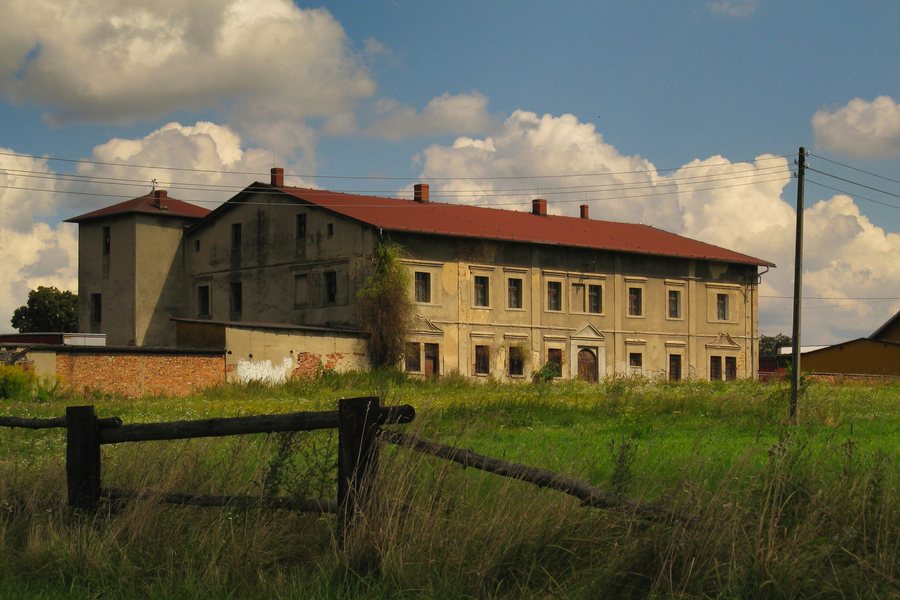
Wieszowa at a glance
The spring of Saint Jan Sarkander lies on the western edge of the village; a legend tells of its origins. The present-day church replaced a small Baroque church and was built between 1896 and 1898.
A loop from Pyskowice through Wieszowa and other towns, returning to Pyskowice, offers a regional view of the surrounding area. The regional tourism guide also describes the spring as one of the most interesting stops on the Pętla Zbrosławicka from a tourism perspective.
What makes the church historically and culturally interesting?
The building’s history can be understood through several clearly distinct milestones: the present-day church was built between 1896 and 1898 to replace a small Baroque church. It was consecrated on 18 May 1904 by Auxiliary Bishop Heinrich Marx of Wrocław. The building suffered severe damage during the Second World War and was restored in 1957. The construction, consecration and restoration refer to different events in the history of the church building.
The organ is also described in detail: Ernst Kurzer built the instrument around 1896; it has 23 stops. In an organ, a stop is a selectable tone colour or rank of pipes. The number therefore gives a concrete sense of the instrument. Its position is also precisely specified: it stands on the choir loft above the main entrance, on the axis of the high altar. This location helps you picture the relationship between the loft, entrance and altar without reducing the organ’s significance to its year of construction.
What legend is associated with the spring?
The spring lies on the western edge of the village. According to legend, it sprang up when Saint Jan Sarkander stopped there to rest on his way to Jasna Góra. The regional tourism guide lists it as one of the most interesting stops on the Pętla Zbrosławicka from a tourism perspective. The spring thus has both a storytelling significance and a tourism significance, each associated with the same place.
An account of the tradition describes processions that, over several years, went from the church to the spring on the last Sunday in May. A service in honour of Saint Jan Sarkander was held there. These accounts take different forms: the spring’s origin is told as a legend, while the procession is described as a practice reported to have taken place over several years. This makes it possible to distinguish the place’s history, religious tradition and the spring’s tourism designation.
How can Wieszowa be included in a cycling tour?
The Pyskowice–Zbrosławice cycling tour is described as a loop through several towns. It runs from Pyskowice through Łubie, Księży Las, Kamieniec, Zbrosławice, Ptakowice, Wieszowa and Zamięcice, before returning to Pyskowice. Wieszowa is therefore part of a regional route, not the loop’s sole point of reference. The list of towns makes the route’s multi-town nature concrete and shows how the village features in the route description.
Planning should therefore take the entire loop as described into account, not just the section that passes through Wieszowa. Check current route conditions before setting off. The spring on the Pętla Zbrosławicka and the Pyskowice–Zbrosławice loop through several towns are both mentioned in the regional information; the specific details of each route should be considered separately.
Discover more destinations: Świerklaniec, Pyrzowice, Tarnowskie Góry, Księży Las, Nowe Chechło, Krupski Młyn, Radzionków, Kalety.
FAQ
Where is the spring of Saint Jan Sarkander?
It lies on the western edge of Wieszowa. According to legend, it sprang up when Jan Sarkander stopped there to rest on his way to Jasna Góra.
Where is the organ in the church?
It stands on the choir loft above the main entrance, on the axis of the high altar.
Which cycling tour passes through Wieszowa?
The Pyskowice–Zbrosławice loop through several towns passes through Wieszowa and several other towns before returning to Pyskowice. Check current route conditions before setting off.
See the main travel overview: Tarnowitz.

