
Ślemień: Open-Air Museum, Churches and History
Accommodation in Ślemień
The open-air museum, churches and historic iron smelting offer different ways to explore Ślemień’s history and culture. For nature, it is worth looking at the municipality as a whole: the Madohora Nature Reserve is located there.
Ślemień at a glance
- The Żywiecki Park Etnograficzny in Ślemień is an open-air museum with 17 relocated historic buildings, mostly made of wood.
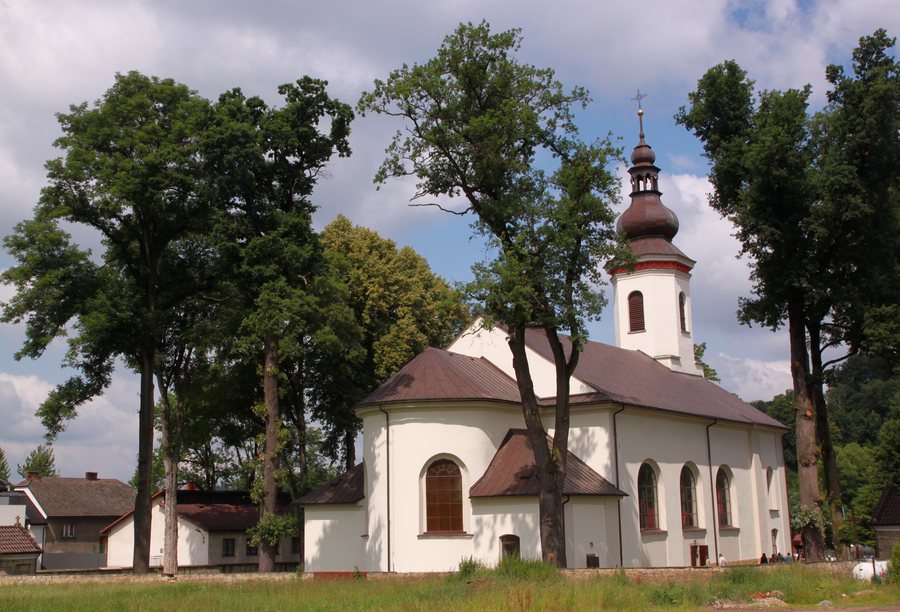
- The present-day Church of St John the Baptist was built from 1842 to 1853 and consecrated in 1860. It has three naves and is made of sandstone and brick.
- The parish in Ślemień was established in 1672. According to local tradition, people have been making pilgrimages to Jasna Górka for hundreds of years.
- The Madohora Nature Reserve is located within the municipality of Ślemień; part of it lies in the Silesian Voivodeship. Access to Jaskinia Komonieckiego is dangerous and is not permitted under the applicable access rules.
What does the open-air museum tell us about life in the region?
The Żywiecki Park Etnograficzny recreates the layout and buildings of a village in the Żywiec Beskids. Its 17 historic architectural buildings were relocated to their present site and are mostly made of wood. The site can therefore be understood as a reconstructed village, rather than simply a collection of individual buildings. The interiors have been reconstructed, and exhibitions illustrate various aspects of Gorals’ lives.
A complete farmstead from Rychwałd makes the story behind the exhibition especially tangible. It includes a residential house dating from 1895, which bears traces of the effects of the last war. Its origin, year of construction and visible traces of war give the house its own historical layer within the site. Anyone interested in architectural styles can connect these details with the broader picture of the recreated village.
Which religious buildings and stories shape Ślemień?
The present-day Church of St John the Baptist combines a long construction history with clearly described architecture: construction lasted from 1842 to 1853, followed by its consecration in 1860. The parish had already been established in 1672—a chapter in local church history that predates the construction of the present church building. Three naves divide the building; sandstone and brick are its two building materials.
The altars also differ in their dedications. An image of the church’s patron saint is in the high altar. Other altars are dedicated to the Sacred Heart of Jesus, St Catherine, Our Lady of the Rosary and St Alexander. At Jasna Górka, meanwhile, the high altar of the Marian shrine displays a venerated image of Mary. It is flanked by figures of St Casimir and St John of Kęty, as well as a dove symbolising the Holy Spirit. Local tradition links this place to a pilgrimage tradition said to have existed for hundreds of years.
What should you know about Madohora and the trails?
Madohora is located within the municipality of Ślemień, though not demonstrably within the village itself; part of the protected area lies in the Silesian Voivodeship. An open section of the blue PTTK hiking trail connects Smerkowice with Przełęcz pod Madohorą and continues towards Ślemień.
Within the nature reserve, a designated footpath also leads along a forest road and a trail to Jaskinia Komonieckiego, also known as Grota Komonieckiego. The path to the cave should be distinguished from entering it: access to the cave is dangerous and is not permitted under the applicable access rules. Bear this restriction in mind when including the trails in your plans.
What traces of earlier technology can you find?
The ruins of the blast furnace in Ślemień are considered a monument to early Polish technology. The history of iron smelting also offers a concrete look at the materials used: the ironworks used bog iron ore, which local residents brought in, and smelted it with charcoal. These details describe historical production, not a current activity. Together with the farmstead, church and museum, the furnace ruins broaden the picture beyond religious and rural history to include the processing of raw materials.
Discover more destinations: Sól, Żabnica, Pewel Ślemieńska, Czernichów, Glinka, Cisiec, Jeleśnia and Koszarawa.
FAQ
What does the Żywiecki Park Etnograficzny showcase?
The open-air museum recreates the layout and buildings of a village in the Żywiec Beskids. It includes 17 relocated historic buildings, mostly made of wood, reconstructed interiors and exhibitions about the lives of Gorals.
When was the present-day Church of St John the Baptist built?
Construction lasted from 1842 to 1853; the church was consecrated in 1860. It has three naves and is built of sandstone and brick.
Are you allowed to enter Jaskinia Komonieckiego?
No. Access to the cave is dangerous and is not permitted under the applicable access rules. The designated footpath leads to the cave, not inside it.
Go to the main travel overview: Żywiec.

