
Discover Haczów: wooden church, Pietà and manor house park
Accommodation in Haczów
Different cultural themes come together in Haczów: a Gothic wooden church, the Haczów Pietà and a manor house park with historic buildings. The dates range from the church’s construction in the 14th century to the park’s approximate origins between 1755 and 1800. You can plan your visit according to whether you are particularly interested in architecture, art or historic landscape design.
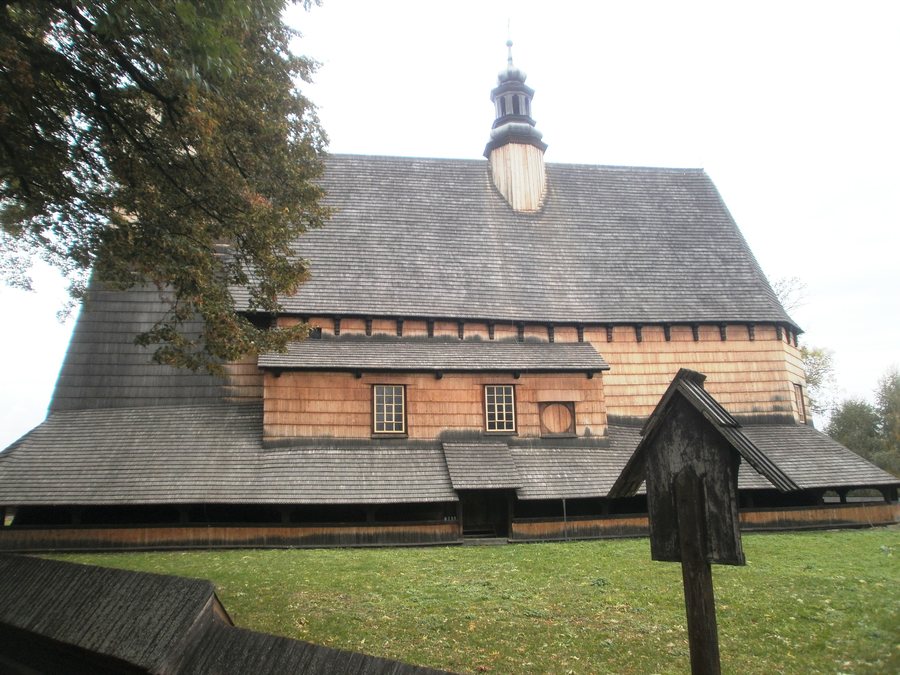
Haczów at a glance
- The Gothic wooden church dates from the 14th century.
- The church can be visited on a guided tour after booking in advance.
- The manor house park preserves remnants of its historic design and frames several historic buildings.
What makes the wooden church in Haczów special?
The wooden church combines a Gothic architectural form with a distinctive construction detail: no nails were used to build it; instead, wooden fasteners were used. For those interested in architecture, the appeal lies in considering the construction method and materials together. Wood is not merely the building material; the joints between the structural elements were also made of wood.
Another historical layer is revealed by the Gothic polychrome decoration from the late 15th century. It depicts scenes from the Old and New Testaments, saints and a monumental image of Saint Christopher. The church itself dates from the 14th century, while the polychrome decoration is dated later: the construction date and the painted program are therefore two different historical reference points.
The church can be visited on a guided tour after booking in advance by calling 534557009. Confirm the arrangements before your visit. An unannounced visit is not guaranteed.
What does the Haczów Pietà tell us?
The Haczów Pietà dates from around 1400 and is 70 centimetres high. Its approximate date and precise measurement provide two different points of reference: a historical timeframe and a clear idea of the artwork’s height. Unlike the wooden church, which is assigned to a century, the Pietà is dated to an approximate point in time.
This makes it possible to consider the Pietà as a distinct art topic alongside the architecture and the later-dated polychrome decoration. If you are interested in comparing dates, around 1400 is close to the span of the 14th century, while the polychrome decoration is assigned to the late 15th century.
How does the manor house park connect landscape and history?
The manor house park was established approximately between 1755 and 1800. Remnants of its historic design have been preserved; at the same time, the park frames the manor house, outbuildings, chapel and orangery. This connection is important for understanding the site: the park is not described merely as a standalone area, but in relation to the historic buildings it surrounds.
The park also plays a role in outdoor events: most of the outdoor events and concerts held in Haczów take place there. If a concert or event is a deciding factor for your visit, check the date in advance.
Discover more destinations: Jabłonka, Brzozów, Humniska, Krzemienna and Ropa.
FAQ
How can I visit the wooden church?
A guided visit is possible after booking in advance by calling 534557009. Confirm the arrangements before your visit.
How does the church’s construction date differ from that of the polychrome decoration?
The Gothic wooden church dates from the 14th century. Its polychrome decoration is dated to the late 15th century and depicts biblical scenes, saints and Saint Christopher.
Which buildings are part of the manor house park’s surroundings?
The park frames the manor house, outbuildings, chapel and orangery; remnants of its historic design have also been preserved.
When was the Haczów Pietà created?
It dates from around 1400 and is 70 centimetres high.
For the broader travel overview: Brzozów.

