
Humniska – Gothic Wooden Church and Culture
Accommodation in Humniska
Humniska is particularly defined by the Parish Church of St. Stanislaus: a rare Gothic wooden church whose architecture and furnishings bring together traces of several centuries. Here you can learn about the features that make the place distinctive for culturally minded travelers.
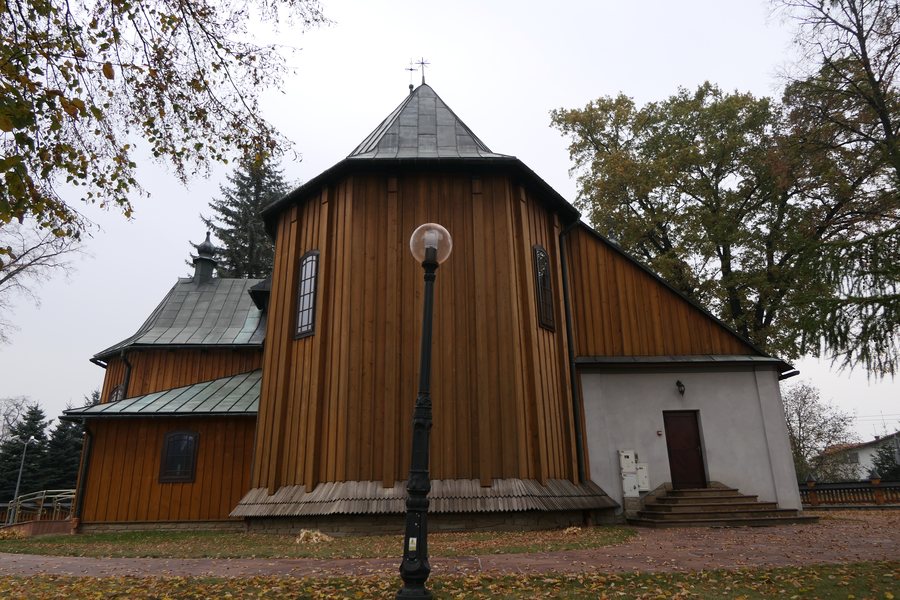 File:Kościół pw. św. Stanisława Biskupa w Humniskach.jpg
Photo: Beata Olszowska via Wikimedia Commons, CC BY-SA 4.0
File:Kościół pw. św. Stanisława Biskupa w Humniskach.jpg
Photo: Beata Olszowska via Wikimedia Commons, CC BY-SA 4.0
Humniska at a glance
- The Parish Church of St. Stanislaus is a Gothic wooden church with a cruciform plan.
- It was built in the 15th century; a brick sacristy was added in 1699.
- Historic wall paintings were uncovered during a discovery in 2002.
- Beside the church stands a brick, openwork bell tower with three bells.
- The church is a stop on the Krośnieńsko-Brzozowska Route of the Wooden Architecture Trail.
What makes the wooden church’s architecture special?
The church is built using log construction and is oriented eastward. Its rectangular plan is complemented by shallow transept arms and two chapels; at the same time, the building is single-aisled and has a single interior space. The chancel is as wide as the nave. These features describe a compact spatial arrangement in which the cruciform layout and the continuous interior can be considered together.
The roof also shapes the building’s exterior: the chancel and nave are covered by a single roof with a continuous ridge. A rooster-shaped weather vane bearing the year 1648 stands on the ridge. Beside the church, the openwork bell tower makes its own architectural statement; its three bells are among the ensemble’s distinctive details.
Which historical traces come together in the church?
The parish church was built in the 15th century. A brick sacristy was added in 1699. During a discovery in 2002, 15th-century paintings were found on ceiling beams. Renaissance paintings were also uncovered on the upper beams at the wall junctions of the transept additions. Both areas of painting had survived later alterations.
Most of the furnishings date from the 17th and 18th centuries. They include a Mannerist high altar, four late Baroque side altars, and a Baroque pulpit. The high altar was brought to Humniska from the demolished Capuchin church on Michałek Hill in Blizne. The furnishings are complemented by a stone Gothic baptismal font; the stone holy-water font dates from the 16th century. To appreciate the church, it is therefore worth taking in its architecture, paintings, and furnishings as distinct historical layers.
How can Humniska be placed in a cultural context?
The parish church is a stop on the Krośnieńsko-Brzozowska Route of the Wooden Architecture Trail. This is a useful thematic reference for travelers with a particular interest in historic architectural styles. Check access to the church before planning a visit.
In the broader destination of Brzozów, further cultural attractions offer a wider perspective on the region. The Muzeum Regionalne im. Adama Fastnachta presents collections on archaeology, ethnography, regional history, and regional art, as well as temporary and permanent exhibitions. It is housed in Brzozów’s historic town hall, which dates from the late 19th century and stands in the center of the modernized market square. A tourist information office is also located there; check its current services before relying on them.
Further cultural highlights in Brzozów include the former College of Missionaries, built between 1746 and 1760 and now home to the Catholic Cultural Center, as well as Kino Sokół, which screens films in its “Studyjna Środa” series, along with festival and Oscar-nominated films. Brzozowski Dom Kultury offers music, dance, and art classes led by experienced instructors.
What should you consider when looking for accommodation?
If you are looking for a hotel for your trip, first consider what you would like to focus on: the wooden church and its architectural history in Humniska, or also the cultural attractions in the broader destination of Brzozów. When choosing accommodation, make sure the specific location of each option suits your planned itinerary.
Discover more destinations: Ropa, Krzemienna, Brzozów, Haczów, Jabłonka.
FAQ
What is special about the Parish Church of St. Stanislaus in Humniska?
It is a rare Gothic wooden church with a cruciform plan, a single-aisled interior, and a chapel-like transept. Its paintings and furnishings from several centuries are also noteworthy.
Which historic details date from the 15th century?
The church was built in the 15th century. Paintings from that period were discovered on ceiling beams in 2002; the church also has a stone Gothic baptismal font.
What cultural attractions are there in the broader destination of Brzozów?
The Muzeum Regionalne presents regional collections and exhibitions. Other attractions include the Catholic Cultural Center in the former College of Missionaries, events at Brzozowski Dom Kultury, and the “Studyjna Środa” film series at Kino Sokół.
For the broader travel overview: Brzozów.

