
Discover Brzeźnica
Accommodation in Brzeźnica
Brzeźnica combines distinctive evidence of sacred history with an archaeological burial mound field and two different routes.
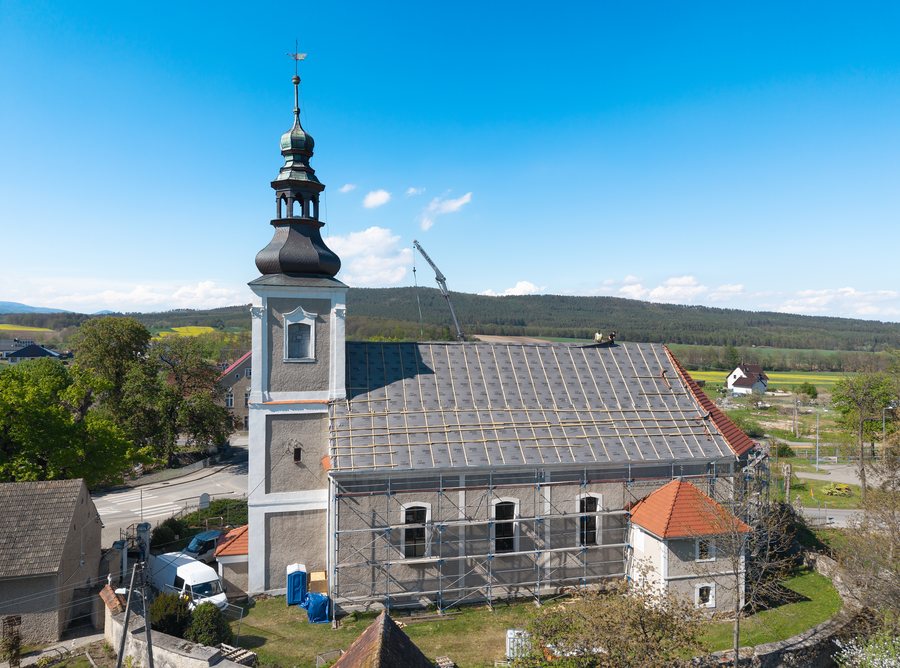 File:2025 Kościół św. Mikołaja w Brzeźnicy (3).jpg
Photo: Jacek Halicki via Wikimedia Commons, CC BY-SA 4.0
File:2025 Kościół św. Mikołaja w Brzeźnicy (3).jpg
Photo: Jacek Halicki via Wikimedia Commons, CC BY-SA 4.0
Brzeźnica at a glance
- The parish church of St. John the Baptist was built in 1905–1906 to a design by Sławomir Odrzywolski and consecrated in 1907 by Bishop Leon Wałęga.
- The church’s historic furnishings include a wooden baptismal font from the 18th century, a side altar from the second half of that century, and paintings from the 18th century.
- A burial mound field dating from the 11th–12th century lies in Borek Forest. Of the original 21 burial mounds, about 12 remain today.
- A 15 km blue lowland trail leads from Dębica to Góra Śmierci; a cycling loop passes through Brzeźnica and returns to Pustków-Osiedle.
What traces of history can you discover?
The parish church of St. John the Baptist offers several concrete points of interest for exploring Brzeźnica’s cultural history. Its construction can be dated precisely: it was built in 1905 and 1906, then consecrated in 1907 by Bishop Leon Wałęga. The design was by Sławomir Odrzywolski.
The furnishings also point to an earlier era. The church contains a wooden baptismal font from the 18th century. There is also a side altar from the second half of the 18th century with a carved crucifix. Paintings of St. Stanislaus and St. John the Baptist also date from the 18th century. Here, in a single church, you can encounter architectural periods and furnishings with different historical associations.
Another sacred landmark is the cemetery chapel, a brick building dating from 1841. The chapel and the parish church are distinct historical subjects; the dates given provide a specific time reference for exploring each.
Which routes suit your travel interests?
The blue lowland trail is 15 km long and runs from Dębica to Góra Śmierci. Along the route in Brzeźnica are the cemetery chapel, the mausoleum monument, and the parish church of St. John the Baptist. The route description therefore links several local sights with a trail between two named endpoints. Before setting out, check local information about the trail’s condition.
The cycling loop in Dębica Municipality follows a different course: it starts in Pustków-Osiedle, passes through Kochanówka, Skrzyszów, Paszczyna, and Brzeźnica, then returns to the starting point. The difference is clear for planning purposes: the lowland trail runs from Dębica to Góra Śmierci, while the cycling route is a loop that returns to Pustków-Osiedle. For this loop, too, check local route information before setting out.
The archaeological burial mound field, dating from the 11th–12th century, is also located in Borek Forest. Of the original 21 burial mounds, about 12 remain today.
How can you plan your accommodation search?
First, consider what you would most like to focus on during your stay: the historic furnishings of the parish church, the sacred buildings, the burial mound field, or one of the routes. This will help you match your interests with your travel plans and assess where you would like to stay based on your priorities. For travelers who prefer a loop, the described cycling route, which starts and ends in Pustków-Osiedle, is a different planning option from the trail running from Dębica to Góra Śmierci.
Discover more destinations: Żyraków, Dębica, Łęki Dolne, Chotowa, Góra Motyczna, Grabiny, Żdżary and Podgrodzie.
FAQ
What historic furnishings does the parish church have?
It houses a wooden baptismal font from the 18th century, a side altar from the second half of the 18th century with a carved crucifix, and 18th-century paintings of St. Stanislaus and St. John the Baptist.
How long is the blue lowland trail?
It is 15 km long and leads from Dębica to Góra Śmierci. The cemetery chapel, mausoleum monument, and parish church are along the route in Brzeźnica. Before setting out, check local information about the trail’s condition.
How many burial mounds remain in Borek Forest?
About 12 of the original 21 burial mounds in the archaeological field, dating from the 11th–12th century, remain today.
For the broader travel overview: Dębica.

.jpg)