
Żdżary
Accommodation in Żdżary
Żdżary offers two concrete starting points for planning a trip: the protected oak avenue and the history of the Church of Our Lady of Perpetual Help. Anyone interested in natural monuments and the development of a place will find facts here about an entire avenue of trees, an old oak, and the dates associated with the church.
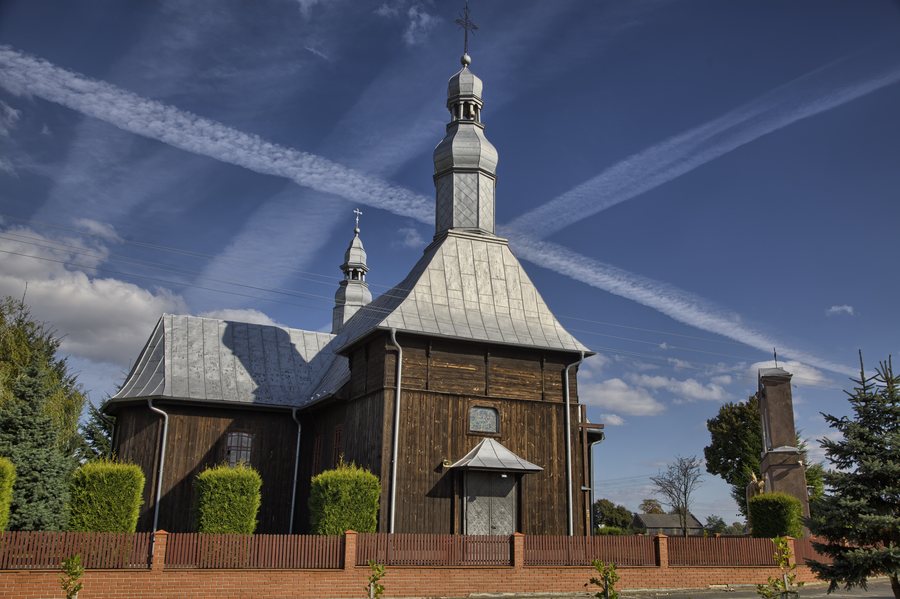 File:Kościół św. Bartłomieja w m. Żdżary.jpg
Photo: Artur Nawojski via Wikimedia Commons, CC BY-SA 3.0 pl
Żdżary at a glance
- Aleja dębowa is a natural monument comprising 134 trees.
- The avenue includes an oak tree about 600 years old, with a trunk circumference of 680 cm.
- The Church of Our Lady of Perpetual Help was built between 1986 and 1991.
- The church became a rectoral church on September 1, 2013, and has been a parish church since June 2022.
- The place name Żdżary is explained as meaning “forest” and is linked to the settlement’s origins in slash-and-burn clearing.
What makes the oak avenue distinctive?
Aleja dębowa is an oak avenue in Żdżary protected as a natural monument. An official resolution from 2025 lists 134 trees. This makes it possible to view the avenue as an ensemble: the natural monument encompasses not just a single particularly old specimen, but a named row of trees.
One oak in the avenue is said to be about 600 years old. Its trunk circumference is 680 cm. Both figures refer to this individual tree: its age is explicitly approximate, while the circumference describes the measurement around the trunk. The 134 trees give an impression of the scale of the natural monument, while the age and circumference describe one particular oak in more detail. These two scales complement each other; the age and trunk circumference do not apply to every tree in the avenue.
To understand the area’s natural features, it is therefore worth considering both the protected avenue as a whole and the individual old specimen. The figures highlight different aspects: the number of trees, the approximate age of one oak, and its trunk circumference. If old trees or designated natural monuments are important to your choice of destination, you can take these features into account.
What is the history of the church?
The Church of Our Lady of Perpetual Help was built between 1986 and 1991. Its construction period can be distinguished from its later ecclesiastical role: it was a rectoral church from September 1, 2013, and has been a parish church since June 2022. The construction dates and status dates therefore mark different stages in the history of the same building.
This sequence helps make sense of the information about the church. The years 1986 to 1991 indicate the construction period. The dates in 2013 and 2022, by contrast, describe changes in its ecclesiastical status. Together, they provide a timeline without implying anything about visiting opportunities or opening hours.
What does the name Żdżary mean?
The place name offers another perspective. Its etymology is explained as meaning “forest”; Żdżary is also described as a settlement that originated through slash-and-burn clearing. This interpretation of the name adds a linguistic and historical connection to the concrete information about the oak avenue and the church.
If natural monuments or local history matter in your choice of destination, the avenue and the church offer two different ways to understand Żdżary. The tree data describe a natural monument, while the construction period and parish status outline the history of the church. The interpretation of the place name adds an explanation of the settlement’s origins.
Discover more destinations: Parkosz, Góra Motyczna, Pilzno, Łęki Dolne, Pustków-Osiedle, Żyraków, Podgrodzie, Brzeźnica.
FAQ
What is Aleja dębowa?
Aleja dębowa is an oak avenue in Żdżary protected as a natural monument. An official resolution from 2025 lists 134 trees.
How old is the oak in the avenue?
One oak in the avenue is about 600 years old and has a trunk circumference of 680 cm.
When was the church built, and when did it become a parish church?
The church was built between 1986 and 1991. It was a rectoral church from September 1, 2013, and has been a parish church since June 2022.
How is the name Żdżary explained?
The etymology is associated with “forest.” The settlement’s origins are attributed to slash-and-burn clearing.
For the broader travel overview: Dębica.

