
Discover Brzóza Stadnicka
Accommodation in Brzóza Stadnicka
A historic granary from the Potocki estate and the Starych Dróg Czar route give Brzóza Stadnicka a distinctive character to consider when planning your trip. Here, you can explore architectural history and a longer circular route as different reasons to discover the village.
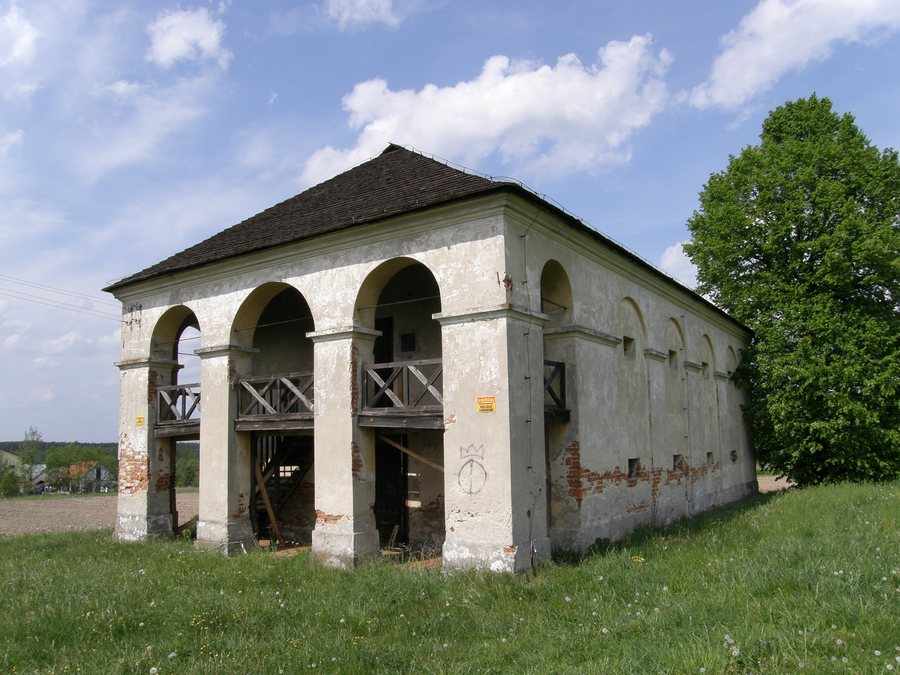
Brzóza Stadnicka at a glance
- Brzóza Stadnicka is home to a historic granary from the Potocki estate.
- The distillery storehouse was built in 1843–1845 to plans by draughtsman Jan Tokarski.
- The building is a two-storey, plastered brick structure in the Neoclassical style, with a rectangular floor plan.
- The Starych Dróg Czar route is a 9.5 km circular route from Żołynia Górna to Brzóza Stadnicka.
What does the historic granary tell us about the village?
The distillery storehouse on the former Potocki estate combines a clear architectural form with a specific construction date: it was built between 1843 and 1845 to plans by draughtsman Jan Tokarski. When planning your trip, this is a distinctive point of interest if you are interested in the history of manor architecture.
The architectural details are also precisely described: the granary is two storeys high, built of plastered brick and designed in the Neoclassical style. Its floor plan is rectangular. This makes it possible to understand the building not only through its connection to the former estate, but also through its materials, form and style. These details give architecture enthusiasts specific features to look out for.
The historic granary offers a different reason to visit than a longer route through the surrounding area. If you choose where to stay based primarily on culture and architectural history, it provides a clearly defined thematic connection to Brzóza Stadnicka.
What should you know about the Starych Dróg Czar route?
The Starych Dróg Czar circular route is 9.5 km long and is described as running from Żołynia Górna to Brzóza Stadnicka. It passes mostly through fields. The named roads include skotnik and zagondwie; the route also follows a path that residents of Brzóza Stadnicka once used when going to church in Żołynia and to the town centre.
Several specific details can help you get your bearings: the stated distance, the locations at either end, the route’s predominantly field-lined course and the names of the roads. The former use of one path also gives this section a local historical dimension. You can take these route details into account when deciding whether you would rather explore the village’s architectural history or include a longer route in your travel plans.
The two subjects have different focuses: the granary is about its construction date, architecture and the former estate, while Starych Dróg Czar is about distance, route and the recorded use of its paths. This distinction can help you assess Brzóza Stadnicka in light of your travel interests without treating the two subjects as one and the same.
Discover more destinations: Białobrzegi, Kraczkowa, Czarna, Łańcut.
FAQ
What is the distillery storehouse like?
The storehouse is a two-storey, plastered brick building in the Neoclassical style, with a rectangular floor plan.
When was the storehouse built?
The distillery storehouse on the former Potocki estate was built in 1843–1845 to plans by draughtsman Jan Tokarski.
How long is the Starych Dróg Czar route?
The circular route is 9.5 km long and runs from Żołynia Górna to Brzóza Stadnicka.
What is the historical significance of one section of the path?
A path on the route was once used by residents of Brzóza Stadnicka when they went to church in Żołynia and to the town centre.
For the broader travel overview: Łańcut.

.jpg)