
Huzele: Trails and History on the San
Accommodation in Huzele
Huzele combines a location on the San with hiking and cycling trails and a complex history. If you are looking for a destination that brings together nature and cultural history, the trails and places around Huzele offer concrete points of reference to help you choose.
Huzele at a glance
- Huzele lies on the San, opposite Lesko and at the foot of 583-metre-high Mount Gruszka.
- The village was mentioned in 1436 under the name “Wrzele.”
- The Wooden Architecture Route passes through the municipality and includes Huzele, Tarnawa and Łukowe.
What shapes the landscape around Huzele?
From the summit of the former ski lift, you can enjoy a panoramic view of Lesko, the Słonne Mountains and the surrounding villages. The forest trails around Huzele pass through an area with diverse flora and fauna. This offers different perspectives on the landscape: views from the former ski lift and trails through wooded terrain.
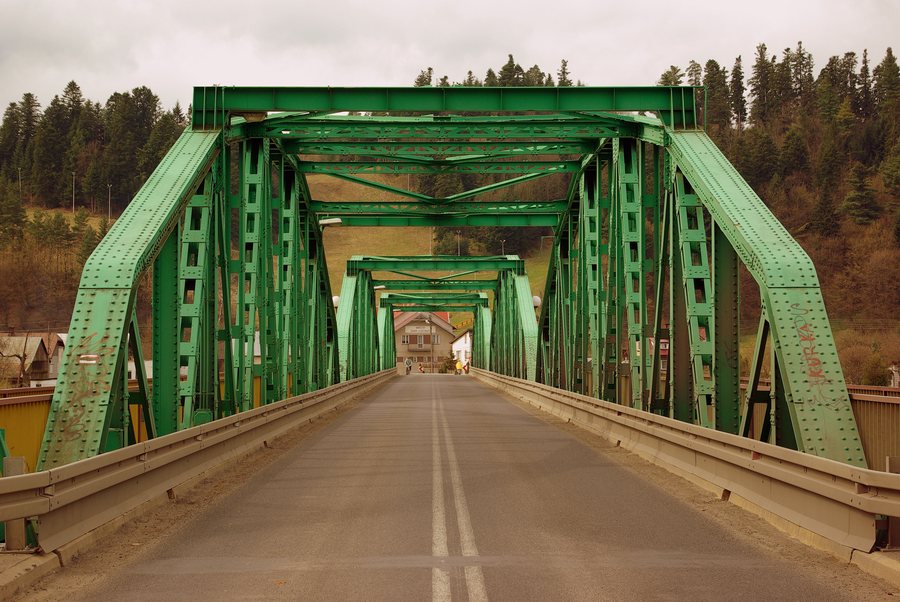
The bridge is also part of the village’s character. The current Huzele Bridge was built in the 1920s; it lies on provincial road 893 between Lesko and Cisna. Its location on the San and its role in history make it a prominent landmark in the village.
Which trails can you include in your trip?
A green hiking trail passes through the Huzele area and connects the surrounding countryside with the ruins of the Discalced Carmelite monastery in Zagórz and Bieszczady National Park. If you are interested in longer hiking routes, this trail links Huzele with cultural and natural attractions outside the village.
The black “Wzgórze Gruszka” walking trail offers another way to include Huzele in a tour. It starts at the Bieszczadzkie Centrum Informacji Turystycznej, passes through Huzele, the ski lift and Wzgórze Gruszka, then goes to the Lesko-Ski ski area and on to Weremień. The return route leads through Huzele to the tourist information centre. The route description helps you follow the circuit by its stops.
By bike, the “Wzgórze Gruszka” route runs from Lesko via Huzele and Tarnawa Górna to Mchawa. When planning, you can choose between a walking route that returns to its starting point and a cycling connection that passes through several places in succession. For both routes, the stops and place names listed here provide practical guidance; no route length is given.
What cultural history can you discover in Huzele?
Huzele was mentioned in 1436 as “Wrzele.” The Kmita family founded the village under Wallachian law. The history of oil extraction is also connected with Huzele: oil wells existed there before 1884, and Huzele was one of the oldest centres of oil extraction in the world.
The Wooden Architecture Route is a themed driving route through the municipality. It includes churches and farmhouses in Huzele, Tarnawa and Łukowe and offers a way to discover Lemko cultural heritage. This part of the trip is therefore suited to visitors interested not only in trails through the landscape but also in architecture and regional history.
During the Second World War, Huzele Bridge was a border crossing between German-occupied Huzele and Soviet-occupied Lesko; the border ran along the San. About 2.5 km from Huzele, near the road to Tarnawa Górna, a monument commemorates 115 Poles murdered by the Nazis on Mount Gruszka in 1940. The village and its surroundings can thus also be explored through different periods of history.
FAQ
Which places does the Wooden Architecture Route include?
It includes churches and farmhouses in Huzele, Tarnawa and Łukowe and offers a way to discover Lemko cultural heritage.
Where does the “Wzgórze Gruszka” cycling route lead?
It runs from Lesko via Huzele and Tarnawa Górna to Mchawa.
What does the monument near the road to Tarnawa Górna commemorate?
It commemorates 115 Poles murdered by the Nazis on Mount Gruszka in 1940.
For the broader travel overview: Łukawica.

